
Last updated November 15, 2026
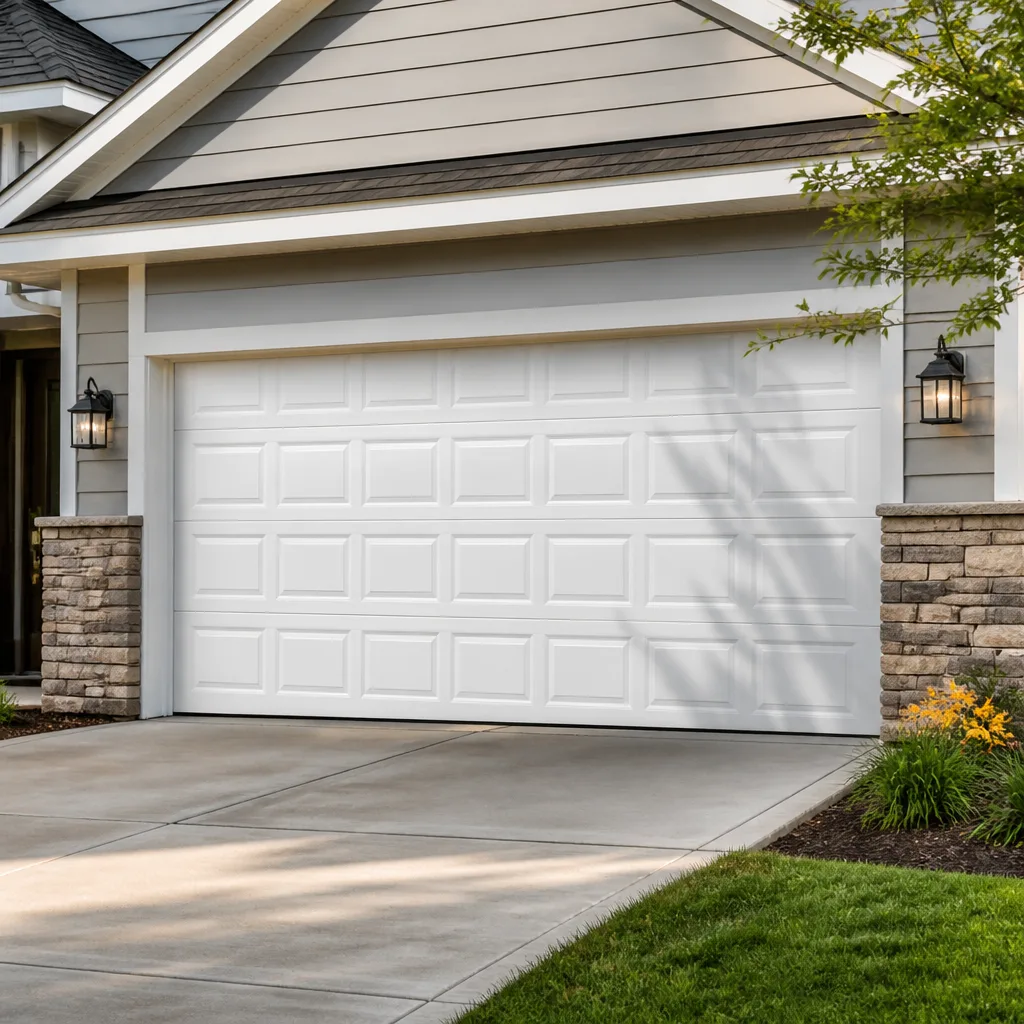 Raised-panel steel
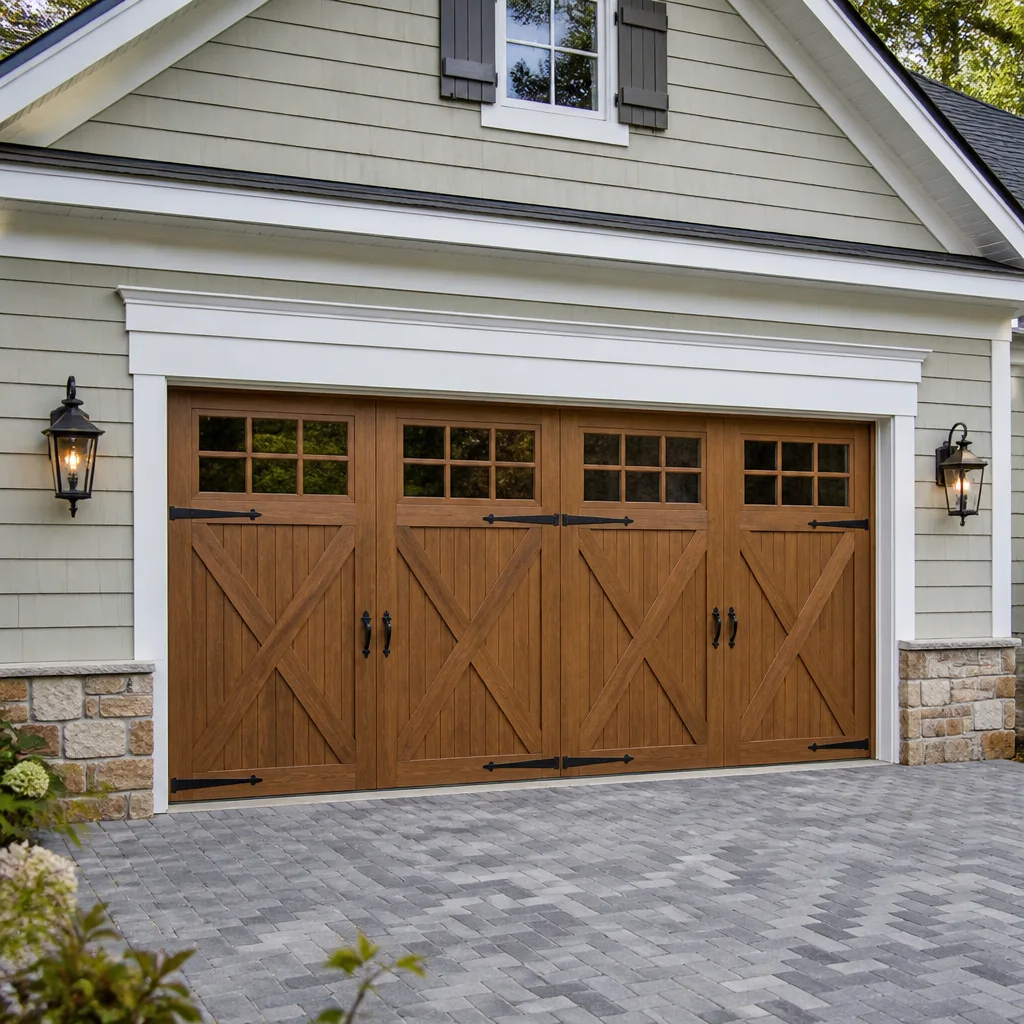 Carriage house
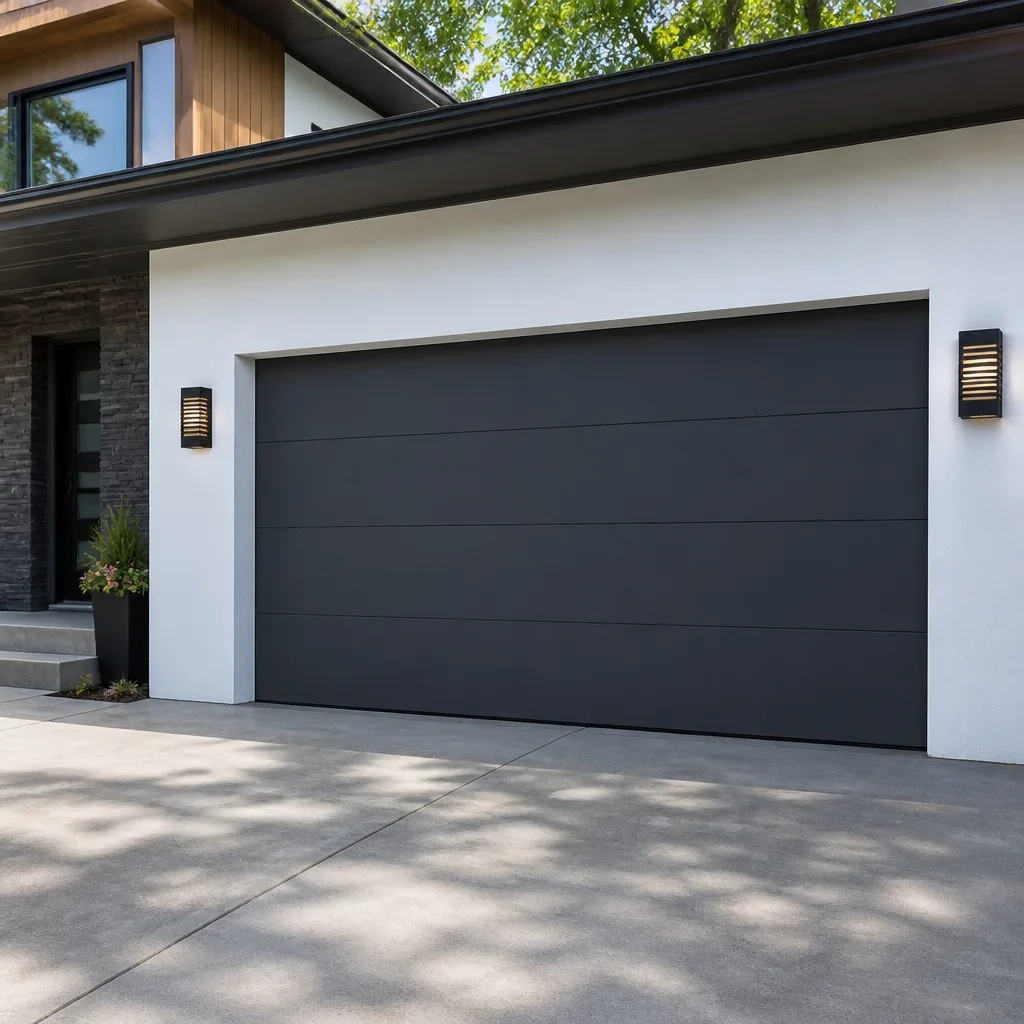 Modern flush
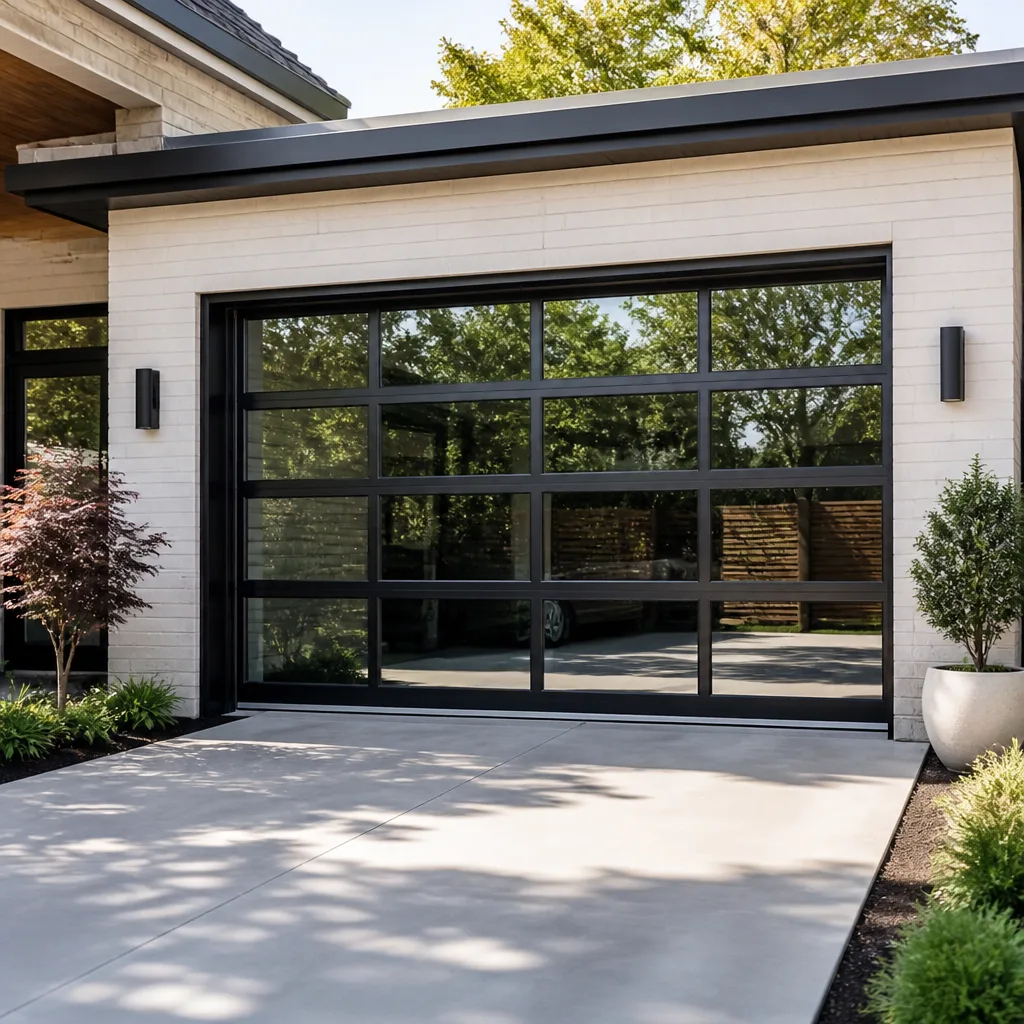 Full-view glass
 LiftMaster openers
 Chamberlain openers
Full 25-point door and opener safety check with every visit - springs, cables, rollers, tracks, and your LiftMaster or Chamberlain opener included
You get a price before we start. It does not change when the pro arrives.
Get your free estimateDIY vs Professional Garage Door: The Manchester Homeowner’s Decision Guide
Most garage door advice online treats the whole door as one decision: either you’re a DIY person or you call a professional. That framing is wrong, and it’s why so many homeowners in Manchester get hurt trying something they should never have touched, or pay for a service call that was really a ten-minute job. The real question isn’t skill level. It’s which specific tasks carry genuine injury risk and which ones a capable homeowner can handle safely with the right information. This guide breaks the door down task by task, tells you honestly which ones to keep and which to hand off, what the tools actually cost, and how DIY work affects warranties on newer doors from manufactures like Clopay and Amarr.
Quick Answer
You can safely DIY lubrication, photo-eye sensor alignment, remote reprogramming, and weatherstrip replacement – they carry little risk and need only basic tools. You should never DIY torsion springs, cables, track replacement, or anything that requires removing the door from its track; those store enough energy to cause serious injury and are a job for a trained technician. Everything else sits in between, and the deciding factor is usually whether a mistake can put the door in free fall.
Styles & brands we work with
- Raised-panel steel
- Carriage house
- Modern flush
- Full-view glass
- LiftMaster openers
- Chamberlain openers
Table of Contents
- A Task-by-Task Breakdown: What’s Safe to DIY
- Why Torsion and Extension Springs Have Different Risk Profiles
- How to Safely Handle the Four Legitimate DIY Tasks
- The Real Cost of DIY: Tools vs. a Service Call
- Warranty Implications People Miss on Newer Doors
- Why Manchester Doors Wear the Way They Do
- Repair or Replace: How to Think About the Decision
- How to Choose a Garage Door Professional
A Task-by-Task Breakdown: What’s Safe to DIY
The single most useful thing you can do before touching your door is sort the job into one of three buckets. Getting this wrong is how homeowners end up injured or how a small problem turns into a full door replacement.
Safe for a prepared homeowner
- Lubricating the hinges, rollers, and track with the appropriate lubricant
- Cleaning and aligning the photo-eye (safety) sensors
- Reprogramming remotes, keypads, and smart-home openers
- Replacing the bottom weatherstrip or seal
- Cleaning the door panels and the tracks with a soft cloth
- Tightening visible hinge and bracket bolts with a wrench
Absolutely not a DIY job, at any skill level
- Torsion spring repair or replacement
- Extension spring replacement
- Cable replacement or re-seating
- Replacing the bottom bracket that sits under spring tension
- Removing the door from its track while springs are under load
- Track replacement or re-engineering a bent track section
- Any adjustment that requires winding or unwinding spring tension
The middle ground: judgement calls
These tasks aren’t immediately dangerous but are easy to get wrong without experience. Things like replacing a roller that’s stuck, adjusting a door that has come slightly off level, or fixing a bent section of track after the spring system has already been professionally made safe. If you’re not certain the springs are fully de-tensioned, treat these as a professional job. That’s the honest line, and it’s the same line we walk our own technicians through when they train.
Why Torsion and Extension Springs Have Different Risk Profiles
A torsion spring stores energy in a twisted bar. An extension spring stores energy by being stretched along a track. Both are dangerous, but they fail and are worked on differently, and that difference matters before you watch any tutorial.
Torsion systems sit directly above the door, on a single torsion tube, usually with one spring on each side of a center bracket. To work on one you have to wind the spring to a specific number of turns to match the door’s weight. The winding bars used to do that are the tool most often involved in serious hand and arm injuries. That’s physics, not caution. The spring doesn’t care whether you’ve watched the video three times.
Extension systems mount alongside the horizontal tracks and stretch horizontally. They’re often double-springed for safety, but the failure mode when one lets go is a fast snap along the track, and the door weight can suddenly shift onto one side. Extension spring replacement is more about correct weight matching and correct installation of the safety cables than about winding tension, but a released extension spring can still cause real injury, and a door that loses one side’s spring under load can drop.
The practical takeaway: torsion springs require tooling and technique most homeowners don’t have, and extension springs require an understanding of matching and safety cables most homeowners don’t have. Two different reasons, same conclusion. If you’re unsure which system your Manchester door uses, look for a horizontal bar across the top of the door (torsion) versus springs running along the tracks (extension), or ask a pro to tell you in one look.
We’ll flag one more thing here since safety is the whole point of this guide. If you hear a loud bang from the garage and the door won’t open, assume the spring has failed. Don’t try to force it up, don’t pull the emergency release, and don’t stand under the door while you figure it out. Call a professional. This is exactly the situation where a garage door repair call saves you from a much worse day.
How to Safely Handle the Four Legitimate DIY Tasks
These four are genuinely homeowner territory. Here’s how to do each one right.
1. Lubricating the door
Use a proper garage door lubricant, not WD-40 and not thick grease. Spray the hinge pivots, the roller bearings (not the surface of the roller), and a light coat down the inside of each track. Wipe off any excess so it doesn’t attract grit. A door in Manchester picks up road dust and grit over the winter, so a quick lube before the cold snap and again in spring prevents most of the sticky, grinding feel people call about. Ten minutes, no tools, no risk.
2. Aligning photo-eye sensors
- Check both sensors for dust or cobwebs and wipe them clean.
- Confirm both LEDs are solid, not blinking.
- If blinking, gently loosen the wingnut and pivot the bracket a few degrees at a time until the LED goes solid.
- Test by passing a hand through the beam – the door should reverse. Never leave the sensors disconnected to “fix” a door that won’t close.
3. Reprogramming remotes and keypads
Most modern openers, including LiftMaster and Chamberlain units, use a “learn” button on the motor head. Press it, then press your remote within the window, and you’re done. Smart-integrated openers may need the app to re-pair. If your opener is from Genie, Craftsman, or an older brand, the procedure varies. That brand-specific knowledge is a big part of why we handle garage door opener repair across the eight major brands in the trade – a generic “try the reset button” answer rarely works on the first try.
4. Replacing weatherstrip
The bottom seal slides or pulls out of the aluminum retainer and pushes back in with a bit of soapy water. Measure the door width before you buy. On doors over a concrete apron, a slightly wider seal helps close the gap. This is a low-risk job that stops drafts and water intrusion, and it’s one of the highest-value DIY tasks on the whole door.
The Real Cost of DIY: Tools vs. a Service Call
Once you’re past the four safe tasks, the tool math changes fast. Here’s an honest look at what you’d need to actually do the “middle ground” and dangerous jobs yourself.
- Winding bars (torsion springs): special hardened steel bars. Cheap ones bend. You’re spending real money on a tool you’ll use once and then never again, on a job with a high injury rate.
- Properly rated torsion spring: has to match the door’s exact weight and cycle life. A wrong spring will fail early or strain the opener.
- Safety cables (extension springs): required on modern installations. Skipping them is a code and safety problem, not a cost saver.
- Cable crimping tools and cable: if you’re replacing cables, the tools are one-use, and a poorly crimped cable is a door that drops.
- Time and risk: hours of your time on a task with a real injury risk, plus the risk of a door closing on something or someone if something’s done wrong.
Compare that to a service call, where the price is quoted and agreed before any work starts, and the estimate itself is free. For almost every spring, cable, track, or opener job in Manchester, the tool cost plus the injury risk tips the balance toward calling. The framing isn’t “DIY is bad.” It’s that this specific category of repair doesn’t reward the DIY investment the way painting a room or replacing a faucet does.
Warranty Implications People Miss on Newer Doors
This is the detail that catches homeowners off guard, and it’s worth a careful read if your door is newer. Manufacturer warranties on doors and openers typically exclude damage caused by improper installation or repair. That means if you attempt a spring replacement or an adjustment yourself and something else goes wrong, you may find the manufacturer won’t honor a claim on the surrounding components, even if the failure looks unrelated.
The same applies to opener warranty coverage after a DIY install. If a smart opener is wired or paired incorrectly and the logic board fails, the brand may treat that as installer-caused. Doors from Clopay, Amarr, Wayne Dalton, and Raynor all carry their own warranty terms, and they vary by line.
What to do about it: keep receipts for any professional work, have a licensed and insured technician do any job involving springs, cables, or opener replacement, and read your door’s warranty document before you decide whether a job is DIY. If you’re not sure what your warranty covers, that’s a good question to bring to a free estimate. A pro can usually tell you the door model in one look and give you a straight answer.
Why Manchester Doors Wear the Way They Do
Garage doors don’t fail in a vacuum. They fail because of what the local climate asks them to do, cycle after cycle, year after year. Manchester’s winters are the main driver. Repeated freeze-thaw cycles tighten and loosen the concrete apron at the base of the door, which is why so many doors in the city start scraping or dragging along the bottom, and why bottom seals wear through faster here than in milder climates.
The cold also affects the metal. Springs, hinges, and rollers all operate differently in sub-freezing temperatures. A spring that’s near the end of its cycle life is much more likely to fail on the first really cold morning than on a warm afternoon. If your door has been slow, squeaky, or reluctant to close for weeks, don’t be surprised when a hard freeze is the breaking point.
Housing stock matters too. Manchester has a mix of older homes with original doors and newer construction – especially in the neighborhoods around the city’s outskirts where newer builds are common – with modern insulated doors that use heavier panels and different hardware. Older doors often need more frequent lubrication and hinge replacements. Newer doors tend to run quietly until something in the opener or a spring gives way. Neither is “better” or “worse.” They just fail differently, and knowing which category your door falls into is half the battle when you’re deciding whether a problem is DIY-safe.
Repair or Replace: How to Think About the Decision
If a technician looks at your door and the honest options are “repair” or “replace,” don’t assume the bigger number is a sales pitch. Here’s how the decision usually shakes out.
- Is the door structurally sound? Damaged panels, a bent track, or rusted-through sections are the main argument for replacement. Cosmetic scratches are not.
- How many parts have failed? One spring, a single roller, or a weatherstrip is a repair. A failed spring plus a bent track plus a tired opener is usually a “look at the whole system” conversation.
- How old is the door, and what warranty is left? A newer door from a premium manufacturer with a failed opener is a repair. A door that’s showing multiple failures across its whole assembly is where replacement starts to make sense.
- Does the door match the house? If the door is failing anyway and it was never the right style for the home, replacement solves two problems at once. That’s a judgement call for you, not for the technician.
Our job in that conversation is to tell you which option actually makes sense for your door, your opener, and your budget, and then to price that option before we start. We don’t push replacement when a repair will do the job properly. That’s part of what “Radiant” means to us: we shed light on the problem before we sell the solution.
How to Choose a Garage Door Professional
The garage door trade has real specialists and generalist handymen who take jobs on the side. When it’s time to hire, here’s what to check.
- Are they licensed and insured? Ask directly. A specialist should confirm both without hesitation.
- Do they work on your brand? A company that knows Clopay, Amarr, Wayne Dalton, and LiftMaster equipment will diagnose the actual door in front of them, not a generic approximation of it.
- Do they handle the whole job? Spring work, opener repair, and installation under one company means you’re not coordinating three contractors on one problem.
- Will they quote before starting? You should have a written price agreed before any work begins. If the answer is vague, walk away.
- Do they explain the “why”? A technician who tells you why something failed, not just what to replace, is one you can trust to make honest calls about repair vs. replace.
That last point matters more than people realize. Garage doors fail in a small number of ways, and a real specialist will recognize yours fast. When you call Radiant Garage Door Repair, you’re talking to a team whose entire focus is this trade, with technicians who have up to 10 years of experience diagnosing the exact door and opener in front of them.
Common Mistakes to Avoid
- Watching a video and assuming it looks easier than it is. Every torsion spring tutorial makes winding bars look calm. The reason there are so many of them is that they don’t show the injuries. That’s the piece of context you’re missing.
- Disconnecting the safety sensors to “fix” a door that won’t close. The door will close, yes, and it can also crush whatever passes under it. If the sensors aren’t working, the fix is alignment, not bypass.
- Pulling the emergency release before checking whether a spring has failed. The release opens the door up to the disconnect, and a door with a broken spring can come down hard once it’s released. Always call a professional first if a spring has failed.
- Buying springs based on length alone. Springs are matched to a door’s weight and cycle life, not to the color painted on the end. A wrong-match spring can fail in weeks. This is the mistake we see most on Manchester doors that were previously DIY’d.
- Skipping the lubricant through a cold snap. Manchester winters punish an under-lubricated door. Ten minutes of lubrication in late autumn prevents five different “why is my door squeaking” calls in January.
- Assuming a DIY fix won’t affect the warranty. Manufacturer warranty terms on newer doors and openers often exclude damage from improper repair. It’s easy to void coverage you didn’t know you had.
- Choosing for price alone. A cheap fix on a dangerous job is the most expensive thing that could happen. A licensed, insured specialist is the floor, not the ceiling.
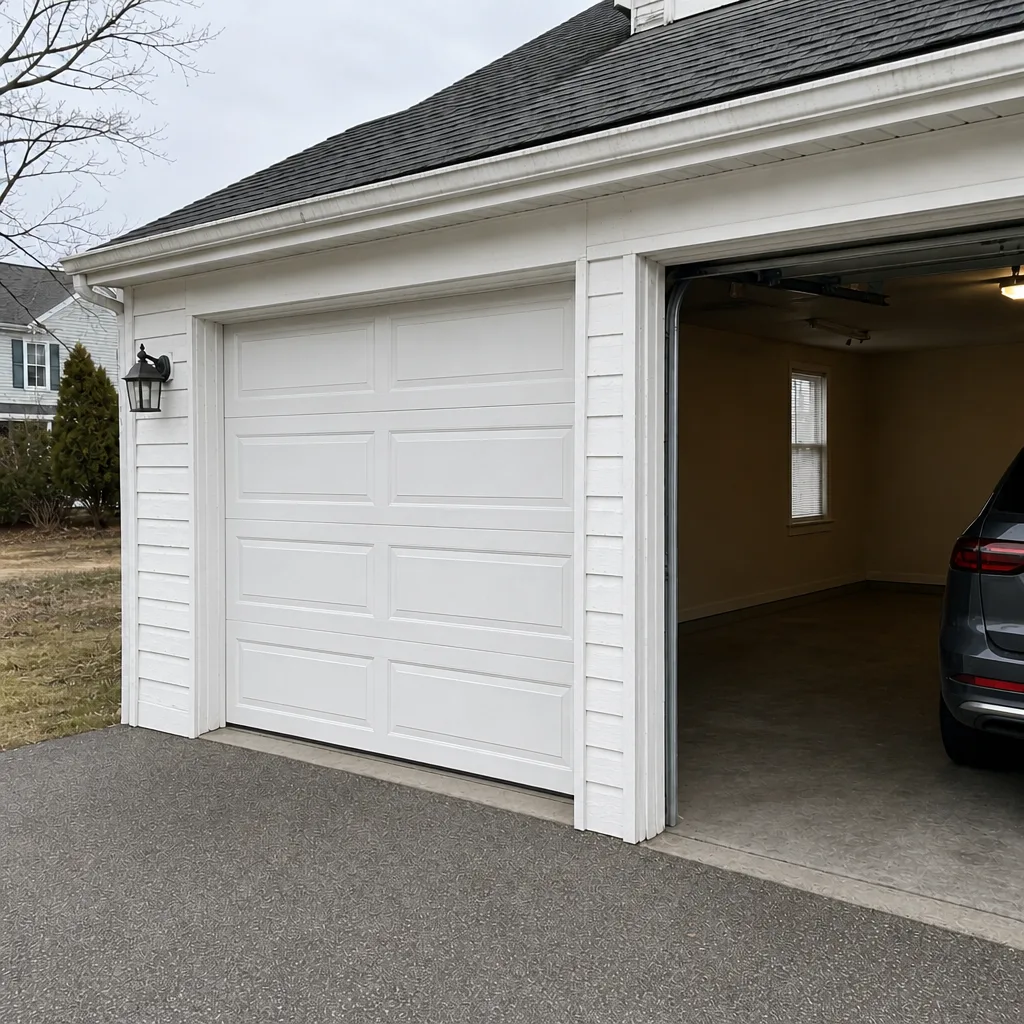
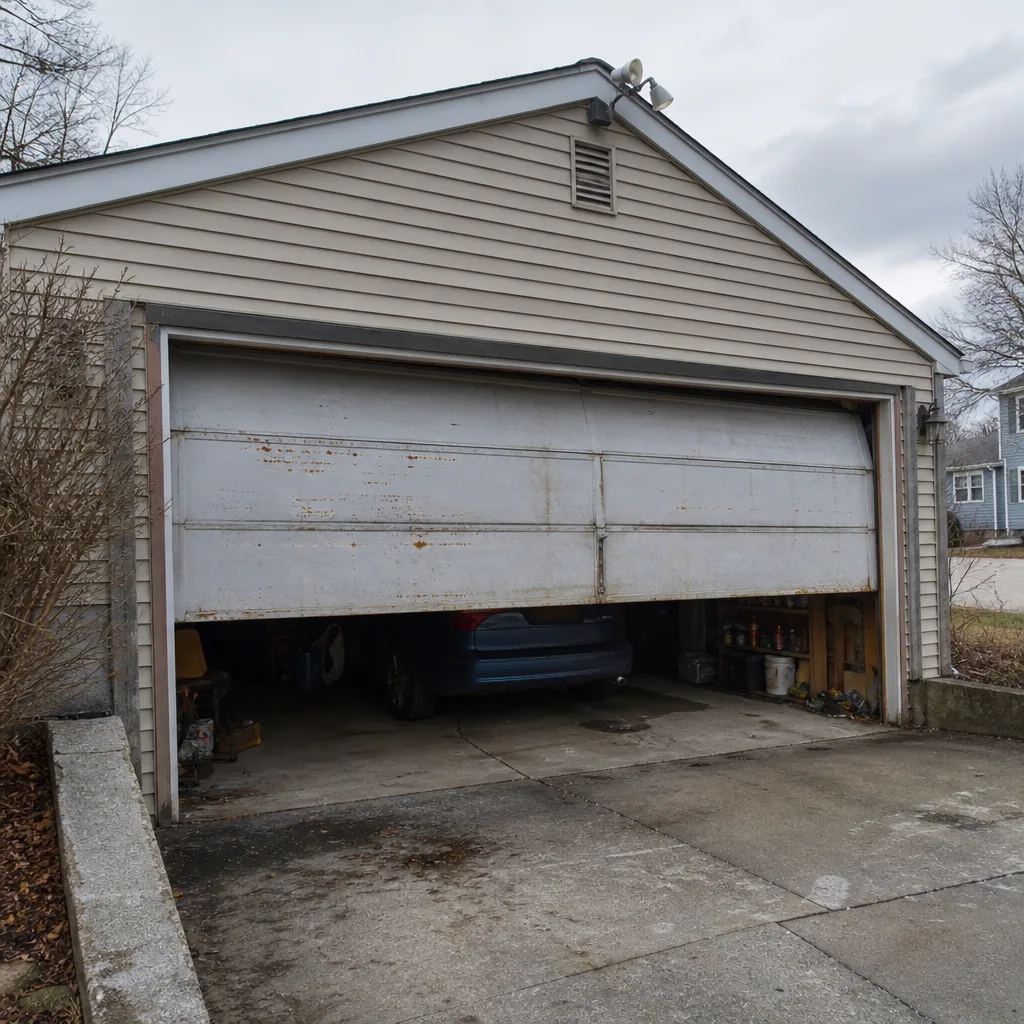
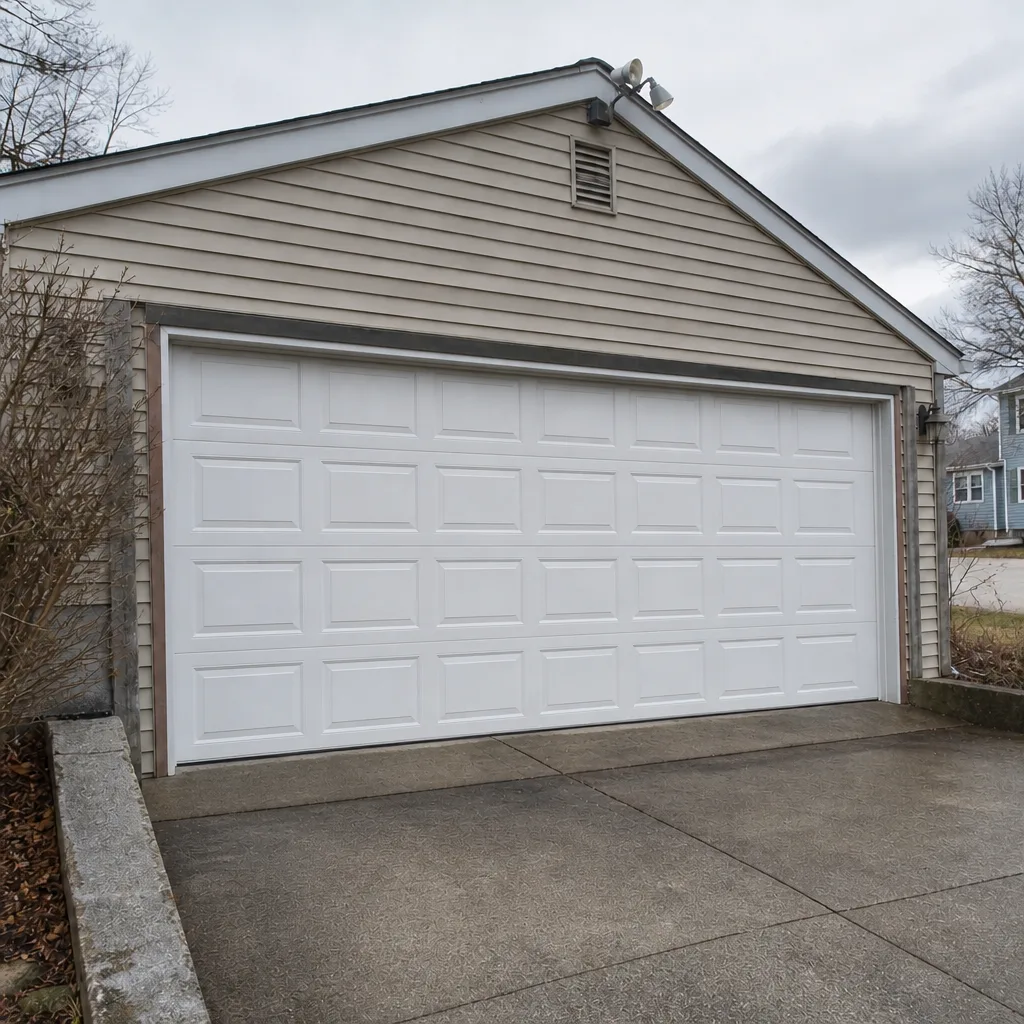
See the difference
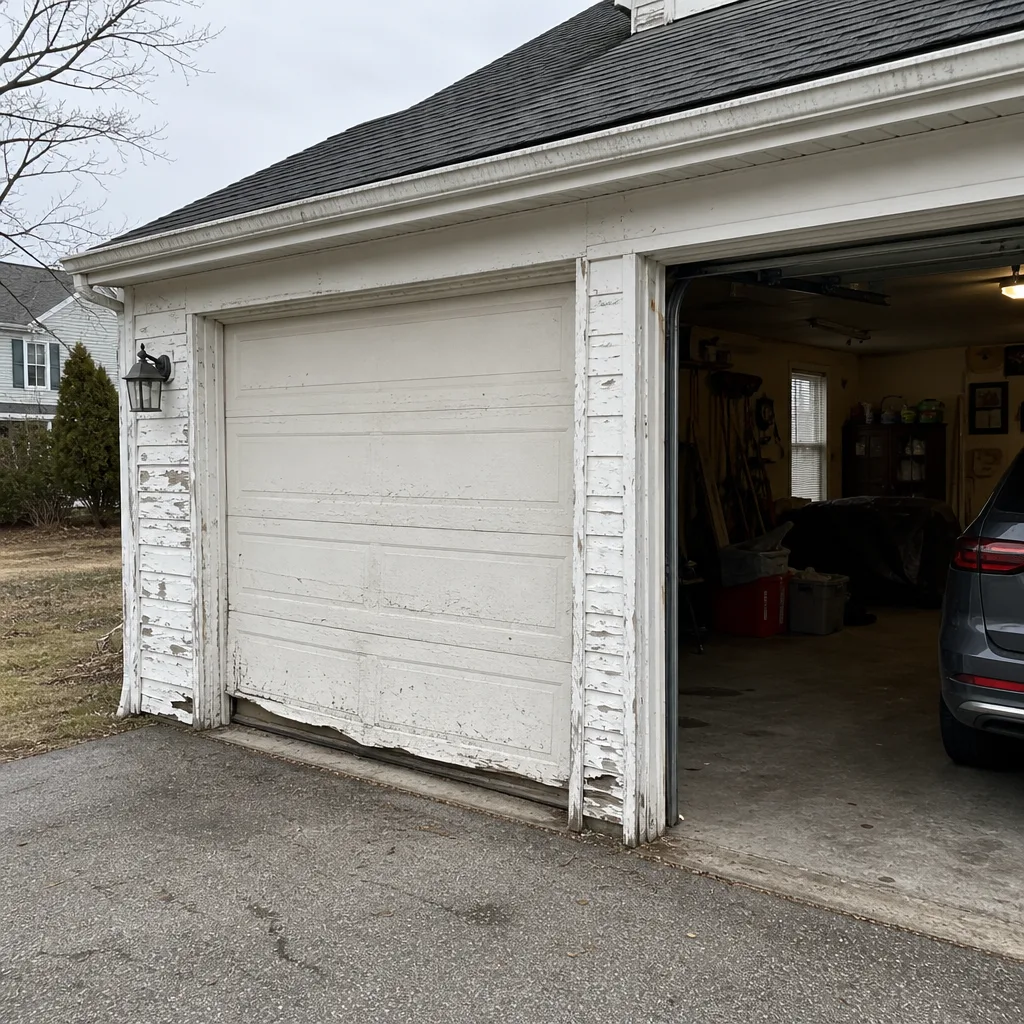 Before
 After
 Before
 After
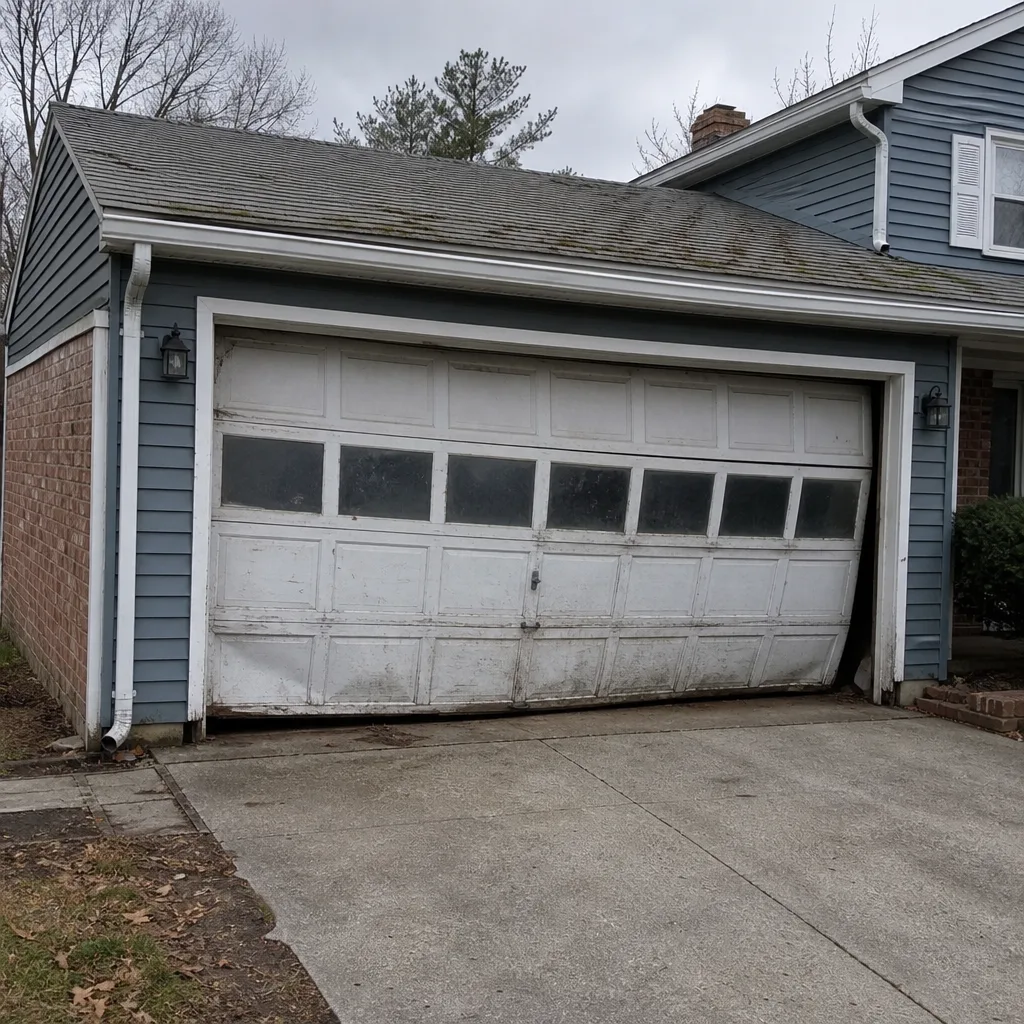 Before
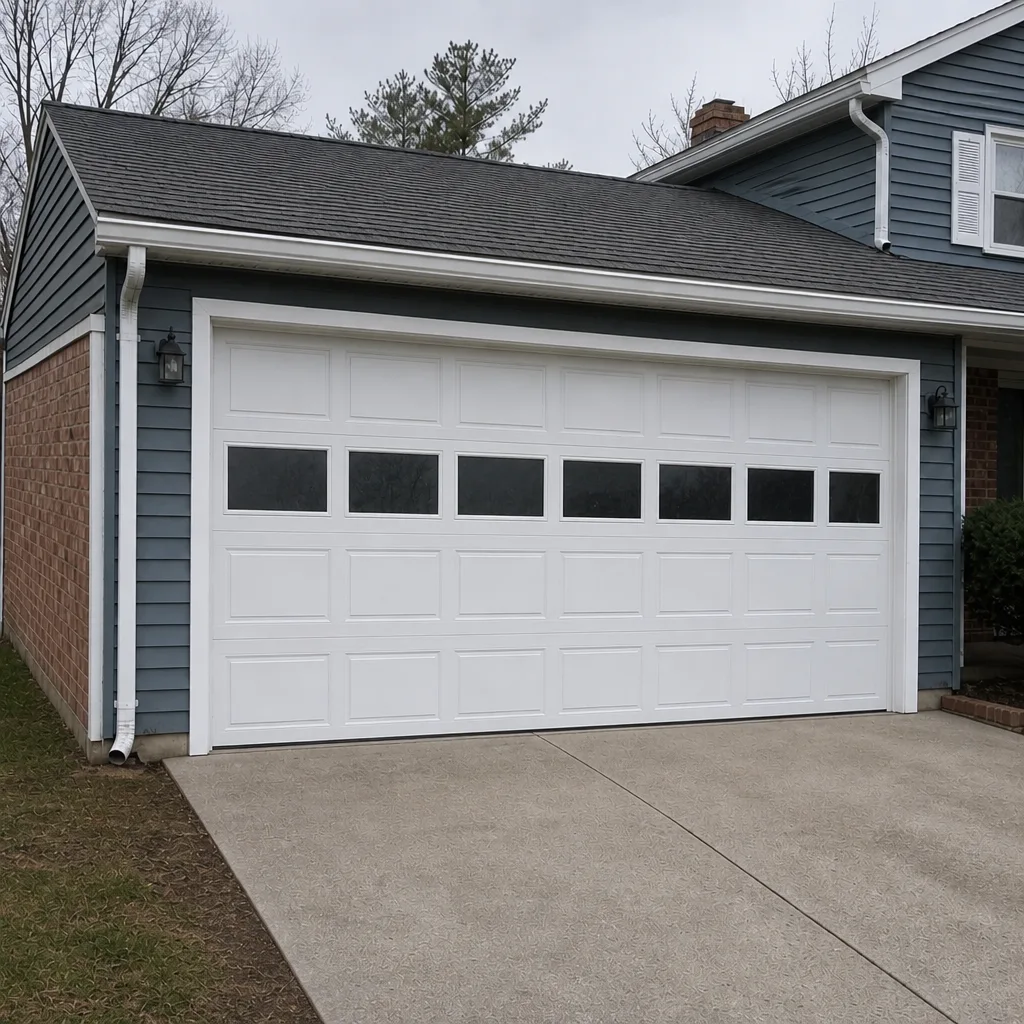 After
When to Call a Professional
Call a professional under any of these conditions: a loud bang and a door that won’t open (probable spring failure); a door that’s come off its track or is hanging unevenly; a visibly frayed or snapped cable; a door that reverses without anything in its path; a bottom bracket that’s bent or loose while springs are under tension; or any opener that’s stopped responding and hasn’t been fixed by a battery change or a simple re-pair. On newer doors with warranty coverage in place, a pro visit also protects the warranty. Radiant Garage Door Repair offers free estimates in Manchester – the price is quoted and agreed before any work begins. Call (888) 459-1302. We answer 24/7. Fast dispatch from 7am to 7pm, Sunday through Friday.
Frequently Asked Questions
You should not. Torsion springs store enough energy to break a wrist or worse, and the winding process requires specific tools and technique. Even with a tutorial, the failure mode can cause serious injury. A trained technician can make it safe and set the spring correctly to your door’s weight.
Yes, several jobs are genuinely safe for a prepared homeowner. Lubrication, photo-eye sensor alignment, remote reprogramming, and weatherstrip replacement are all fine with basic tools and a bit of care. Anything involving springs, cables, track removal, or the bottom bracket should always go to a professional.
It can. Manufacturer warranties on doors and openers typically exclude damage from improper installation or repair. On newer doors from Clopay, Amarr, Wayne Dalton, or Raynor, that’s a real consideration before you pick up a wrench. Ask about your warranty coverage before you start any non-trivial repair. Call (888) 459-1302 for an exact quote – estimates are free.
Same-day service is often possible on repair calls. If your door won’t open because a spring has failed or the door has come off its track, call right away and describe what you see. Call (888) 459-1302. We answer 24/7. Fast dispatch from 7am to 7pm, Sunday through Friday.
Spring repair is priced per job by a written estimate after the door is looked at, and matched pairs are usually replaced together. The estimate is free and the price is quoted and agreed before any work starts, so there’s no surprise on the invoice. Call (888) 459-1302 for an exact quote – estimates are free.
No. The written estimate sets the price, and we agree it with you before any work starts. If the diagnostic reveals something different from what was described on the phone, we’ll explain the change and get your agreement before proceeding. Call (888) 459-1302 – estimates are free. For more on our services in Manchester, see our service page.
Yes. Licensed and insured is a baseline requirement for any garage door work, and we hold both. Ask for confirmation from any company you’re considering, and don’t accept “we’ve been doing this for years” as an answer. Call (888) 459-1302 for a free estimate.
We work on all eight major residential brands – LiftMaster, Chamberlain, Genie, Clopay, Amarr, Wayne Dalton, Craftsman, and Raynor – across repair, opener repair, and installation. Each brand has its own opener logic, spring spec, and warranty terms, and knowing those differences is the point of using a specialist. Call (888) 459-1302 for a free estimate at Radiant Garage Door Repair.
The Bottom Line
The DIY-vs-professional question for garage doors isn’t about whether you’re handy enough. It’s about which jobs carry genuine injury risk and which ones reward the effort. Lubrication, sensor alignment, remote pairing, and weatherstrip are worth doing yourself. Springs, cables, tracks, and the bottom bracket are not – not because you couldn’t physically attempt them, but because a mistake can cause a serious injury or a door that drops. Keep the four safe tasks, hand off the rest, protect your warranty on newer doors, and treat a loud bang and a dead door as a professional call, not a project. That’s the honest way to think about garage door work in Manchester, and it’s the same way we think about it for every door we touch.
Ready to get your door back to working the way it should? Call (888) 459-1302 for a free estimate from Radiant Garage Door Repair. We answer 24/7. Fast dispatch from 7am to 7pm, Sunday through Friday.
Written by the team at Radiant Garage Door Repair.