
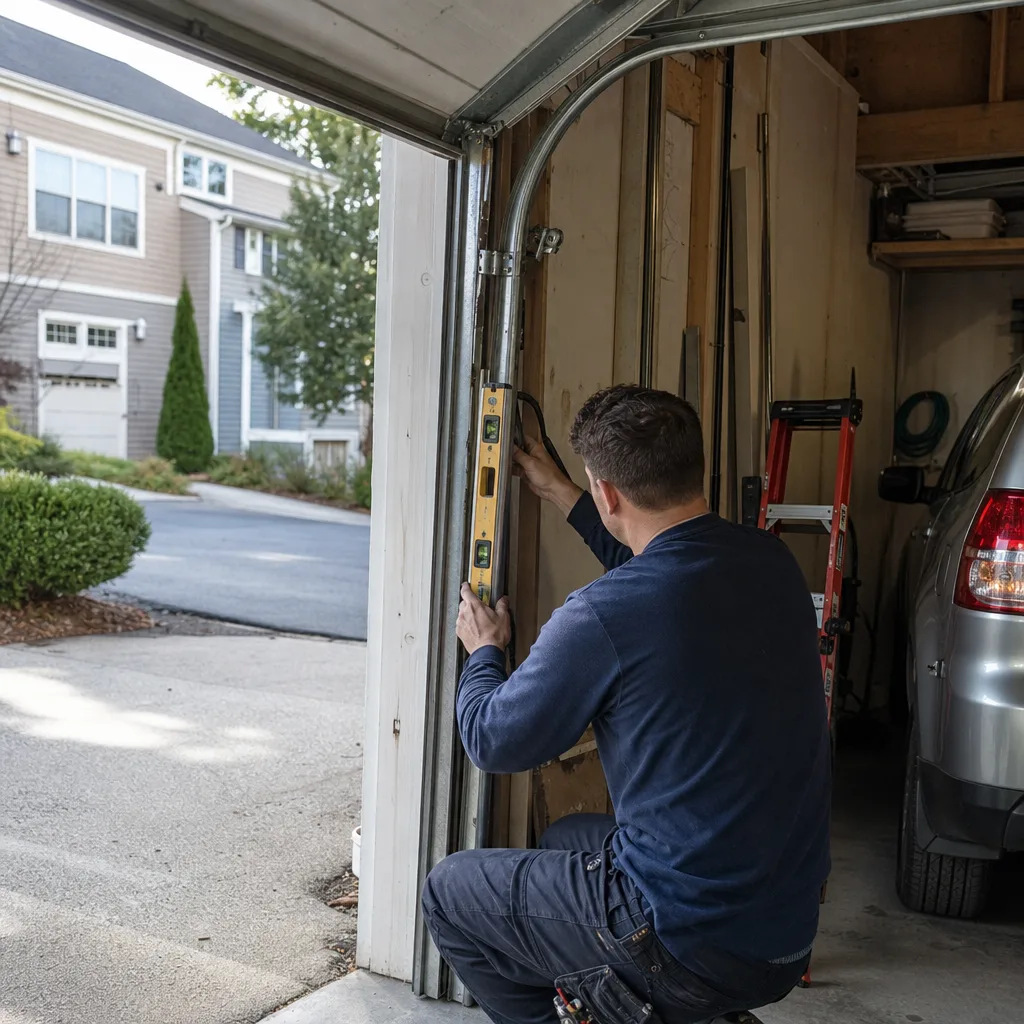
Last updated November 15, 2026
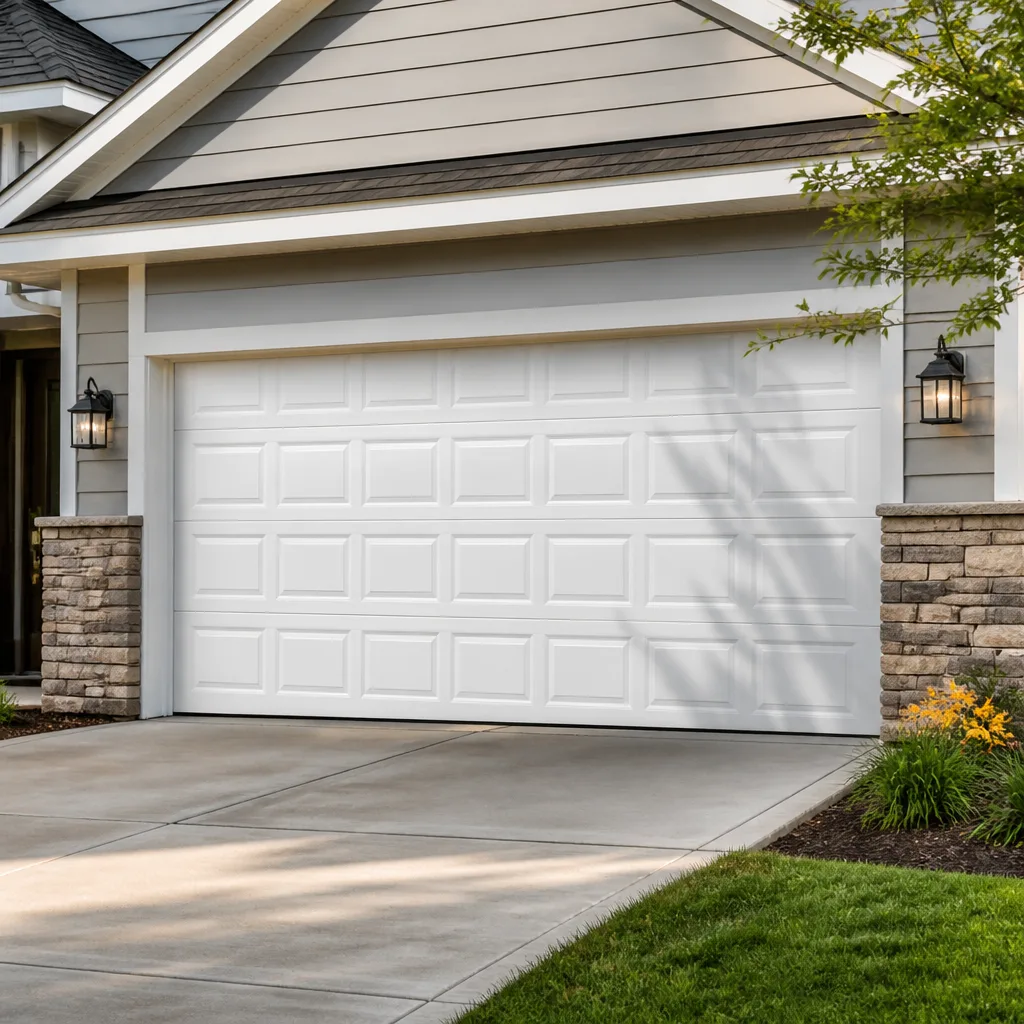 Raised-panel steel
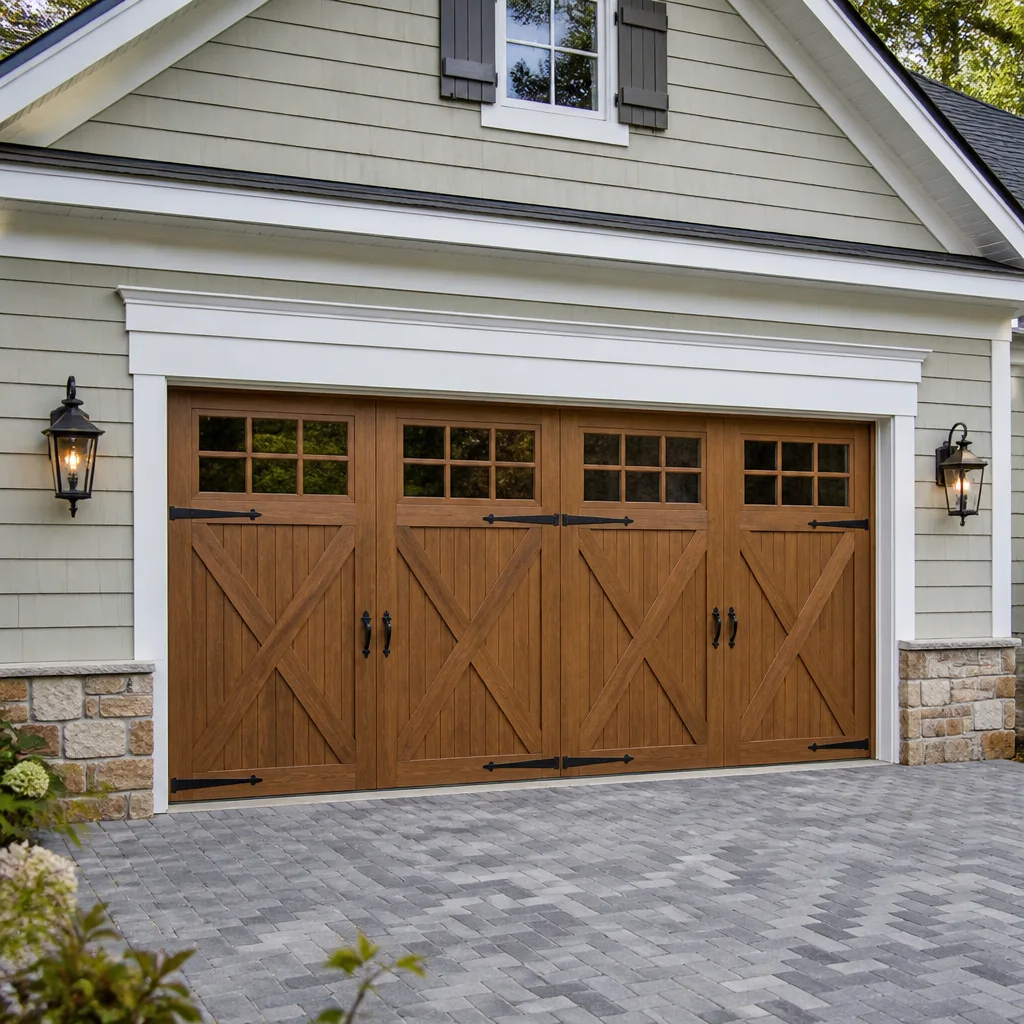 Carriage house
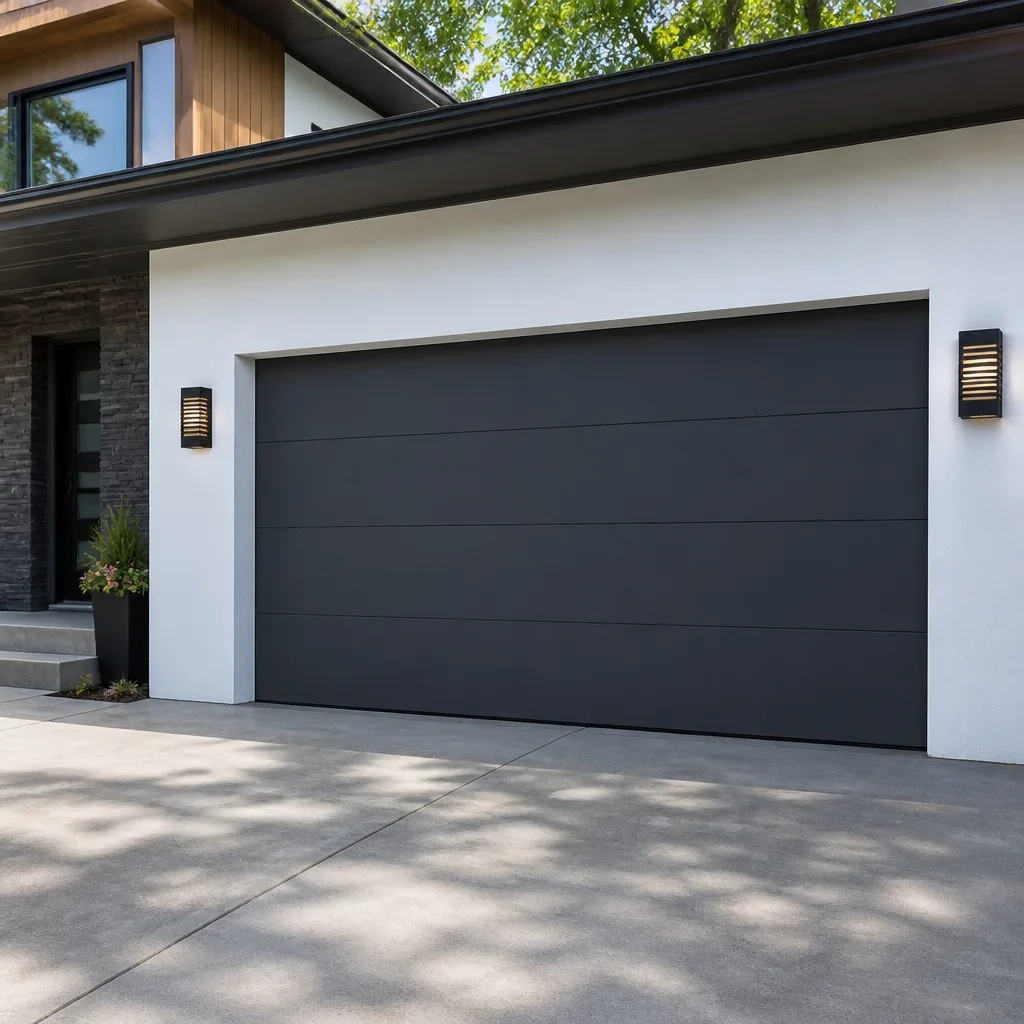 Modern flush
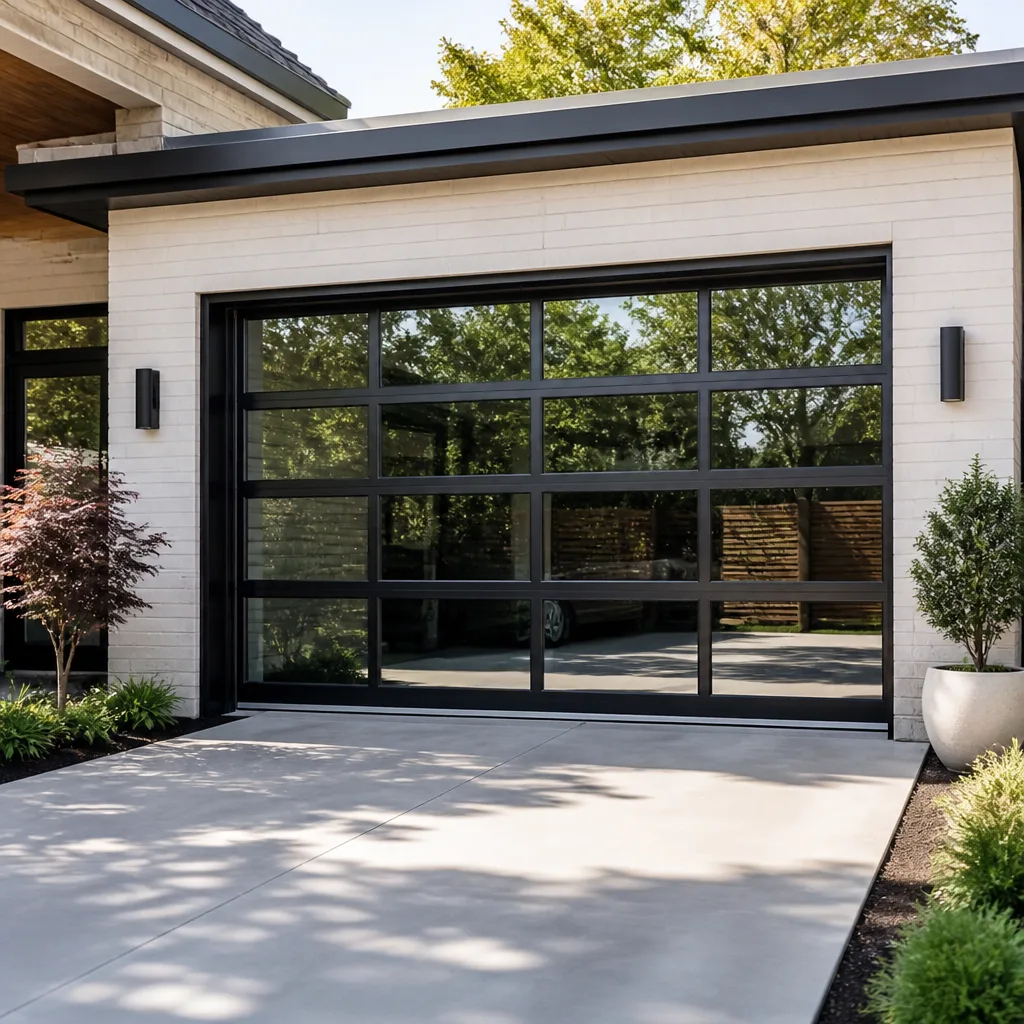 Full-view glass
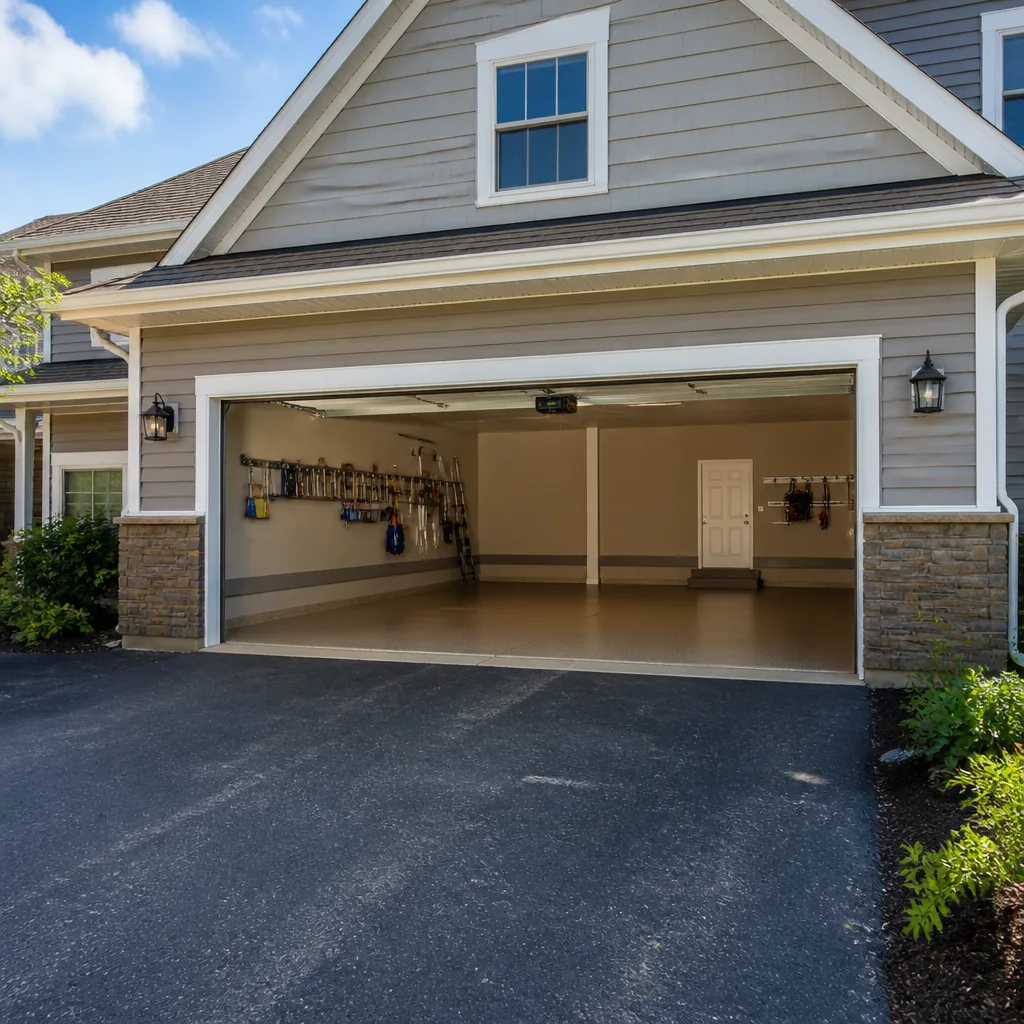 LiftMaster openers
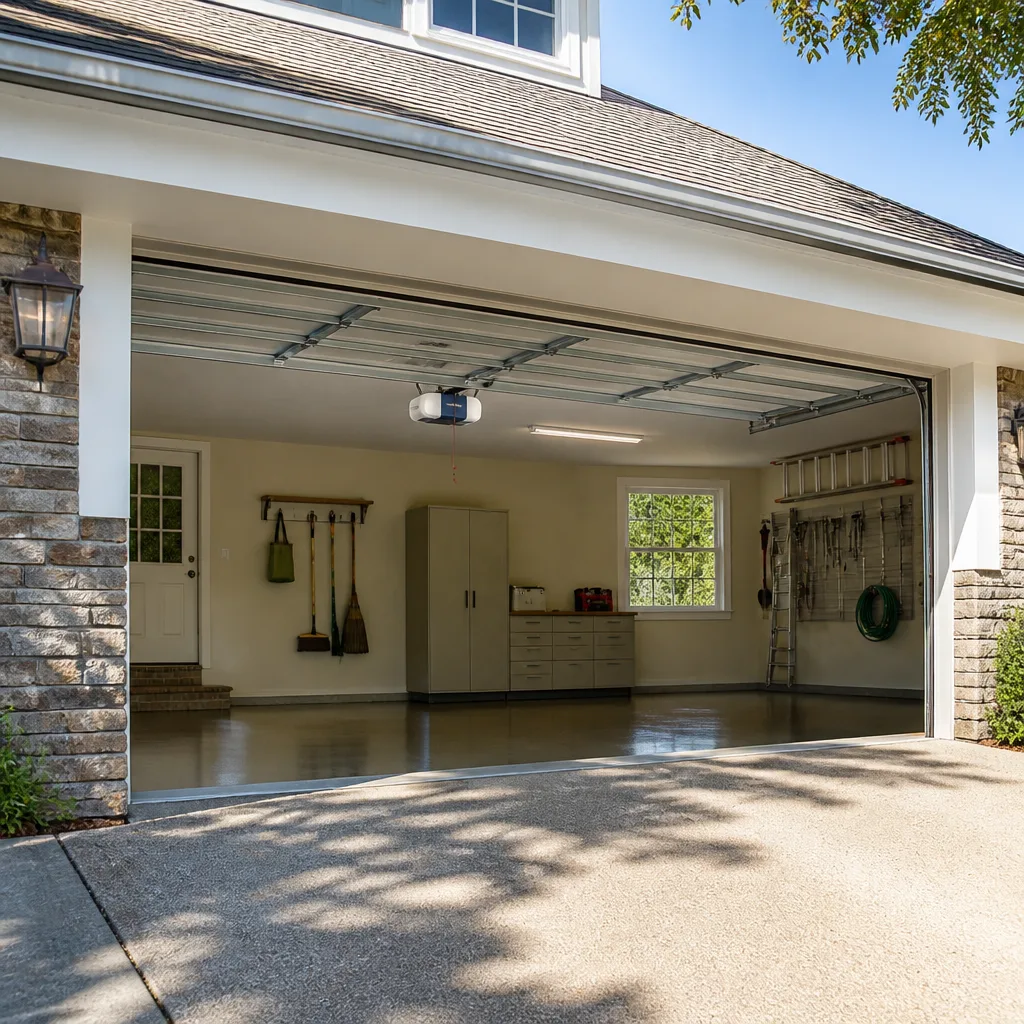 Chamberlain openers
Full 25-point door and opener safety check with every visit - springs, cables, rollers, tracks, and your LiftMaster or Chamberlain opener included
You get a price before we start. It does not change when the pro arrives.
Get your free estimateHow to Hire a Garage Door Contractor in Manchester: A Step-by-Step Guide
A handyman with a garage door ad on Facebook and a technician who works on a single brand all day are both calling themselves “garage door contractors.” That’s the problem in a nutshell. Homeowners in Manchester tend to vet garage door contractors the way they’d vet a plumber or an electrician, and the questions that catch a generalist rarely catch a specialist who’s wrong for your door. Garage doors are their own trade. The springs, cables, tracks, panels and openers are a closed system, and a person who’s skilled with a wrench isn’t automatically skilled with a torsion spring or a LiftMaster logic board. This guide walks you through what to ask, what a real estimate looks like, how to check insurance in a way that actually protects you, and the red flags that are specific to this trade.
Quick Answer
To hire a garage door contractor in Manchester, verify three things before you sign anything: that they work on your specific brand and equipment, that their written estimate names the exact parts being replaced and the total price, and that they carry general liability insurance with a limit high enough to cover a door coming down on your property. New Hampshire doesn’t require a specialty license for garage door work, so credentials come down to brand certification, insurance, and whether the contractor diagnoses before quoting. Get all three in writing, and never accept a same-day replacement pitch before the door has actually been inspected.
Styles & brands we work with
- Raised-panel steel
- Carriage house
- Modern flush
- Full-view glass
- LiftMaster openers
- Chamberlain openers
Table of Contents
- The Five Questions to Ask Before You Get a Quote
- What a Legitimate Written Estimate Should Include
- Why New Hampshire Doesn’t License Garage Door Work (and What That Means for You)
- Red Flags Specific to the Garage Door Trade
- How to Verify Insurance in a Way That Actually Protects You
- Brand Certification: The Question Most Homeowners Never Ask
- What Manchester Homeowners Should Know About Their Doors
- Common Mistakes to Avoid
- When to Call a Professional
The Five Questions to Ask Before You Get a Quote
Most homeowners ask about price first. Price matters, but it’s the wrong opening question because a contractor who can’t answer these five will give you a price that changes the moment the door is on the ground. These are the questions that separate a specialist from a generalist with a ladder.
- What brand and model is my door and opener, and have you worked on this specific equipment before? If they can’t identify your door by looking at it, they’re guessing. A Clopay panel profile and an Amarr panel profile are not interchangeable, and the same is true for the openers. The best answer is a contractor who names your brand and tells you what they typically see go wrong with it.
- Are you certified to service this brand? Brand certification means the manufacturer has trained and authorized the contractor on that equipment. It’s not required by law, but it’s the closest thing to a real credential in this trade. See the dedicated section below.
- What exactly is the part being replaced, and what’s the part number or specification? “The spring” isn’t an answer. A torsion spring has a wire gauge, an inside diameter and a length. A contractor who can tell you what’s coming off and what’s going on is a contractor who’s done the job hundreds of times.
- Is the written estimate the full price, and does it include labor, disposal of the old part, and any hardware? Ask the question out loud, then read the estimate back to yourself. If the answer is “roughly” or “it depends,” you don’t have a price yet.
- Will you diagnose before recommending replacement? A door that won’t open is not automatically a door that needs replacing. Springs, cables, rollers, hinges and openers fail independently, and the cheapest correct fix is often one component, not a whole new door.
Ask all five on the phone, before anyone drives out. A specialist will answer without hesitation. A generalist will answer three of them and change the subject on the other two. Our own technicians have up to 10 years of experience, and the ones who’ve been at it that long can usually identify a door and an opener from a photo before they leave the shop.
What a Legitimate Written Estimate Should Include
A written estimate is not a courtesy. It’s the document that decides who pays if something goes wrong. In our experience, the difference between a smooth garage door job and a contested invoice almost always comes down to whether the estimate was specific or vague. Here’s what a real one contains.
What a real estimate includes
- Your name, address and the date of the estimate. Seems obvious. It’s the first thing missing from the quote someone texts you.
- A description of the door and opener, including the brand. If they can’t name the brand on the estimate, they didn’t check.
- Line-item parts and labor. “Replace torsion spring, one spring, part number XXX, labor included” is a line item. “Garage door repair – $450” is not.
- The total price, stated as a total. One number, not a range with a note that it could go up.
- A statement that the price is good until the work is done, unless you add scope. Anything else invites a surprise.
- Insurance details if you ask for them. A legitimate contractor will provide a certificate of insurance on request.
- A clear statement of what’s not included. Disposal, painting, and track realignment are the common add-ons. Better to see them listed as excluded than to learn later.
What a vague quote looks like
A vague quote reads like this: “Garage door fix – call for price.” Or: “Spring replacement, starting at $X, final price depends on what we find.” Both leave the door open for a number that grows after the part is already off. That’s not dishonesty by itself – some jobs genuinely have unknowns until the door is opened up – but the contractor’s job is to look first, then write the number. Anything else is a placeholder for an invoice you haven’t seen yet. For a deeper look at what specific repairs actually involve, our garage door repair page covers the common failures and how they’re diagnosed.
Why New Hampshire Doesn’t License Garage Door Work (and What That Means for You)
New Hampshire does not require a specialty license for garage door installation or repair. That’s a fact. What it means practically is that anyone can print “Garage Door Contractor” on a business card, and there is no state board to check them against. You can’t look up a garage door contractor on a state license lookup the way you’d look up an electrician or a plumber in Manchester. That’s the gap this section is about.
The lack of a specialty license doesn’t mean there are no qualifications. It means the qualifications are other things, and you have to ask for them directly.
- Brand certification. Manufacturers like LiftMaster, Chamberlain, Genie, Clopay, Amarr, Wayne Dalton, Craftsman and Raynor train and certify service providers. This is a real credential, and it’s the closest thing this trade has to a license.
- General liability insurance. Not a license, but it’s the coverage that protects your property if a door comes down or a panel gets damaged during the work. Ask for the certificate.
- Workers’ compensation. If the contractor has employees, ask whether they’re covered. If a technician gets hurt on your property and the company doesn’t carry workers’ comp, that’s a problem you don’t want to be part of.
- Business registration. New Hampshire requires businesses to register with the Secretary of State. You can verify a business entity through the state’s online database before you sign anything.
None of this is a substitute for a license, but together it’s a real vetting process. The homeowners in Manchester who get burned are almost always the ones who asked “are you licensed?” and accepted “yes” as an answer about a category that doesn’t exist for this trade. Ask what they’re certified in, ask for the insurance certificate, and confirm the business entity. That’s the actual check.
Red Flags Specific to the Garage Door Trade
Every trade has its own tells. In plumbing it’s a plumber who won’t name the pipe material. In garage doors, the tells are specific and they’re easy to spot once you know what you’re looking at. These are the ones we hear about most often from homeowners who call us after a bad experience.
Quoting without measuring
A garage door spring is sized by wire gauge, inside diameter and length. A door panel is sized to the opening. Neither can be quoted correctly over the phone without either the model number or a measurement in hand. If a contractor quotes you a spring price before they’ve seen the door, they’re quoting an average, and the average is not your door.
Can’t name the parts
Ask a contractor what they’re replacing and you should hear specifics: “your left torsion spring,” “the bottom bracket,” “the safety sensors,” “the logic board.” If you hear “the mechanism” or “the spring assembly” and nothing else, they either don’t know or don’t want you to know.
Same-day replacement pitch before diagnosis
This is the one to watch for. A door that won’t open is not automatically a door that needs replacing, and a spring that snapped is not a reason to sell you a new door. The correct sequence is diagnose, then recommend, then quote. If the replacement pitch comes before the diagnosis, the recommendation isn’t about your door.
No written estimate before work starts
If the contractor is willing to start work without a written estimate, they’re willing to bill you without one too. The estimate is the contract. No estimate, no work.
Can’t explain the safety systems
Modern openers have two safety systems: the photo-eye sensors at the bottom of the tracks and the force-reversal setting in the opener itself. A contractor who can’t explain both, and who doesn’t test both before leaving, isn’t finishing the job. This is also the part of the work that’s genuinely dangerous to DIY, which is why the garage door opener repair page is careful to describe what gets checked rather than how to adjust it yourself.
Won’t put insurance in writing
“We’re insured” is not insurance. The certificate is insurance. If a contractor won’t email or hand you a certificate of insurance, that’s the red flag that ends the conversation.
How to Verify Insurance in a Way That Actually Protects You
“Do you have insurance?” is the wrong question. Every contractor says yes. The question that actually protects you is “what kind of insurance, and how much?” The answer needs to be specific, and it needs to be on paper.
Here’s the verification process that works.
- Ask for a certificate of insurance before work starts. Not after. Not “we’ll send it over.” Before. A legitimate contractor will email it the same day.
- Check the policy type. You want to see general liability, and you want to see it covers garage door installation and repair. Some policies exclude certain types of work. The certificate should name the coverage.
- Check the limit. The limit needs to be high enough to cover a door coming down on your car, your property, or a person. A very low limit is technically insurance but practically nothing. Ask what the policy limit is.
- Check that the certificate is current. Look at the effective date. An expired certificate is not coverage.
- Check workers’ compensation separately if the contractor has employees. General liability covers your property. Workers’ comp covers the technician. They’re different policies, and you want both if the company has employees.
One more thing worth knowing: insurance protects you if something gets damaged during the work, but it doesn’t stop the damage from happening. The best protection is a contractor who diagnoses before quoting, knows your brand, and doesn’t rush a spring replacement on a door they haven’t measured. Insurance is the backstop. It’s not the first line of defense.
Brand Certification: The Question Most Homeowners Never Ask
This is the question almost nobody thinks to ask, and it’s the one that most reliably separates a specialist from a generalist. Brand certification is the manufacturer’s own training and authorization program for the contractors who service their equipment. It’s not a state license. It’s better, in a way, because it’s specific to the equipment on your door.
Why it matters: garage door openers and doors are engineered systems. A LiftMaster opener and a Genie opener have different logic boards, different safety sensor behavior, and different troubleshooting paths. A Clopay door and a Wayne Dalton door have different panel profiles, different hinge systems and different weight distributions. A contractor who’s certified on your brand has been trained on that specific equipment. A contractor who isn’t certified may still be competent, but they’re working from general knowledge, and general knowledge is where misdiagnosis happens.
What to ask: “Which brands are you certified to service?” A specialist answers with a list. Radiant Garage Door Repair is certified across eight major brands: LiftMaster, Chamberlain, Genie, Clopay, Amarr, Wayne Dalton, Craftsman and Raynor. That’s not a list of every brand on the market – it’s a list of the brands most widely installed in residential America, which is what you want. A contractor who claims every brand under the sun is either certified on nothing specific or exaggerating. A contractor who names the brands they’re trained on is telling you the truth about their scope.
Why it matters for the estimate, not just the repair: a certified contractor can often diagnose from the model number without pulling the opener apart. That means a faster, more accurate estimate. When you’re getting quotes on a garage door repair job, the certification question tells you whether the quote is based on your equipment or on a guess.
What Manchester Homeowners Should Know About Their Doors
Manchester sits in a part of New Hampshire that swings hard between seasons, and that swing does specific things to a garage door. Summer humidity works its way into wood and composite panels and into the drywall around the opening. Winter cold contracts metal tracks and the springs that ride in them. The freeze-thaw cycle in a Manchester springtime is the one that catches people off guard – a door that ran fine in February can bind in March because the ground under the slab shifted just enough to throw off the opening.
Older homes in neighborhoods like the North End, and the triple-deckers that were converted to single-family houses through the 20th century, often have garage openings that were built for cars a lot smaller than what’s parked in them now. That mismatch shows up in the tracks – bent, spread, or shimmed to fit a wider vehicle – and it’s one of the reasons we always look at the tracks before quoting a repair. A misaligned track will eat a new set of rollers in a season if the alignment isn’t corrected first.
Newer construction around the city’s edges tends to have modern insulated doors and smart-home-integrated openers, often LiftMaster or Chamberlain. Those openers are more capable than the ones from twenty years ago, but they fail in their own ways: a Wi-Fi module that stops talking to the app, a battery backup that quietly dies, a logic board that needs a specific diagnostic tool. Opener-specific repair is a service a lot of general contractors skip or hand off, and it’s a big part of why the Manchester homeowners who call us tend to know their brand before they pick up the phone.
The climate here also affects opening habits. In a hard New Hampshire winter, the door goes up and down more times a day than it does in July, because nobody’s walking from the street to the door in single-digit temperatures. More cycles means more wear on the springs and the opener gears. A spring that would last years in a milder climate can cycle out faster here. That’s not a reason to buy a new door – it’s a reason to have the springs checked before they break, ideally during a fall tune-up when the weather is still decent.
Common Mistakes to Avoid
- Hiring a generalist because the price is lower. A handyman can sometimes fix a loose bracket. A garage door is a counterbalanced system under enormous tension, and a repair that’s slightly off will damage the door, the opener, or both. The lower quote rarely stays lower once the rework is done.
- Accepting a phone quote without an on-site inspection. A price given before anyone has looked at the door is a placeholder, not an estimate. In Manchester’s climate, a door that was installed ten years ago may have a track problem that nobody can see on a phone call.
- Not asking which brands the contractor is certified on. This is the single biggest filter, and most homeowners skip it. If they can’t list the brands, the certification isn’t there.
- Confusing “insured” with a certificate of insurance. Ask for the document. Read the effective date. Check the policy limit. A verbal yes is not coverage.
- Letting a same-day replacement pitch skip the diagnosis. Springs, cables, rollers and openers fail for different reasons, and the fix is different for each. If the replacement recommendation comes before the diagnosis, ask why.
- Ignoring the safety sensors because the door “works fine.” The photo-eyes and force-reversal have to be tested, and a contractor who skips that step on a repair has left the door in a condition that’s not safe to operate. Have them tested on every service call.
- Choosing a contractor who won’t put the total price in writing. The written estimate is what protects you if the invoice and the quote don’t match. No written estimate, no work.
When to Call a Professional
Some garage door problems are cosmetic and can wait. Others are genuinely dangerous, and a few are a call-you-now situation. Call a professional immediately if a spring has visibly broken or the door is hanging from one cable, if the door has come off its tracks, if the door reverses unexpectedly or won’t reverse when it should, or if the opener runs but the door doesn’t move. Those are the situations where the door is a physical hazard and a DIY repair can cause serious injury – torsion springs and cables are under enough tension that the wrong move is a hospital trip.
Call for an inspection, not an emergency, if the door is noisy, slow, sagging at one corner, or the opener isn’t responding to the remote as reliably as it used to. Those are early warning signs that get cheaper to fix the sooner they’re looked at. If you’re in Manchester and you’re not sure which category you’re in, Radiant Garage Door Repair offers free estimates in Manchester – call (888) 459-1302. Our technicians have up to 10 years of experience, and we’ll tell you whether it’s a repair, an adjustment, or something that can wait.
See the difference
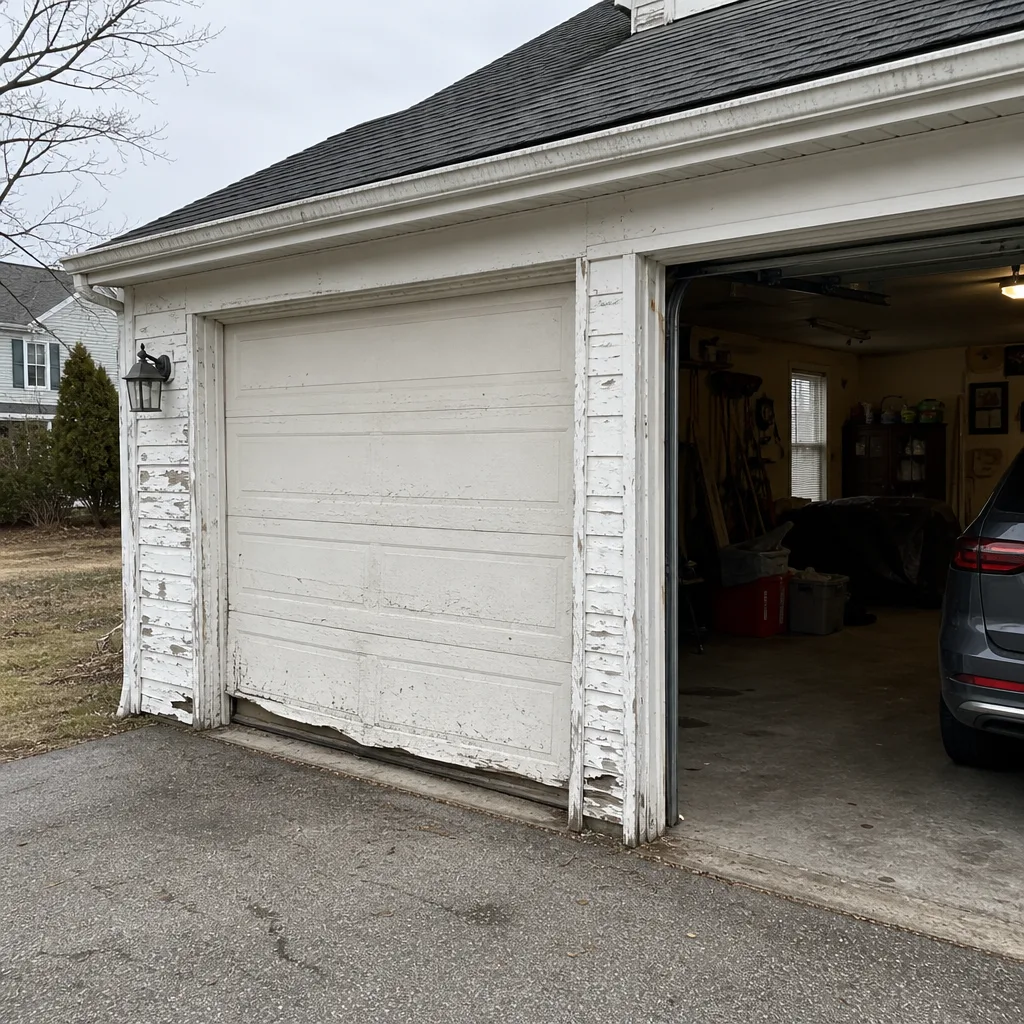 Before
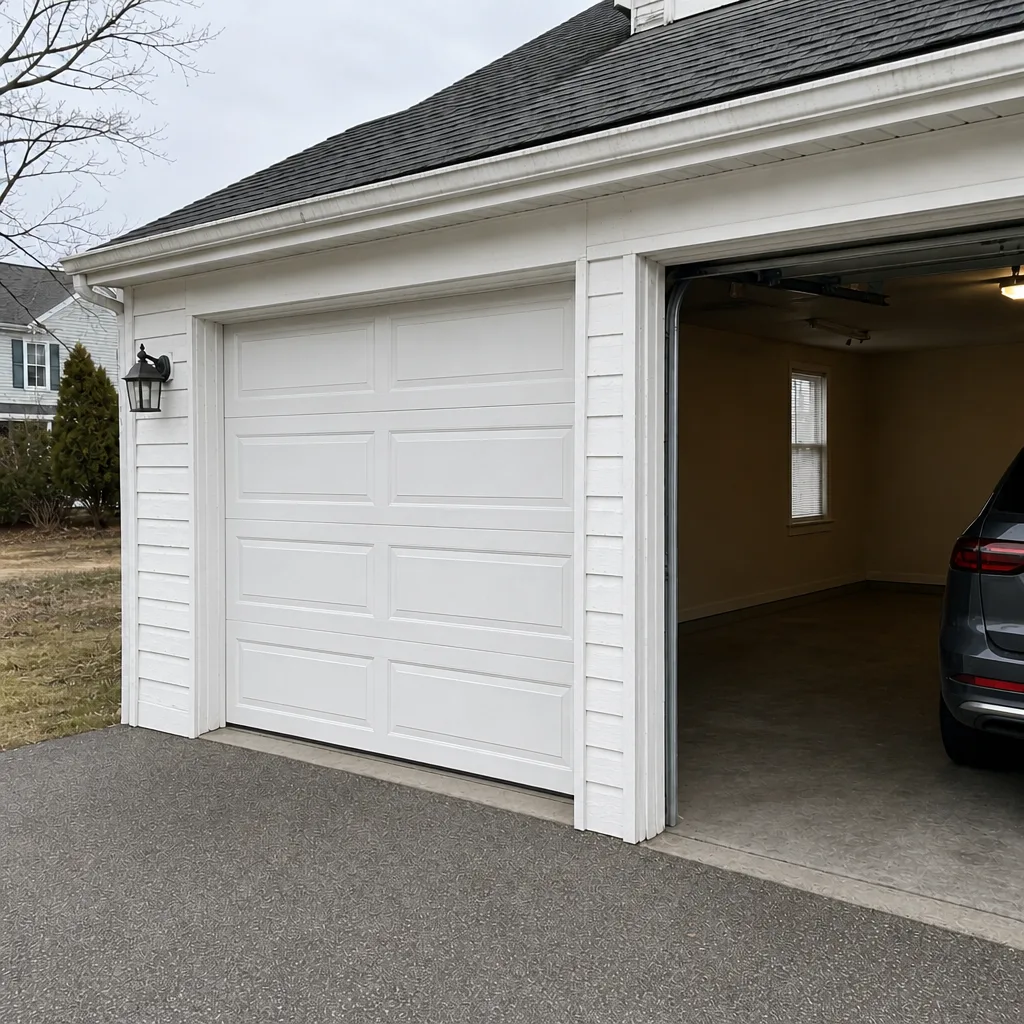 After
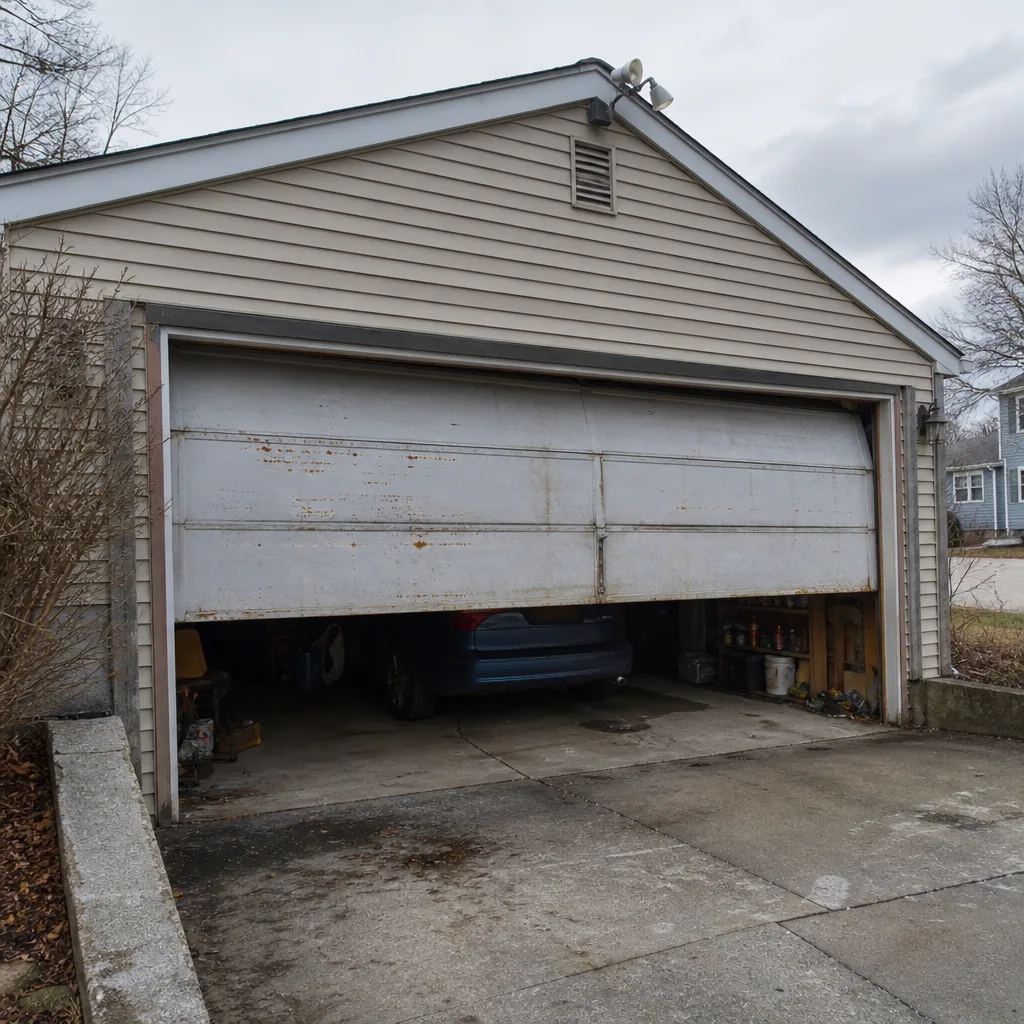 Before
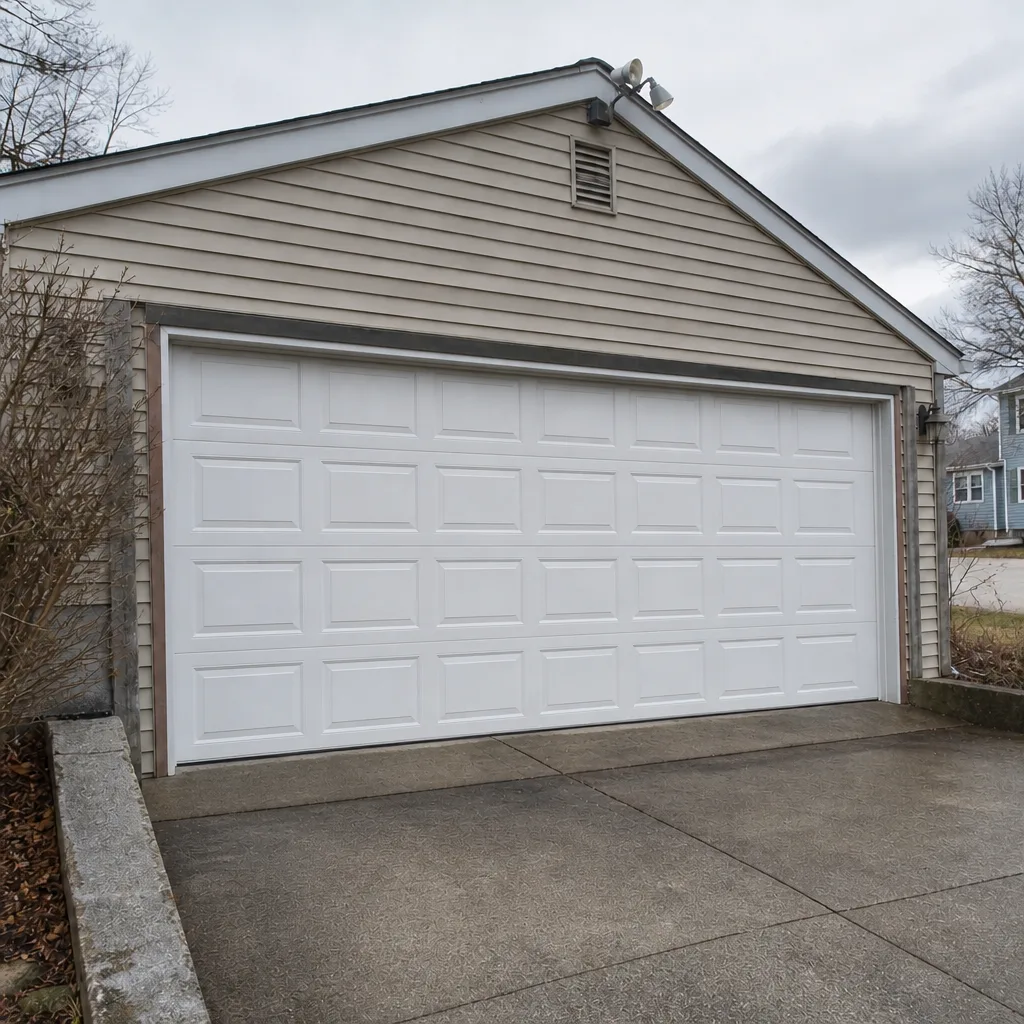 After
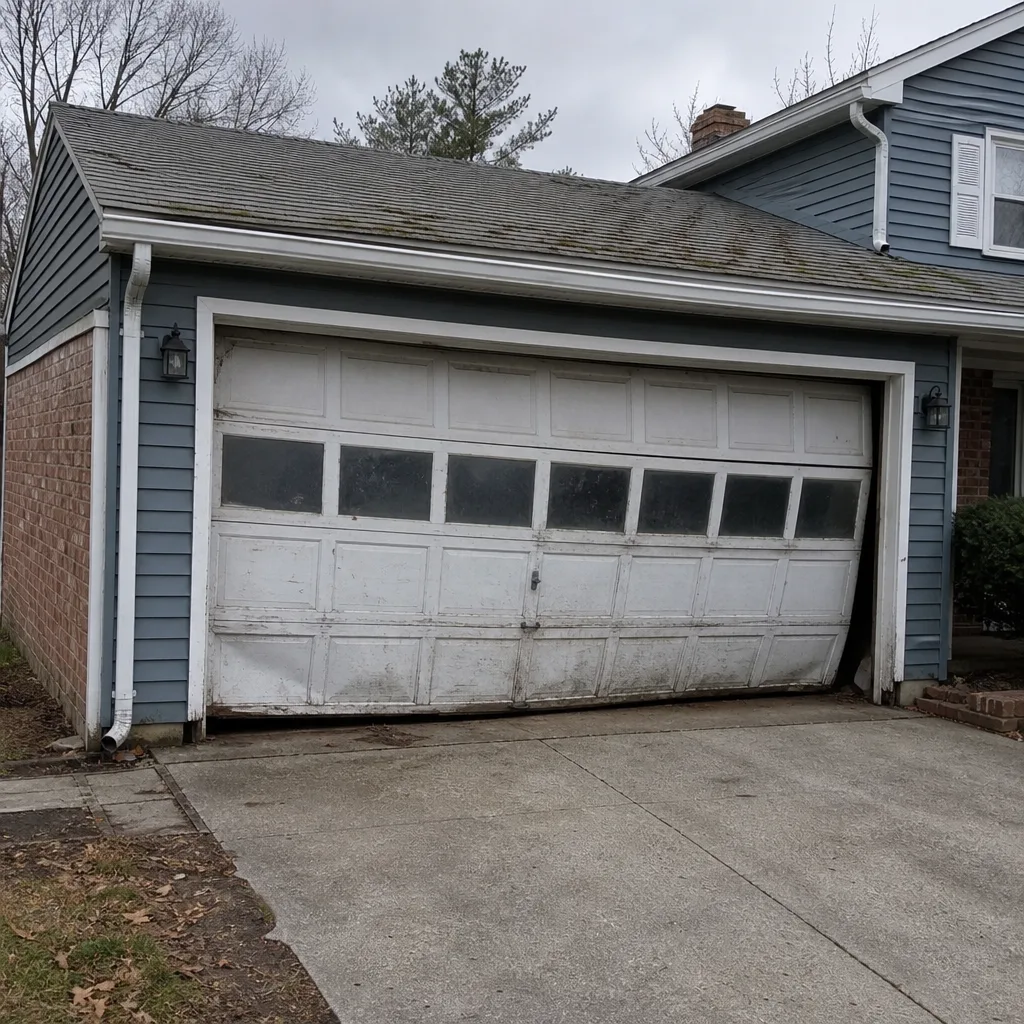 Before
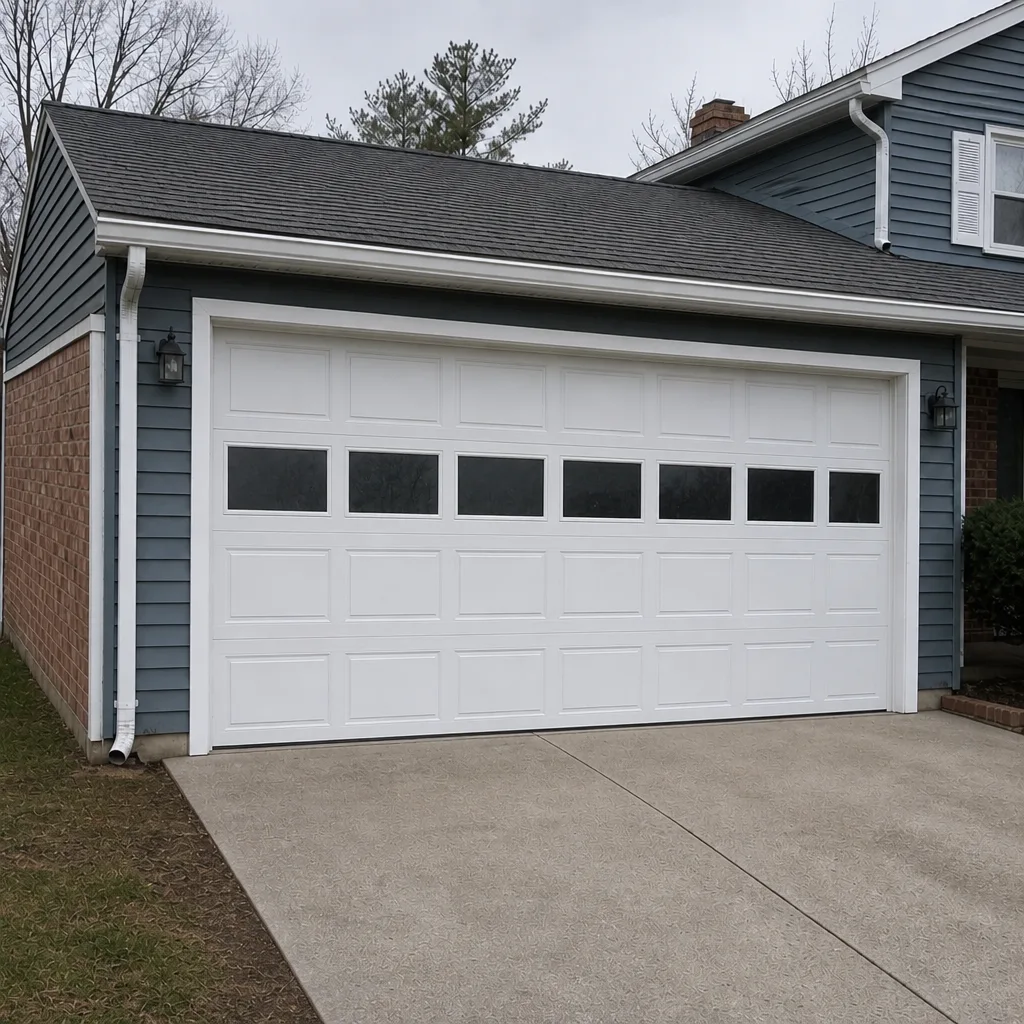 After
Frequently Asked Questions
Check three things: brand certification, a certificate of insurance, and a written estimate that names the exact parts and the total price. New Hampshire doesn’t license garage door contractors, so there’s no state lookup to run. The certification and insurance documents are the real credentials, and the written estimate is the proof that the price is real. Call (888) 459-1302 for a free estimate – we’ll walk you through all three.
No. New Hampshire does not require a specialty license for garage door installation or repair. That means vetting is on you, and the questions that matter are about brand certification, general liability insurance, workers’ compensation if the company has employees, and business registration with the Secretary of State. Ask for the insurance certificate before work starts, and confirm the business entity online.
A written estimate should include the contractor’s name and address, the brand and model of your door and opener, line-item parts and labor with the specific parts named, a total price stated as a total, and a clear statement of what’s excluded. The estimate should be the price you pay for the scope described. If the total is a range or the parts are described vaguely, ask for a revised estimate before you sign.
No. Torsion springs and the cables attached to them are under extreme tension, and releasing that tension incorrectly can cause serious injury or worse. We don’t recommend any homeowner attempt a spring or cable repair, and we don’t publish step-by-step instructions for one. Call a trained technician. Same goes for track realignment and any repair involving the counterbalance system.
Brand certification means the manufacturer has trained and authorized the contractor on that specific equipment. A LiftMaster opener and a Genie opener have different diagnostics, and a Clopay door and a Wayne Dalton door have different panel and hinge systems. A certified contractor diagnoses your actual equipment; an uncertified one works from general knowledge. Ask which brands they’re certified on and expect a specific list.
Call (888) 459-1302. We answer 24/7, and we dispatch crews from 7am to 7pm, Sunday through Friday. We’re closed Saturday. A stuck-open door is a security problem, so we treat it as a priority – tell us on the call what the door is doing and whether the opener is running. If the call comes outside dispatch hours, we’ll book you into the next opening.
The Bottom Line
Hiring a garage door contractor in Manchester comes down to three checks that most homeowners skip: brand certification, an insurance certificate you’ve actually read, and a written estimate that names the parts and states the total. New Hampshire doesn’t license this trade, so those three documents are the vetting process. Ask the five questions before you get a quote, watch for the red flags specific to this trade – quoting without measuring, replacement pitches before diagnosis, no written estimate – and don’t let a low phone price substitute for an on-site inspection. A door is a counterbalanced system under real tension. Hire someone who knows your brand, put the price in writing, and the job goes the way it should.
If you’re ready to get a real estimate from a specialist who works on your brand, call Radiant Garage Door Repair at (888) 459-1302. We answer 24/7. Fast dispatch from 7am to 7pm, Sunday through Friday. Estimates are free, the price is quoted and agreed before any work starts, and we’ll tell you whether it’s a repair or a replacement – whichever actually makes sense for your door.
Written by the team at Radiant Garage Door Repair.