
Last updated November 15, 2026
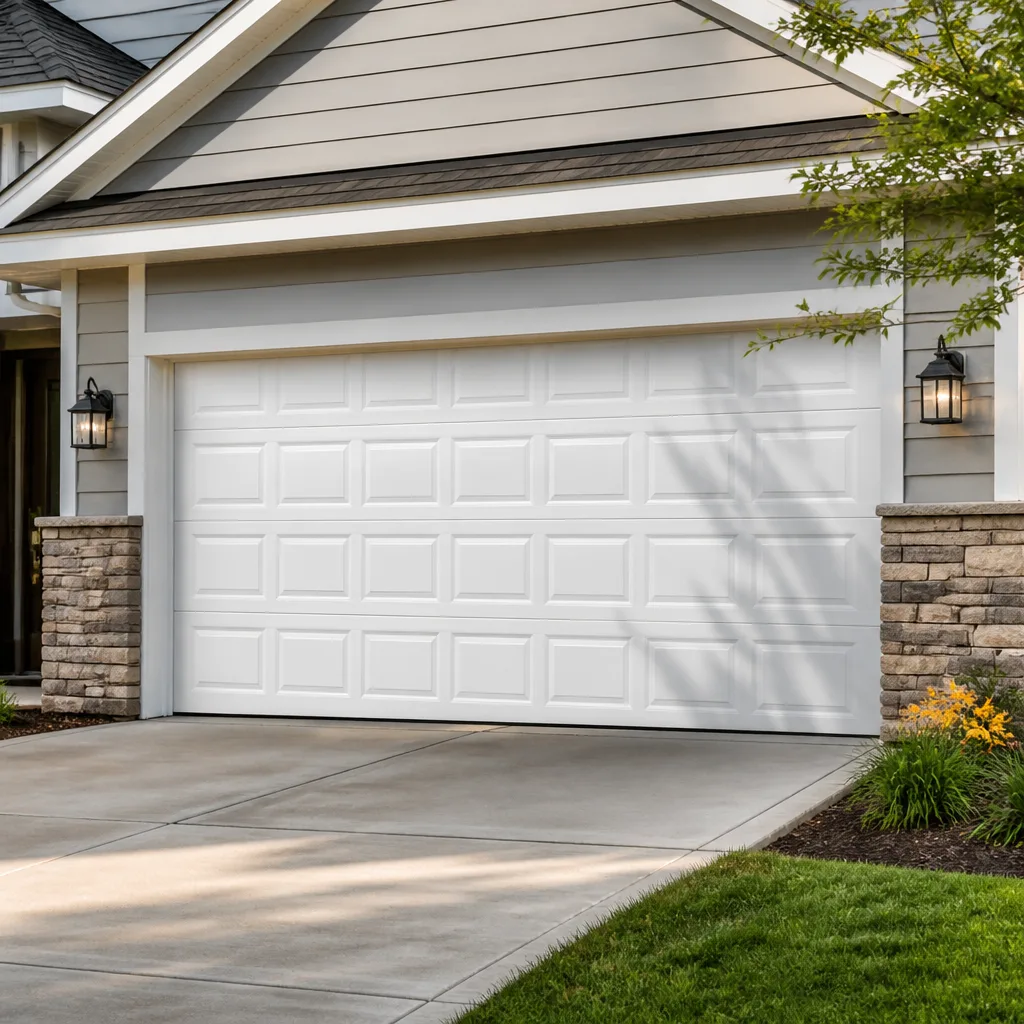 Raised-panel steel
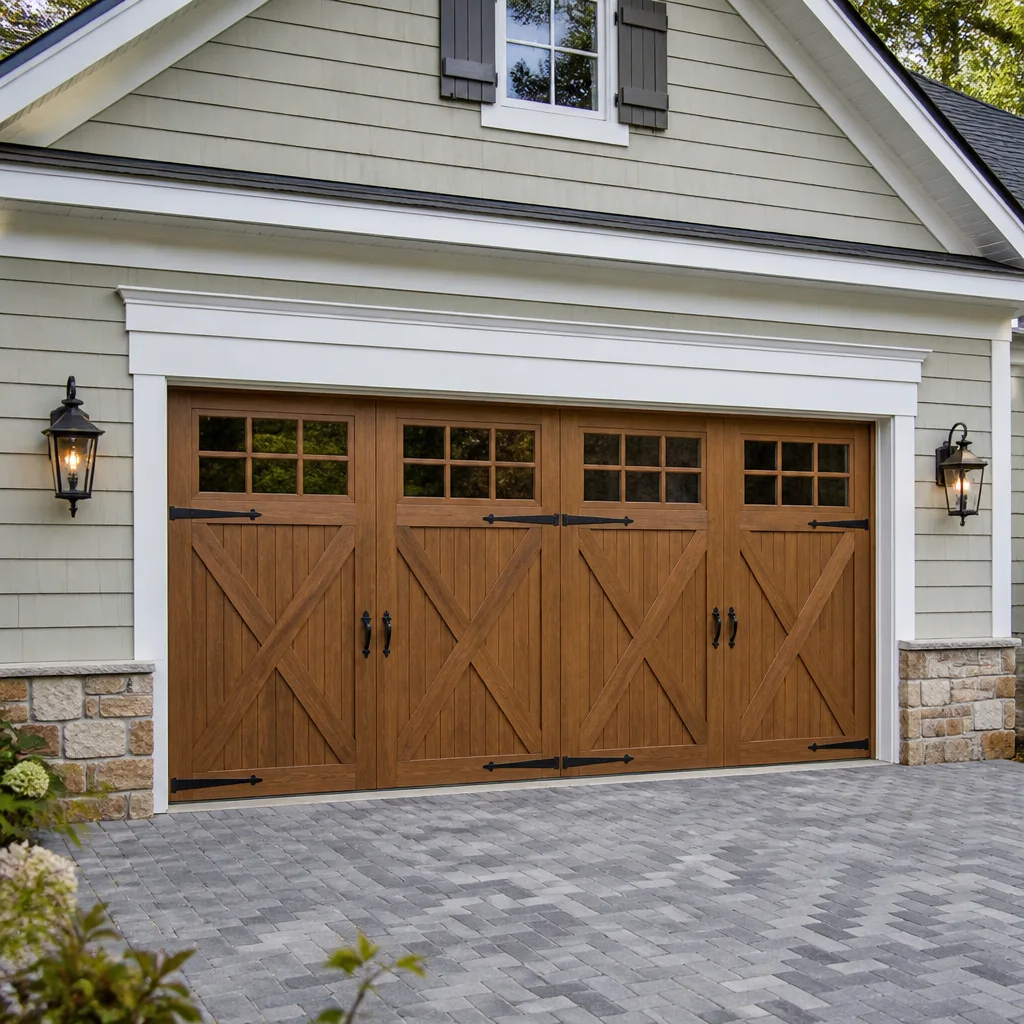 Carriage house
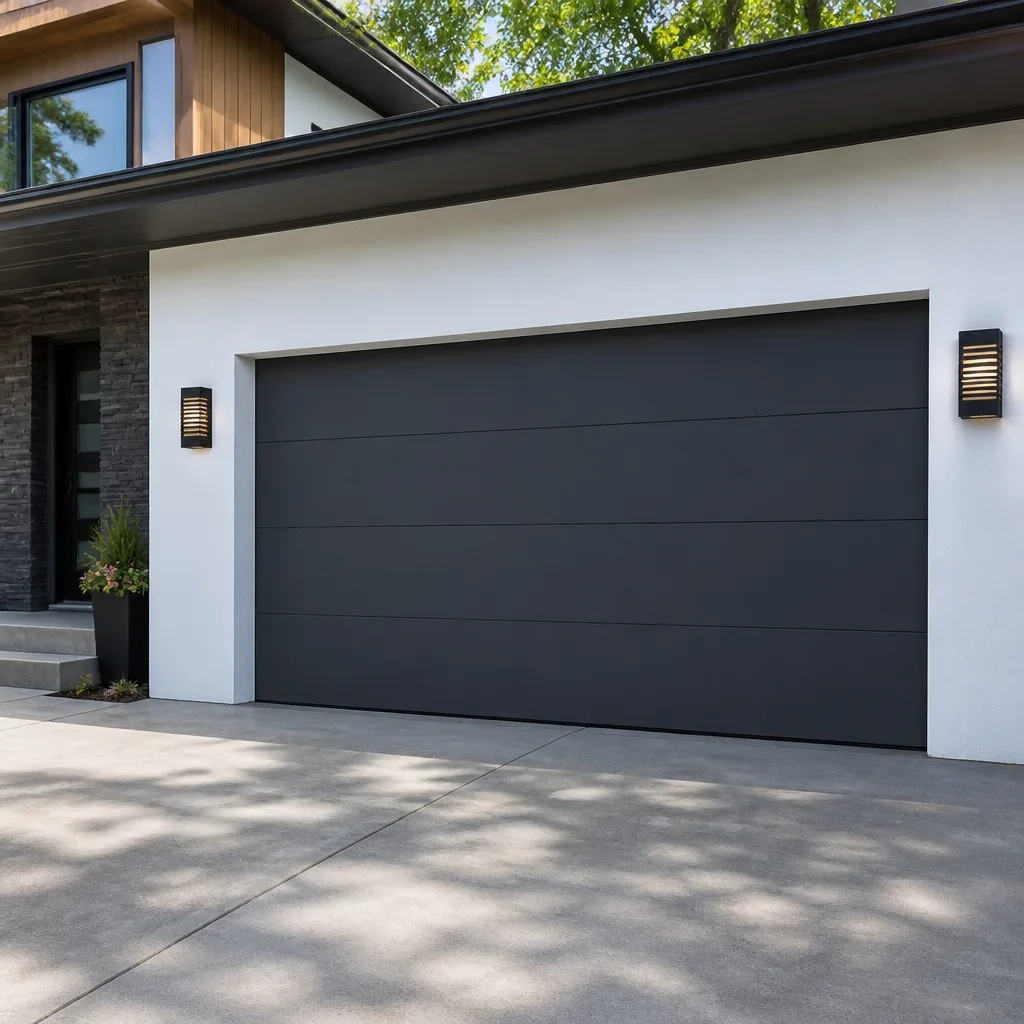 Modern flush
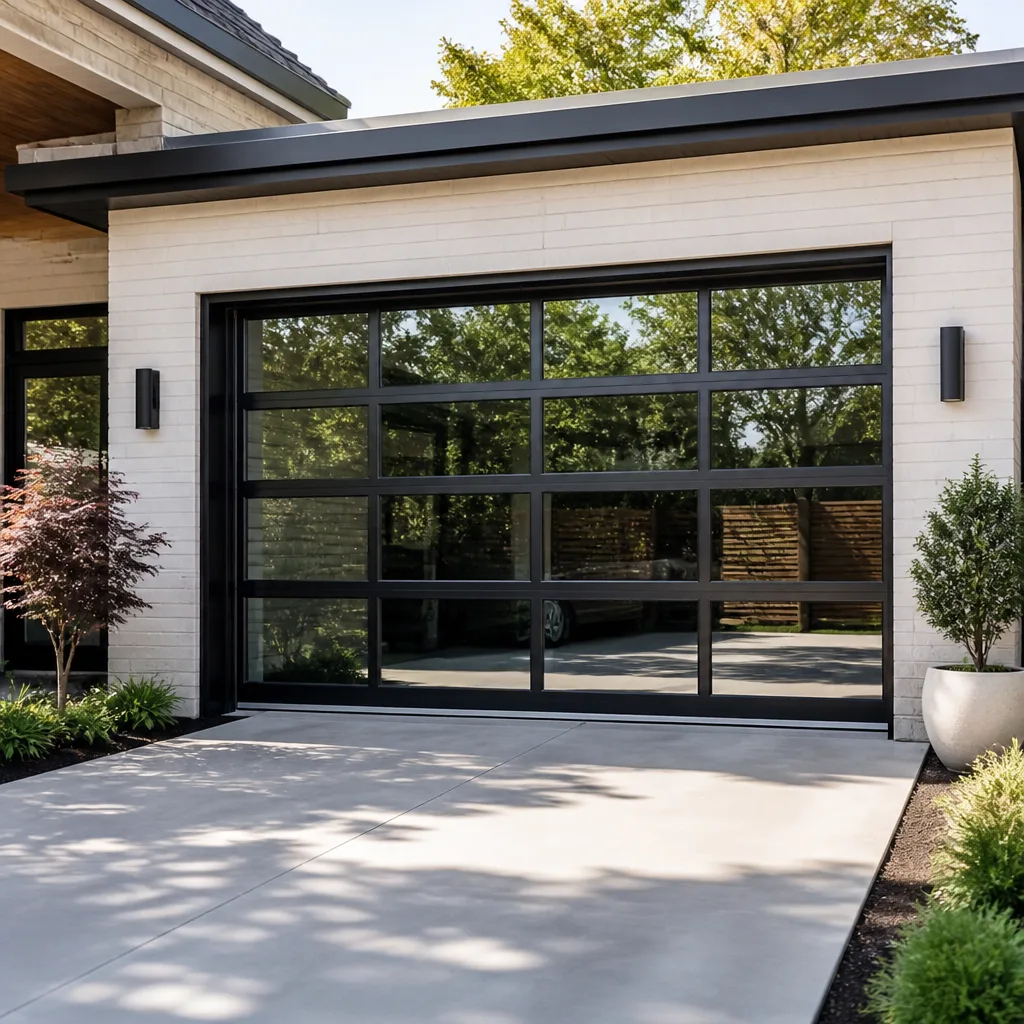 Full-view glass
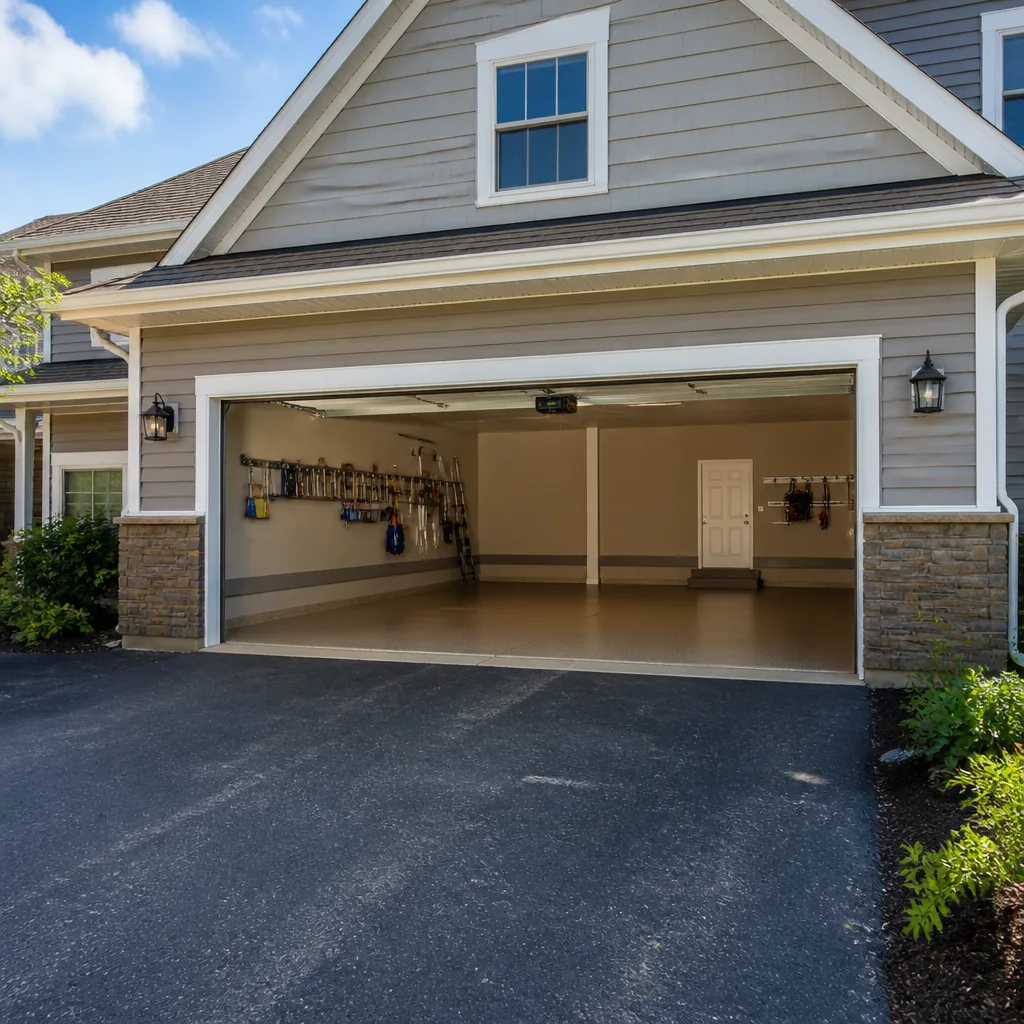 LiftMaster openers
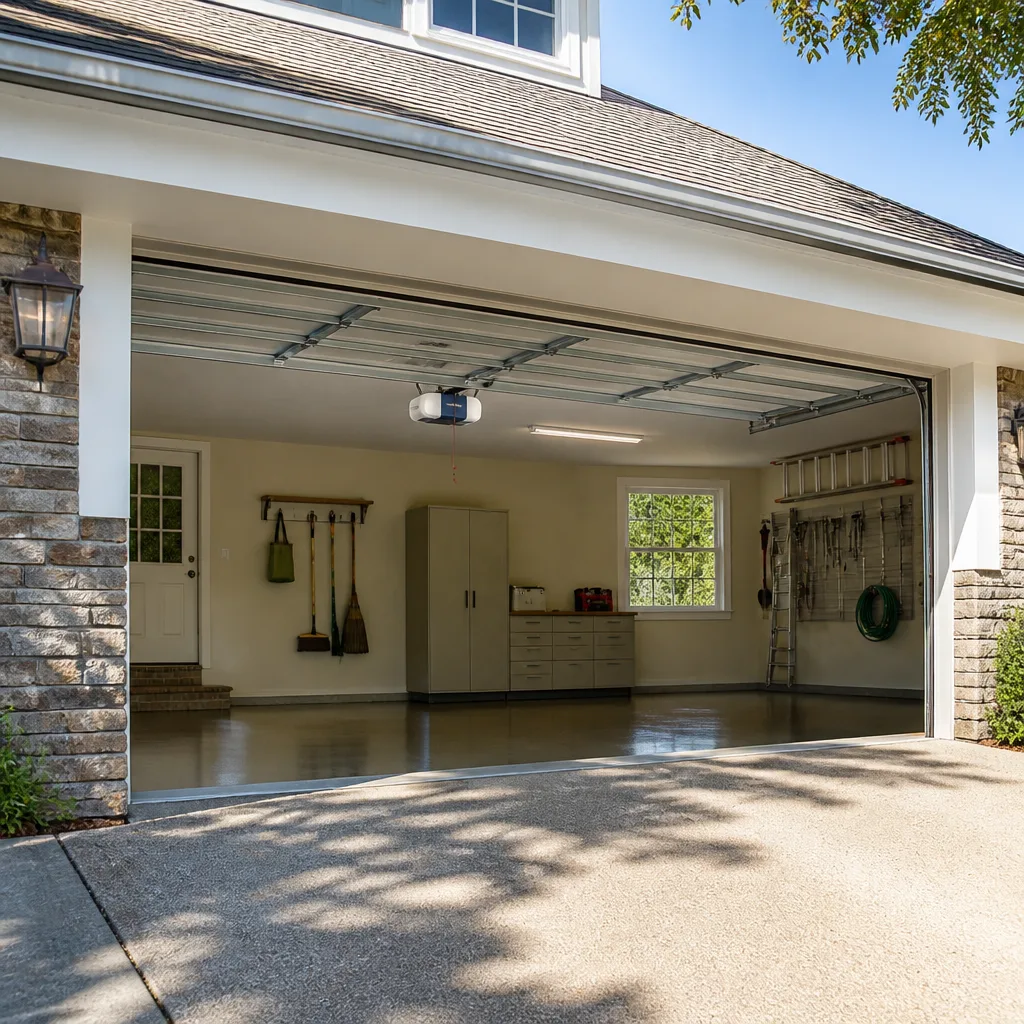 Chamberlain openers
Full 25-point door and opener safety check with every visit - springs, cables, rollers, tracks, and your LiftMaster or Chamberlain opener included
You get a price before we start. It does not change when the pro arrives.
Get your free estimateGarage Door Warning Signs: A Manchester Homeowner’s Reference Guide
A garage door that reverses before it reaches the floor isn’t broken. It’s doing exactly what it was built to do. That single distinction sits at the heart of this guide, because the difference between a safety feature working and a component failing decides whether you pick up the phone or ignore the door for another month. In our experience, homeowners tend to make one of two mistakes: they panic over a symptom that’s normal, or they overlook a symptom that genuinely matters. This reference walking through Manchester breaks warning signs into severity tiers so you know which is which.
Quick Answer
Garage door warning signs fall into three tiers: immediate safety hazards (a door off its tracks, a snapped spring, frayed cables, a door that won’t stay up), problems worth repairing within about a month (strained opener, worn rollers, uneven travel), and monitor-and-maintain items (squeaks, minor vibration, slow response). Any symptom touching springs, cables, or the door’s balance is a stop-use signal. Anything else can usually wait for a scheduled look.
Styles & brands we work with
- Raised-panel steel
- Carriage house
- Modern flush
- Full-view glass
- LiftMaster openers
- Chamberlain openers
Table of Contents
- Sorting Symptoms by Severity: The Three Tiers
- What Each Sound Actually Tells You
- Slow Door vs. Uneven Door: Two Different Problems
- The Five-Minute Visual Inspection
- Door, Opener, Springs, or Tracks? Identifying the Source
- Warning Signs Particular to Manchester Homes
- When Reversing Is Normal and When It Isn’t
- Frequently Asked Questions
Sorting Symptoms by Severity: The Three Tiers
Every warning sign lands somewhere on a spectrum, and knowing where helps you decide how urgently to act. The tiers below aren’t arbitrary; they follow how the door’s mechanical systems fail and how quickly a small problem becomes a large one.
- Tier 1 – Stop using the door now: a snapped torsion spring, a door hanging crooked or off its track, a visibly frayed or kinked cable, a door that drifts down when you lift it partway, or anything that looks or sounds like metal-on-metal binding. These are genuine safety concerns. Don’t try to operate the door, and don’t try to fix a spring or cable yourself – call a trained professional.
- Tier 2 – Repair within about thirty days: an opener that strains or labors, worn or split rollers, hinges that are loose, an unbalanced door that’s still operating, or an opener running on an old battery backup. These are degrading, not dangerous yet, and a scheduled repair keeps them from sliding into Tier 1.
- Tier 3 – Monitor and maintain: a squeak at a hinge, slight vibration in the tracks, a remote that responds a beat late, or a door that just sounds a little louder than it used to. These are the cheap-to-catch, expensive-to-ignore items.
One point matters here. Tier 2 and Tier 3 problems share symptoms more often than people expect. A grinding sound from a worn roller and a grinding sound from a worn bearing both start as a noise you barely notice. The sections below help you tell them apart instead of guessing. If a Manchester homeowner isn’t sure which tier they’re in, a professional look sorts it out quickly. Radiant Garage Door Repair offers free estimates in Manchester.
What Each Sound Actually Tells You
Garage door noises are not interchangeable. A grinding door and a squeaking door have almost nothing in common mechanically, and treating them the same way wastes time and money. Here’s what the main sounds point toward.
- Grinding: Usually metal rubbing against metal – worn or seized rollers, a dry bearing, or a torsion spring that’s beginning to bind. Grinding worsens fast and rarely fixes itself. If it starts suddenly, treat it as a Tier 2 problem or higher.
- Squeaking: Often the least serious. Hinges and rollers that have lost their lubrication squeak as a door travels. It’s a maintenance item, but persistent squeaking at a specific spot can indicate a hinge pulling loose.
- Popping: A single loud pop usually means a torsion spring has snapped. On older doors, popping can also come from a cable that’s jumped its drum. Either way, stop operating the door – this is Tier 1.
- Rattling: Loose hardware – hinges, bolts, or track brackets – vibrating as the door moves. It’s usually a tightening job, but ignore it long enough and the vibration works bolts loose and wears the surrounding metal.
- A dull thud or slam: The opener is reaching the floor with too much force, or a travel limit is out of adjustment. This puts strain on the springs and the door itself and is worth addressing quickly.
Where the noise is coming from matters as much as what it sounds like. A grinding sound in the tracks points to rollers. A grinding sound from the center above the door points toward the torsion system. When we work on a door, the first thing a technician does is isolate the source by listening and watching the door travel, because repairing the wrong part wastes everyone’s afternoon.
Slow Door vs. Uneven Door: Two Different Problems
These two symptoms look related to a homeowner watching a door travel, but they almost always trace to different systems. Treating a slow door as a balance problem, or an uneven door as an opener problem, sends you down the wrong repair path.
A slow door is nearly always an opener issue. The motor is losing output, the drive system is worn, or the opener’s logic board is limiting travel. It’s a mechanical or electronic fault in the opener itself, and it’s one reason opener repair deserves its own attention rather than being folded into general handyman work. Radiant Garage Door Repair handles garage door opener repair as a dedicated service, so a slow travel motor gets diagnosed for what it is.
An uneven door – one side lifting before the other, or the door binding at one corner – is a balance or track problem, not an opener problem. The causes cluster around a few culprits: a stretched or snapped spring on one side, a cable that’s come loose, a bent track, or worn rollers on one edge. If the door is uneven and the opener is still trying to force it, the opener will wear out prematurely trying to compensate.
Here’s the short test. Watch the door from the side as it travels. If both sides move together but the whole door is slow, it’s the opener. If one side leads, or the door shudders and jerks, it’s the door’s balance or the tracks. Knowing which you have tells you which repair to expect before anyone arrives – and saves you from paying for an opener service when the real fault is a worn spring.
The Five-Minute Visual Inspection
Most developing problems leave visible evidence long before the door fails. A five-minute walk-around, done monthly, catches the majority of what’s developing. You’re looking, not touching the danger points. Never adjust or repair springs or cables yourself – those parts store dangerous tension and belong to a trained technician.
- Look at the springs. On a torsion spring above the door, look for a visible gap of about two inches in the coil. On extension springs beside the tracks, look for stretched or broken sections. A gap means a broken spring. Stop there and call a professional.
- Check the cables. Look for fraying, kinks, or corrosion along the cable running beside the tracks. Don’t touch them if they’re frayed; a snapped steel cable is a serious injury risk.
- Run the door and watch the tracks. Stand back. Both sides of the door should move in unison. If one side lags, or the door comes out of the vertical track at a corner, it’s a balance or track issue.
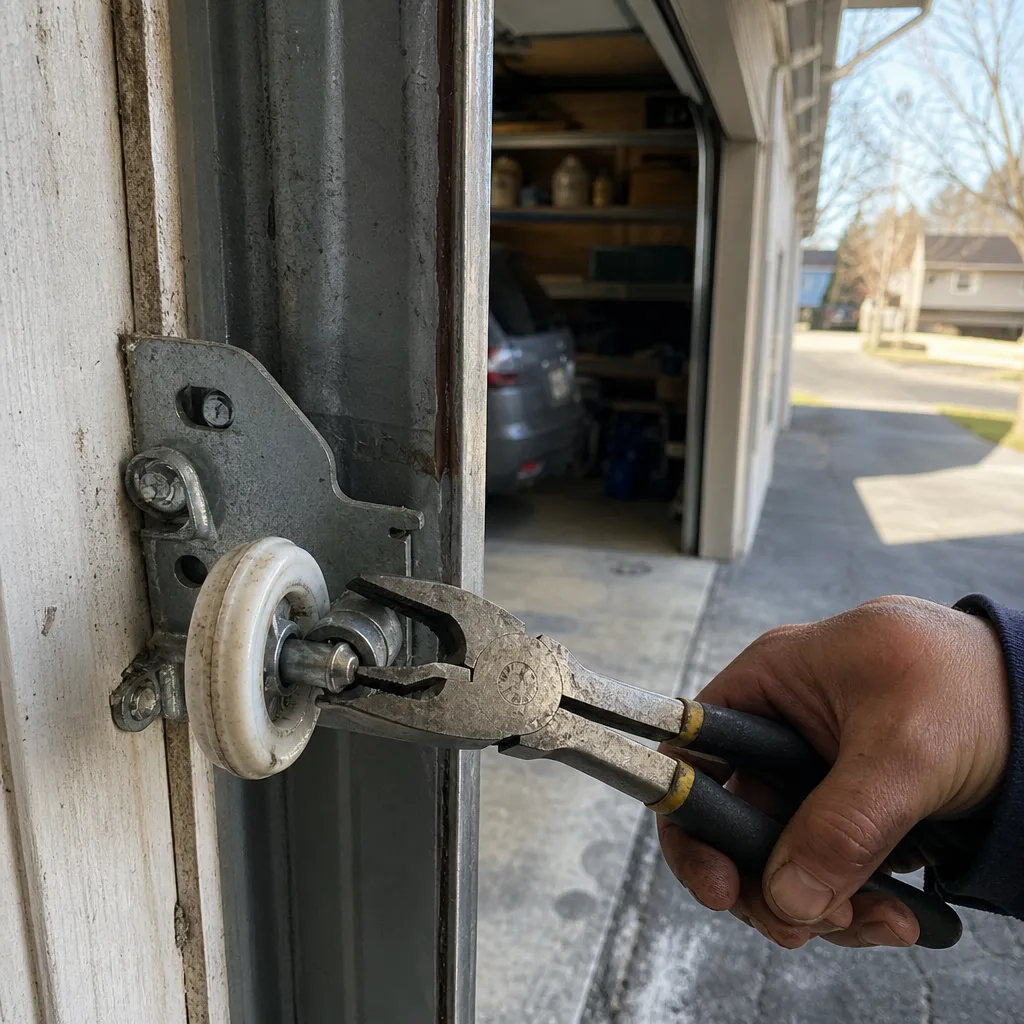
- Look at the rollers. Worn rollers look flat-spotted, cracked, or loose in their brackets. Steel rollers show wear differently than nylon ones, but both should be round and firm.
- Test the balance. With the opener disengaged (usually a pull cord), lift the door about halfway and let go. A balanced door holds its position. A door that drifts down or up is out of balance – a spring or cable issue. Re-engage the opener before testing the safety reverse.
- Check the safety reverse. Place a small object, like a roll of paper towels, in the door’s path. The door should reverse on contact. If it doesn’t, stop using the door.
This inspection reveals most of what’s developing before it becomes a failure. When a Manchester homeowner calls us after running it, they can describe exactly what they saw, which speeds up the diagnosis.
Door, Opener, Springs, or Tracks? Identifying the Source
Four systems make a garage door work, and each fails in its own way. Naming the system is the single most useful thing you can do before you call, because the fix for one is completely different from the fix for another.
- The door itself: Panels, hinges, and the frame. Symptoms include a dented or cracked panel, a sagging section, loose hinges, or a door that looks like it’s leaning. Panels can often be replaced rather than the whole door – worth asking before assuming you need new installation. We install Amarr and Wayne Dalton doors, among others, so replacement choices are usually broader than homeowners expect.
- The opener: The motor and its controls. Symptoms are slow travel, failure to respond to the remote, an opener that reverses on its own, or a loud strain when it starts. This calls for opener-specific diagnosis, not a general repair.
- The springs: The counterweight that makes the door light enough to lift. A broken spring shows itself as a door that won’t lift, a loud pop, or a visible gap in the coil. Spring work is the highest-risk part of the trade, so it belongs to a trained technician every time.
- The tracks: The rails the door rides in. A bent or misaligned track shows up as a door that binds, wobbles, or comes out of the track at one corner. Tracks can usually be straightened or replaced without touching the opener.
Most of the “which system” confusion comes from symptoms that cross two systems at once. A door that won’t close might be an opener fault, a safety sensor knocked out of alignment, or a broken spring. A five-minute inspection of the four systems above usually isolates it before anyone arrives. If it doesn’t, a professional diagnosis does. Garage door repair is a diagnosis business as much as a repair business; getting the source right is the whole job.
Warning Signs Particular to Manchester Homes
Manchester’s climate puts garage doors through a specific cycle of stress that shapes which warning signs show up and when. Cold winters and freeze-thaw cycles drive much of what we see on local doors, and knowing that helps you interpret the symptoms you’re seeing on your own.
The first thing to know is that the cold months are harder on the moving parts. Metal contracts in the cold, and lubricants thicken. Doors that ran quietly all summer often develop a squeak or a slow response on the first genuinely cold morning. That’s not necessarily a failure – many doors settle into a slightly louder, slightly slower rhythm during a cold snap and return to normal in warmer weather. But a persistent grind or a door that won’t reverse reliably in the cold is worth checking, because the cold only amplifies a fault that was already there.
Freeze-thaw cycles matter because moisture works its way into hinges, brackets, and door hardware and then freezes and thaws repeatedly. Over a few seasons, that cycle can loosen bolts and encourage corrosion. A quick check each fall catches the hardware that’s working loose before the ground freezes.
Manchester’s older housing stock matters too. A lot of homes around the city have doors and openers that have been in place for a long time, and older equipment is more likely to show advanced wear on rollers, cables, and springs. If you’re in a neighborhood with older homes, the five-minute inspection becomes more valuable, not less, because the parts have more years on them.
And there’s the question of what to do about an aging door. When the panels are tired and the hardware is worn, sometimes the honest answer is that replacement makes more sense than continuing to patch. We install doors from Clopay, Raynor, and several other major brands, and we’ll tell you which option actually makes sense for your door – repair or replace. For homeowners anywhere in Manchester, that’s the kind of straight answer worth asking for.
When Reversing Is Normal and When It Isn’t
A garage door that reverses before hitting the floor is often functioning correctly. Most openers built since the early 1990s include a safety reverse system required by federal standard. When the door meets an obstruction, or the sensors detect a person or object in its path, it stops and reverses. A door that reverses when something is genuinely in the way is doing its job.
Reversing becomes a warning sign when it happens on an empty path. If the door starts back up with nothing near the sensors, or reverses partway through travel for no apparent reason, something else is wrong. The usual causes are:
- A misaligned or dirty safety sensor (photoelectric eye) near the floor – the sensor can be knocked askew by a broom, a bag of groceries, or snow piled against the wall.
- A travel limit that’s out of adjustment, telling the door the floor is closer than it actually is.
- A failing opener logic board, which can cause unpredictable reverse behavior in either direction.
- A door that’s binding in its tracks; the opener senses the resistance as an obstruction and reverses.
The quick check: clear anything near the sensor, wipe it clean, and see if the reversing stops. If it persists with an empty path, the opener or the door’s balance needs a look. This distinction between a safety feature working and a reversing fault is where a lot of unnecessary panic comes from – and a lot of unnecessary service calls. When the door reverses for no reason, it’s worth a look; when it reverses because something’s in the way, it’s working.
Common Mistakes to Avoid
- Ignoring a broken spring and forcing the door. A door with a broken spring might lift partway under manual pressure, which tempts people to use it. Forcing it strains the opener and the tracks and puts the door and anyone near it at risk. Stop using the door and call a professional.
- Treating a grinding noise as a squeak. Squeaks and grinds come from different places and call for different repairs. Greasing a grinding roller or bearing can quiet it briefly while the underlying wear gets worse. When a new noise starts, name it before you act.
- Testing the safety reverse with a person, pet, or child in the path. Use an object like a broom handle or a roll of paper towels. Never test the reverse function with anything that could be hurt if the door fails to stop.
- Assuming a slow door means the door is broken. A slow travel issue almost always lives in the opener, and replacing panels or hinges won’t fix it. Diagnose the opener before paying for door work.
- Skipping the fall inspection. Manchester’s freeze-thaw cycles work hardware loose and stiffen moving parts. A quick check each autumn catches the wear before the cold amplifies it.
- Replacing the opener when the real fault is the door’s balance. A strained opener is often compensating for a door that’s out of balance. Fixing the door balance (the springs and cables) can resolve an opener problem without touching the opener.
- Adjusting springs or cables yourself. These parts store dangerous energy, and a wrong adjustment can send them flying. This is the one part of the door where the DIY instinct should stop. Call a trained technician.
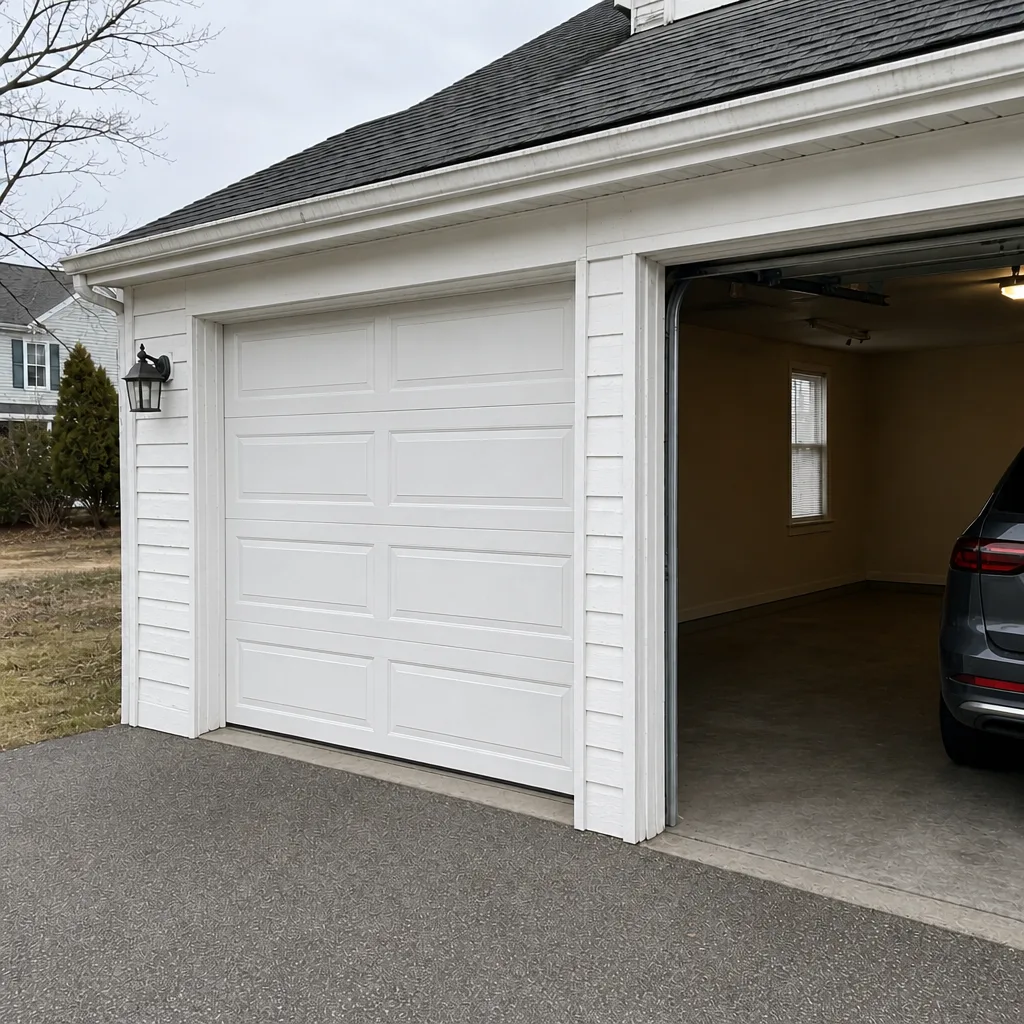
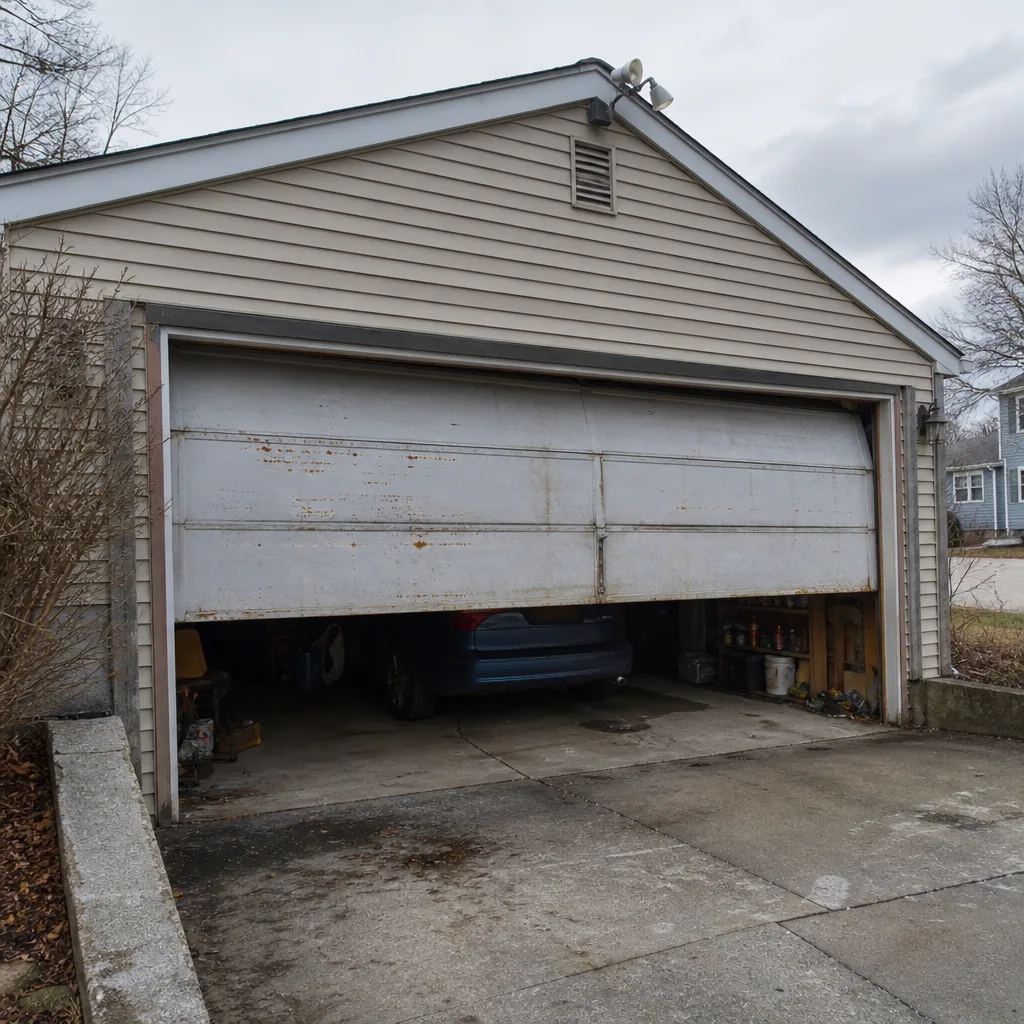
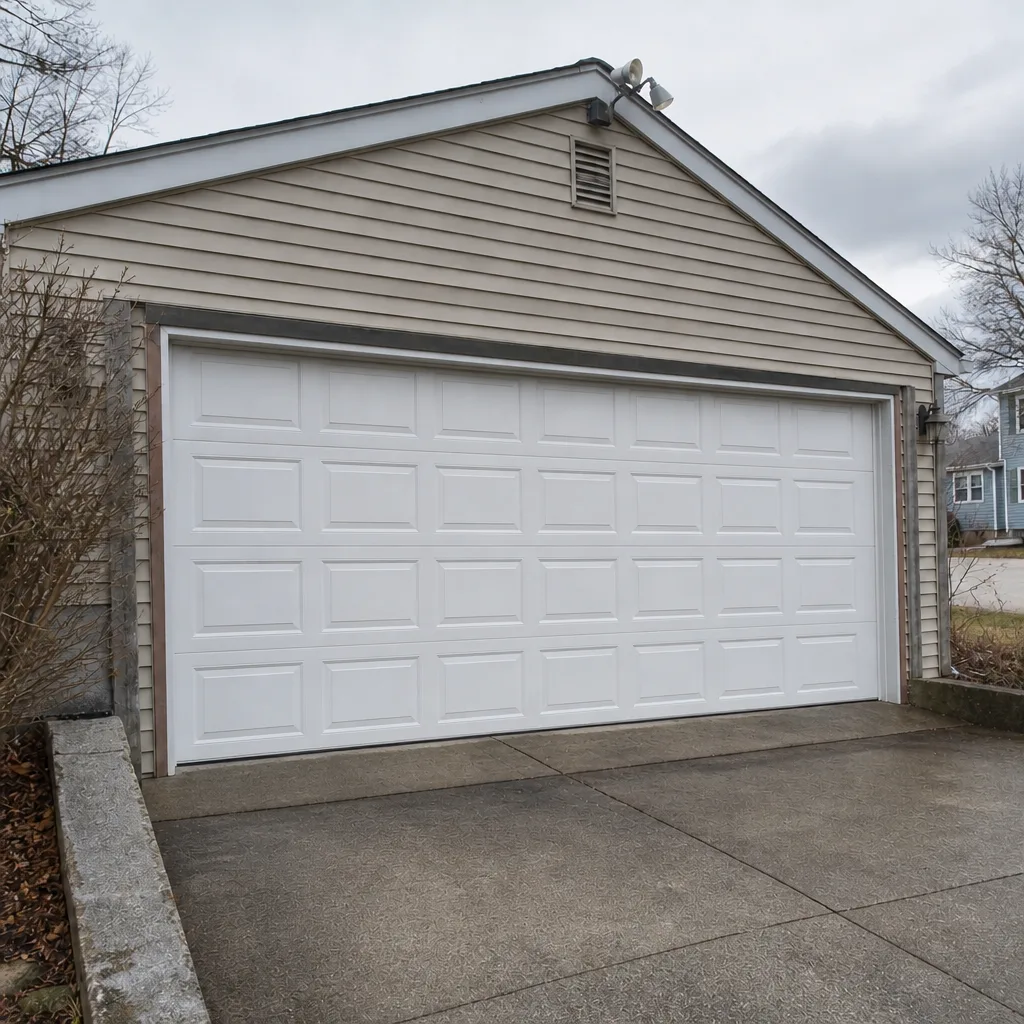
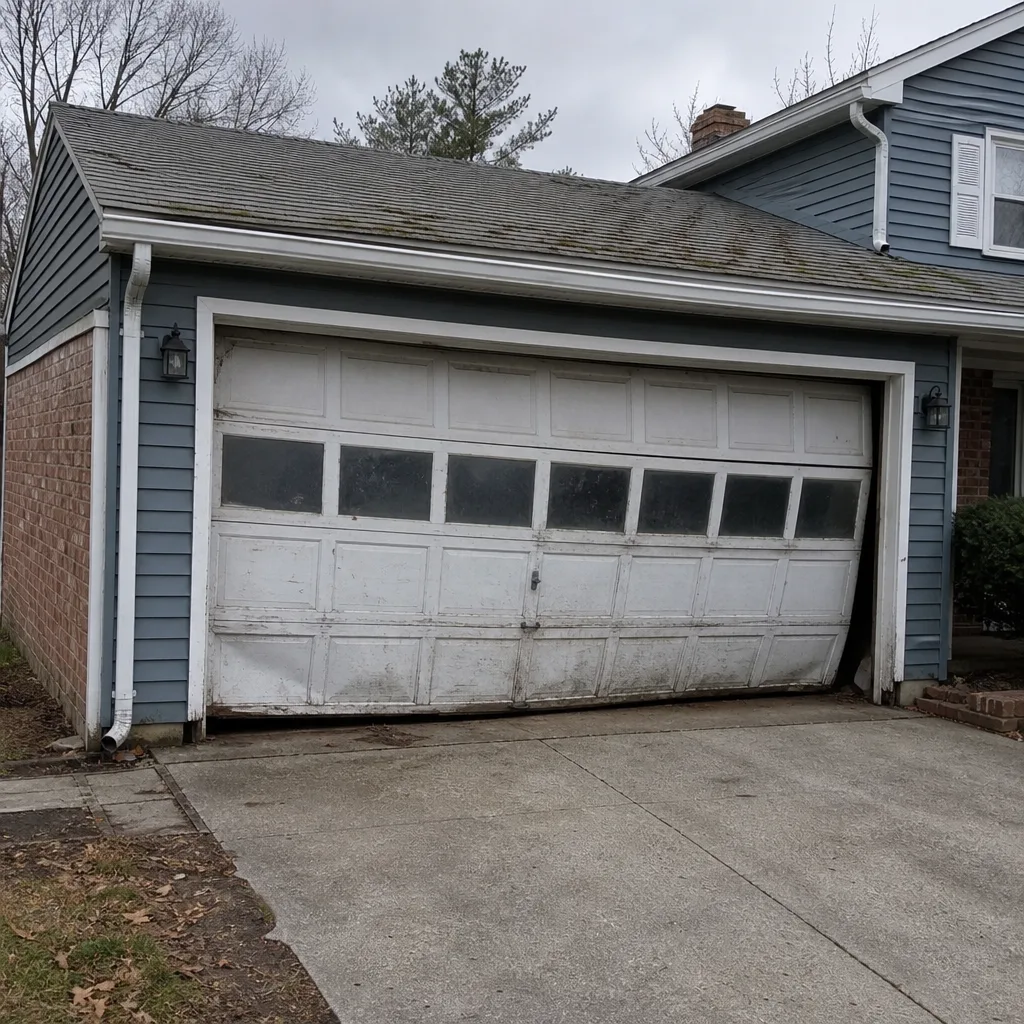
See the difference
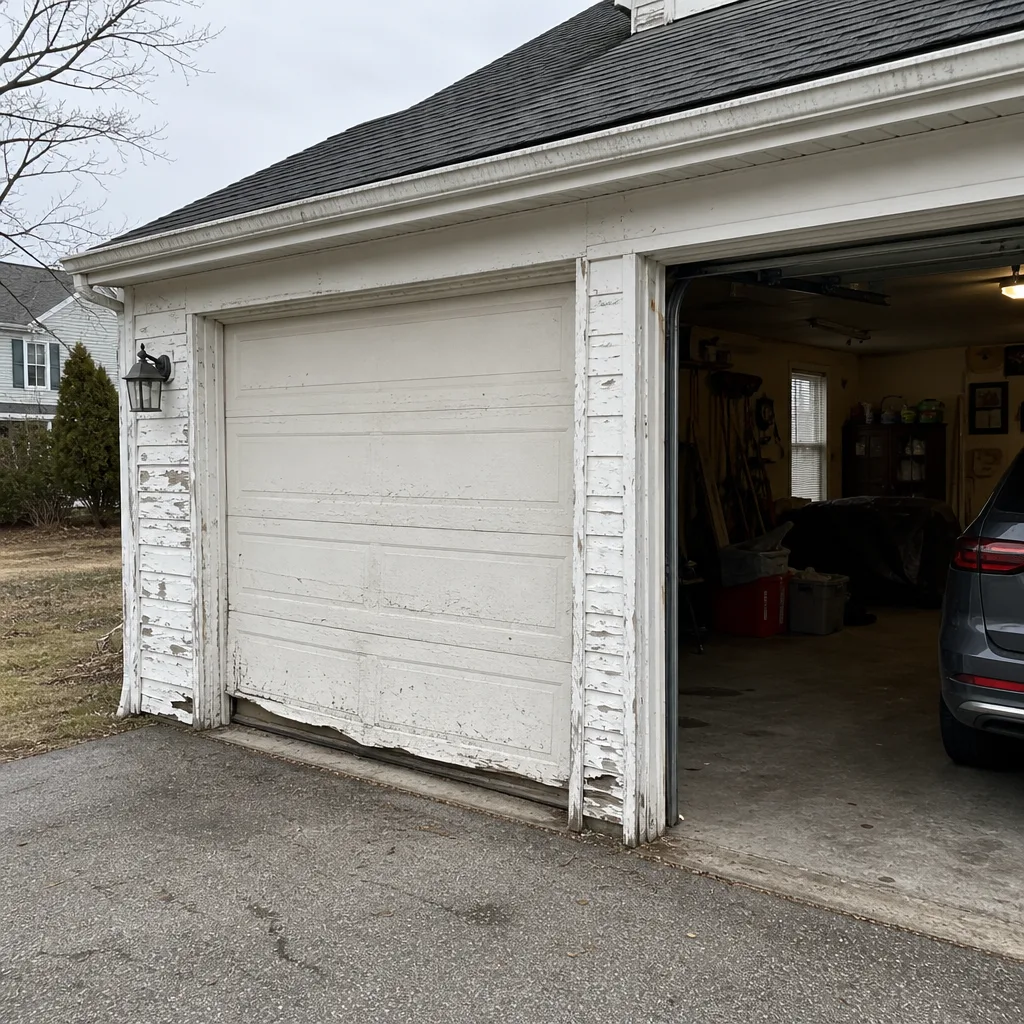 Before
 After
 Before
 After
 Before
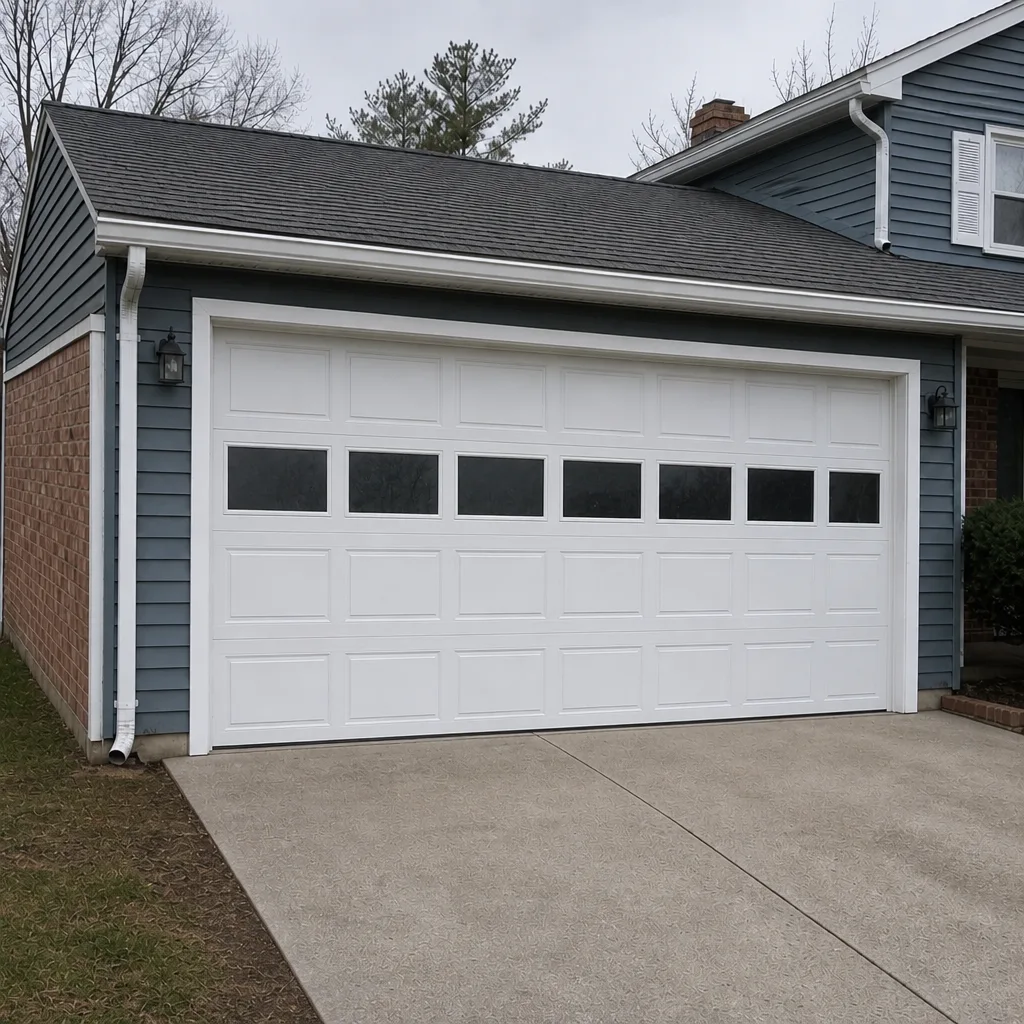 After
When to Call a Professional
Call us when any symptom falls into Tier 1: a broken spring, a door off its tracks, a frayed cable, a door that won’t stay up, or a door that reverses on an empty path. Those are safety matters and shouldn’t wait. Call when you’ve run the five-minute inspection and can’t tell whether a noise is a hinge or a bearing. Call when the door has started doing something it’s never done before and you’d rather have it diagnosed than guess. And call when you’re weighing whether to repair or replace, because that’s a judgment worth getting from someone who works on your brand every day.
Radiant Garage Door Repair offers free estimates in Manchester – call (888) 459-1302. We answer 24/7. Fast dispatch from 7am to 7pm, Sunday through Friday. The written estimate sets the price and is agreed before any work starts, so there are no surprises when the work is done.
Frequently Asked Questions
If the problem touches the springs, cables, or the door’s balance – a snapped spring, a frayed cable, a door that drifts down on its own – it’s dangerous and the door should stay shut. Annoyances live in the hardware: squeaky hinges, rattly bolts, a noisy roller. The dividing line is whether the door could fall or the hardware could let go. When in doubt, don’t run the door and get a professional look.
Not always. A door that reverses when something is in its path is doing exactly what the safety reverse is built to do. It becomes a warning sign when it reverses with an empty path – usually a misaligned sensor, a travel limit that needs adjusting, or a binding door. Clear the sensor area first; if it still reverses, it needs a look.
A slow door is nearly always an opener issue – the motor losing output or the drive wearing down. An uneven door is almost always a balance or track issue, like a bad spring or a bent rail. They look similar from a distance but call for completely different repairs. Watch the door from the side: if both sides move together but slowly, it’s the opener; if one side leads or the door shudders, it’s the door.
No. Springs and cables store dangerous tension, and an adjustment gone wrong can cause serious injury. This is the one part of the door that a homeowner shouldn’t touch. Call a trained technician for any spring or cable work.
Once a month for the five-minute visual check, and again each fall before the cold sets in. Manchester’s freeze-thaw cycles loosen hardware and stiffen moving parts, so the fall check catches developing problems before winter amplifies them. Spring is a good second check after a cold season.
Most doors can be repaired – panels replaced, springs and openers serviced, tracks adjusted – without full replacement. Replacement makes more sense when the door’s structure is compromised or the hardware is uniformly worn out. We’ll tell you which makes sense rather than pushing one option. Call (888) 459-1302 for a free estimate.
The Bottom Line
Garage door warning signs exist on a spectrum, and the single most useful skill is knowing where a symptom falls. Springs, cables, and balance issues are stop-use problems. Strained openers, worn rollers, and uneven travel are fix-your-this-month problems. Squeaks and slight vibration are watch-and-maintain problems. The sounds a door makes each point to a different system, and naming the source before you call saves a lot of wasted repair. Run the five-minute inspection, respect the safety line around springs and cables, and call when something doesn’t add up. That’s how a Manchester homeowner keeps a door working the way it should, without either panicking over nothing or missing something that mattered.
If you’ve read this far and your door is showing a symptom in the top tiers, Radiant Garage Door Repair offers free estimates in Manchester. Call (888) 459-1302. We answer 24/7. Fast dispatch from 7am to 7pm, Sunday through Friday. We work on your brand, whether that’s LiftMaster, Chamberlain, Genie, Clopay, Amarr, Wayne Dalton, Craftsman, or Raynor, and we’ll tell you honestly whether repair or replacement makes more sense. It’s the kind of straightforward answer you should be able to count on. Radiant Garage Door Repair is here for it.
Written by the team at Radiant Garage Door Repair.