
Last updated November 15, 2026
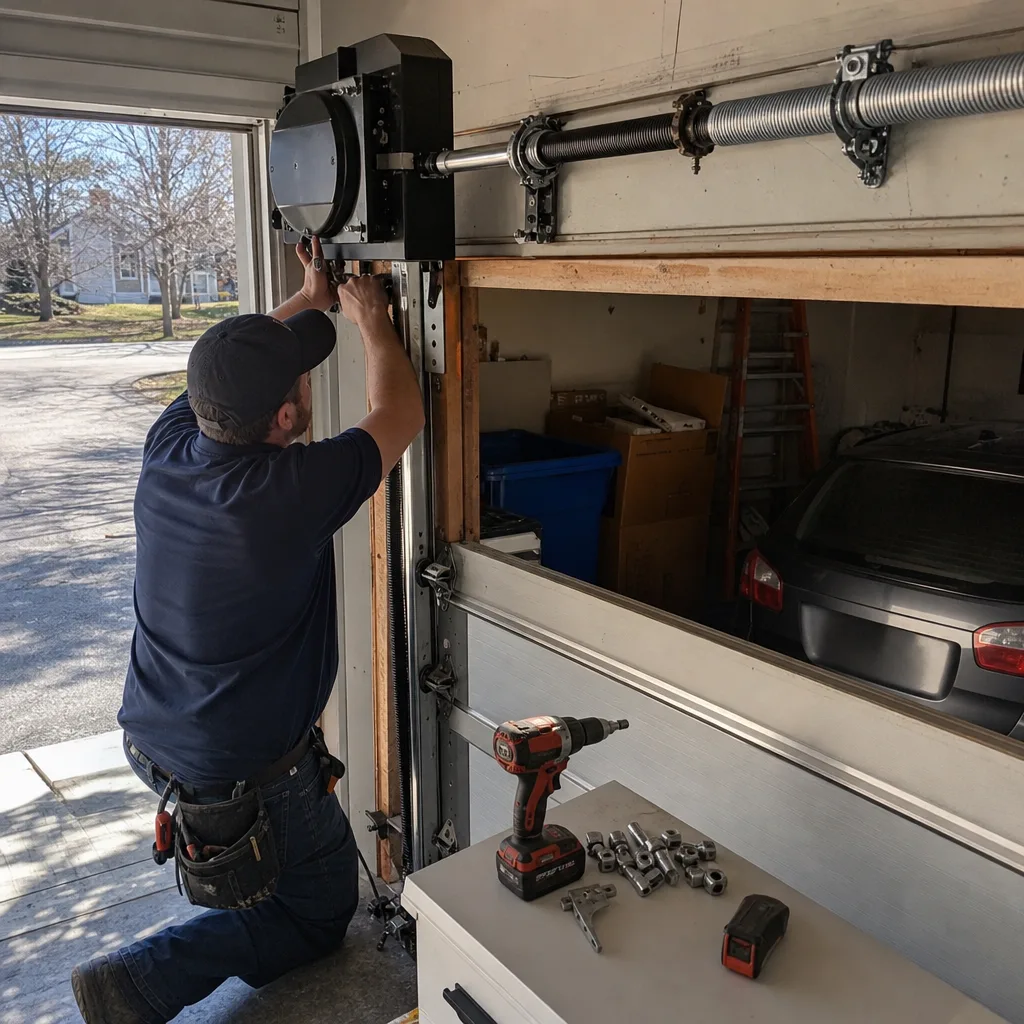
 Raised-panel steel
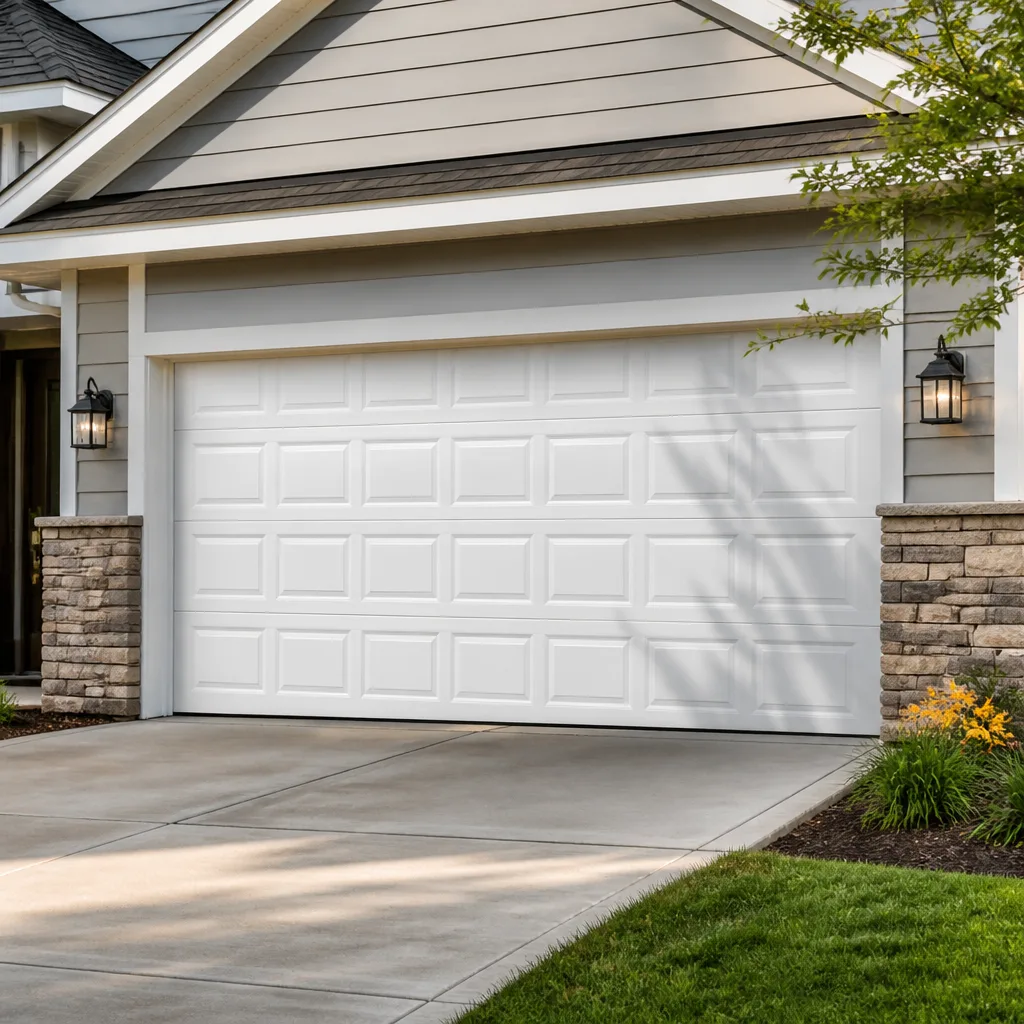
 Carriage house
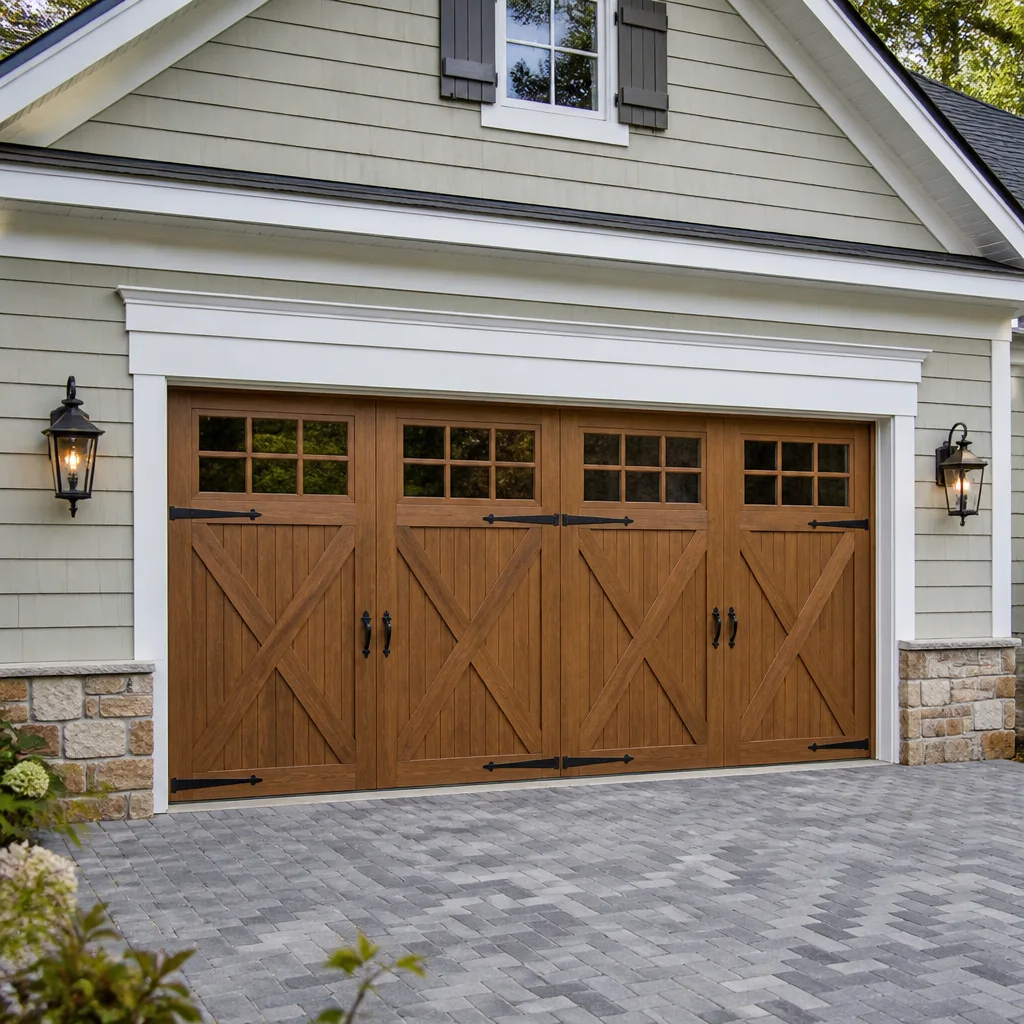
 Modern flush
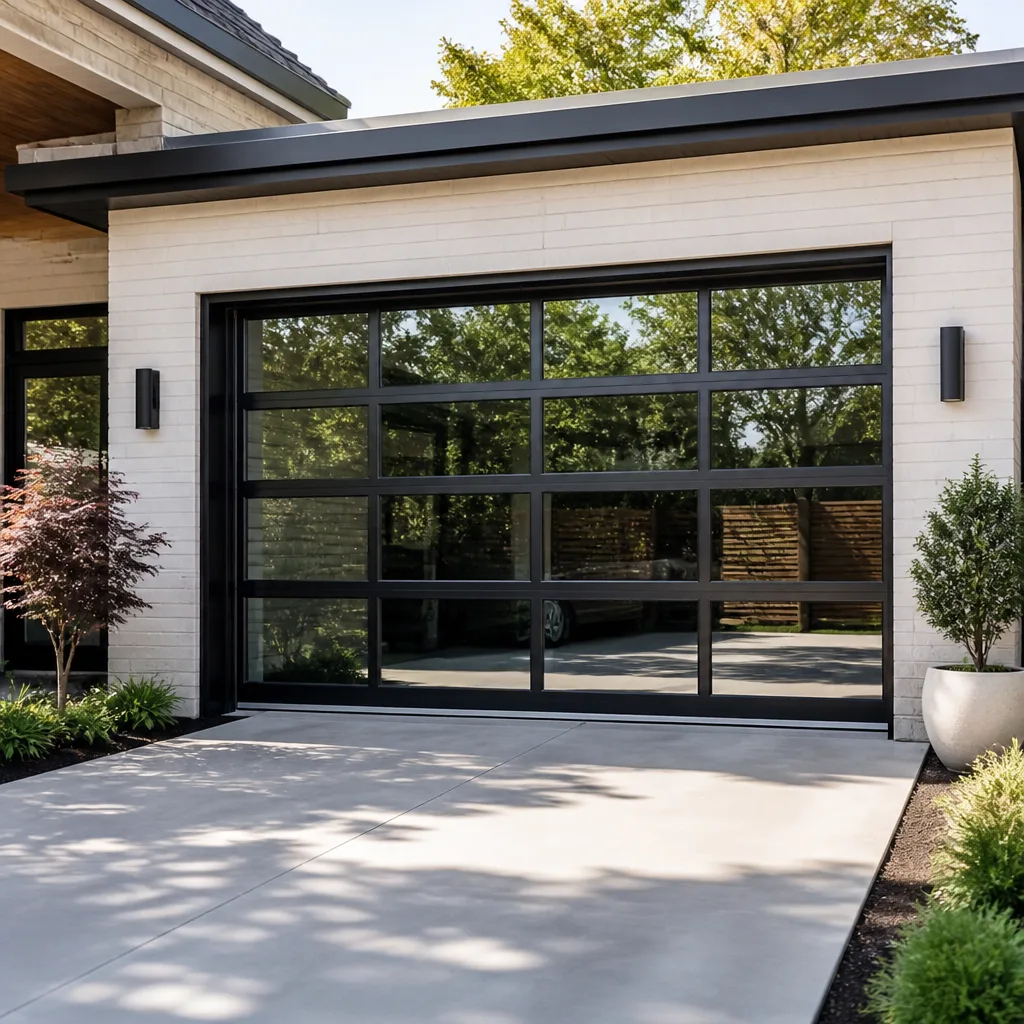 Full-view glass
 LiftMaster openers
 Chamberlain openers
Full 25-point door and opener safety check with every visit - springs, cables, rollers, tracks, and your LiftMaster or Chamberlain opener included
You get a price before we start. It does not change when the pro arrives.
Get your free estimateGarage Door Emergency Preparedness Guide for Manchester Homes
Most Manchester homeowners think about their garage door about as often as they think about their water heater: not at all, until it stops working. That’s the problem. The morning your door won’t open is the worst possible time to learn where the emergency release cord is, which way it pulls, or whether that grinding sound means a spring just let go. A little preparation on an ordinary day turns a two-hour ordeal into a twenty-minute inconvenience. This guide walks through what to do when a spring breaks, how to get your car out safely during a power outage, how to secure a door that won’t close, and how to tell a true emergency from something that can wait until morning.
Quick Answer
The safest response to a garage door emergency is to stop operating the door and identify what failed before you touch anything. If a spring has broken, keep the door closed and don’t try to lift it. If the power is out, use the manual release only after the door is fully closed and you’ve checked that no one is underneath. Anything involving springs, cables, or a door that’s come off its tracks calls for a trained technician, not a DIY attempt.
We answer 24/7. Fast dispatch, 7am-7pm, Sunday through Friday. Call (888) 459-1302 for a free estimate on any garage door repair in Manchester.
Styles & brands we work with
- Raised-panel steel
- Carriage house
- Modern flush
- Full-view glass
- LiftMaster openers
- Chamberlain openers
Table of Contents
- How Do You Open a Garage Door Manually During a Power Outage?
- What Should You Do Immediately When a Spring Breaks?
- How Do You Temporarily Secure a Garage Door That Won’t Close?
- The Pre-Emergency Checklist Every Manchester Home Should Complete
- What Counts as a True Emergency vs. What Can Wait Until Morning?
- Why Manchester Winters Make Garage Door Problems Worse
- When the Opener Fails: Smart vs. Legacy Systems
- When to Call a Professional
How Do You Open a Garage Door Manually During a Power Outage?
The short answer: pull the emergency release cord, but only after the door is fully closed and you’ve confirmed no one is standing under it. The release disconnects the door from the opener so you can lift it by hand. Done carelessly, it can drop a door on a car, a pet, or a person. Manchester’s older housing stock often has original openers or doors that haven’t been serviced in years, which makes this the moment a little caution matters most.
Here’s how to do it safely, in order:
- Close the door first if it’s open. Don’t pull the cord with the door halfway up. Let the opener bring it fully down. If there’s no power, wait until you can lower it manually with assistance or call for help.
- Look up and around. Make sure no one is standing beneath the door and nothing is in its path. Check that the door isn’t visibly off its tracks or sagging.
- Find the release cord. It’s the red or black handle hanging from the trolley on the opener rail, usually in the center of the ceiling. On some Chamberlain and Genie models it’s a short cord with a T-handle.
- Pull straight down, firmly. You’ll hear or feel the trolley disconnect. Don’t yank at an angle.
- Lift the door slowly with both hands. A properly balanced door should lift with one hand. If it feels heavy, or won’t stay up when you let go, stop and don’t force it. A door that won’t balance is a door with a damaged spring or cable.
- Prop it open if you need to move the car. Use a sturdy brace, not a chair or a broom handle, and don’t leave it propped unattended.
- Reconnect when power returns. Pull the cord again (or the trolley lever) to reengage the opener, then run the door through a full open-close cycle to confirm it’s tracking correctly.
If your door doesn’t lift easily or won’t stay up, leave it closed and call garage door repair. That’s a symptom of a broken spring, not a power problem, and lifting it by hand can cause injury or damage the door further.
What Should You Do Immediately When a Spring Breaks?
You’ll usually hear it before you see it: a sharp bang from the garage, like a firecracker or a dropped weight. Then the door won’t open, or opens a few inches and stops. That’s a torsion or extension spring letting go. The first thing to do is nothing. Don’t try to open the door, don’t pull the manual release, and don’t touch the spring or the cables attached to it.
Torsion springs store enormous tension. A garage door spring under load can cause serious injury if it releases unexpectedly, and the cables that run alongside it are equally dangerous. This is the one part of garage door repair that truly isn’t a homeowner job, and any technician who tells you otherwise isn’t one you want working on your door.
Here’s what to do instead:
- Keep the door down. A door with a broken spring is being held by the opener alone, and the opener isn’t designed to lift that weight. Forcing it will burn out the motor or strip the gears.
- Get your car out carefully, if you need to. If the car is inside and the door is closed, you can’t safely open it by hand. In most cases the safest move is to leave the car where it is and call for repair. If you have a second vehicle or a side door, use that. Don’t try to lift a door with a broken spring, even with two people.
- Note the type of spring. A torsion spring runs horizontally above the door on a shaft. An extension spring runs along the side tracks. Tell the technician which you have when you call.
- Keep kids and pets out of the garage. A door being held up by a failing opener can drop without warning.
- Call for repair. A broken spring is usually a same-day fix, and both springs are typically replaced as a matched pair since they wear together.
In our experience, a broken spring is the single most common call we get from Manchester homeowners, and it nearly always happens at the worst moment. If you’re not sure what’s broken, describe what you heard and what the door is doing. We can usually tell you over the phone what to expect.
How Do You Temporarily Secure a Garage Door That Won’t Close?
A door that won’t close is a security problem and a weather problem at the same time. Manchester’s winters make an open garage a real risk to plumbing and stored belongings, and an open door is an open invitation. The fix is usually simple: get the door down, secure it, and call for repair.
Work through these in order:
- Check the safety sensors first. The two small eyes near the floor at each side of the door are the most common reason a door opens but won’t close. Wipe them clean, check that nothing is blocking the beam (a leaf, a ball, a snow shovel), and confirm both have a solid light, not a blinking one.
- Check the tracks and rollers. If a roller has popped out of the track or the track is bent, the door won’t close evenly and the opener will reverse. Don’t force it.
- Try the manual release only if the door is fully open and you can lower it by hand. Disconnect the opener, then lower the door slowly and evenly with both hands. If it won’t come down smoothly, stop.
- Lock the door mechanically once it’s down. Most doors have a manual slide lock or a lock bar on the inside. Engage it. If your door doesn’t have one, a pair of locking pliers on the track just above a roller will hold it in place temporarily.
- Brace the door from the inside if it’s a security concern. A length of lumber cut to fit between the door and the floor, or a bar across the tracks, will keep it from being lifted from outside.
- Call for repair the same day. A door that won’t close is a mechanism problem, not something that fixes itself.
If your door is stuck open and you can’t get it down safely, call us. We can talk you through what to check without putting you in harm’s way.
The Pre-Emergency Checklist Every Manchester Home Should Complete
The best time to test your garage door is on a quiet afternoon when nothing is at stake. Ten minutes of preparation now saves a lot of scrambling later. Here’s what to do on a normal day, before anything goes wrong:
- Locate the manual release cord. Find it, note its color and position, and make sure everyone in the household knows where it is. If you have a Chamberlain or Genie opener, the cord hangs from the trolley on the rail.
- Test the release with the door closed. Pull it once, confirm the trolley disconnects, then reengage it and run the door through a full cycle. This confirms the mechanism isn’t seized.
- Test the balance. Disconnect the opener with the door halfway up, then let go. A balanced door stays put. A door that drops or won’t stay up has a spring or cable problem that needs attention.
- Check the safety sensors. Confirm both LEDs are solid, not blinking. Wipe the lenses and clear any obstructions.
- Test the auto-reverse. Place a piece of wood flat on the floor in the door’s path and close the door. It should reverse on contact. If it doesn’t, the opener needs adjustment.
- Listen for changes. Grinding, squealing, or a door that hesitates before opening are early warnings. Address them before they become emergencies.
- Note your door and opener brands. Knowing you have a Clopay door and a LiftMaster opener makes the repair faster and more accurate.
- Keep a flashlight and a step stool in the garage. You’ll need both if the power goes out.
Run through this checklist once a season. Manchester’s freeze-thaw cycles put extra stress on springs and tracks, so it’s worth a look before winter sets in and again in spring.
What Counts as a True Emergency vs. What Can Wait Until Morning?
A true garage door emergency is one where someone’s safety or the security of the home is at risk right now. Most other problems can wait for a scheduled repair. Knowing the difference saves you stress and, often, money.
Call now:
- A broken spring with the door stuck open or stuck closed and a vehicle trapped
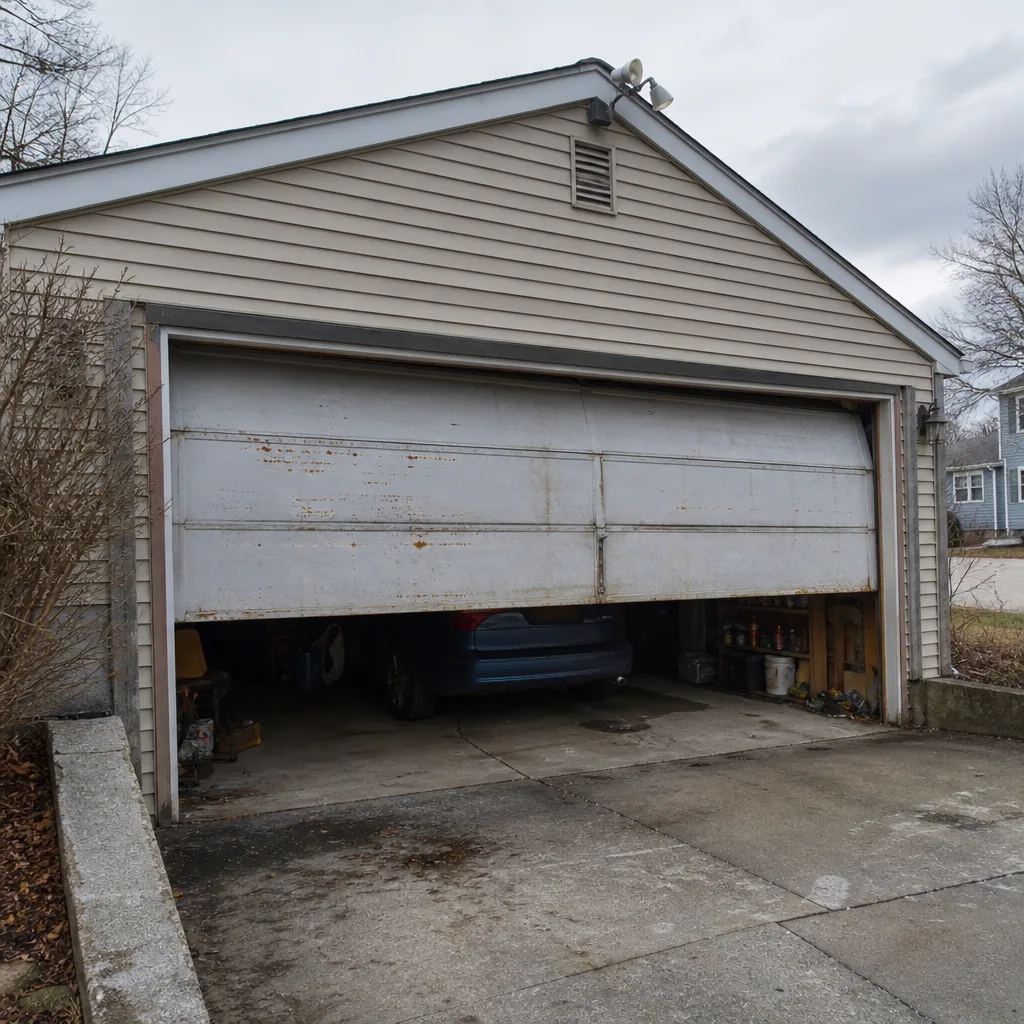
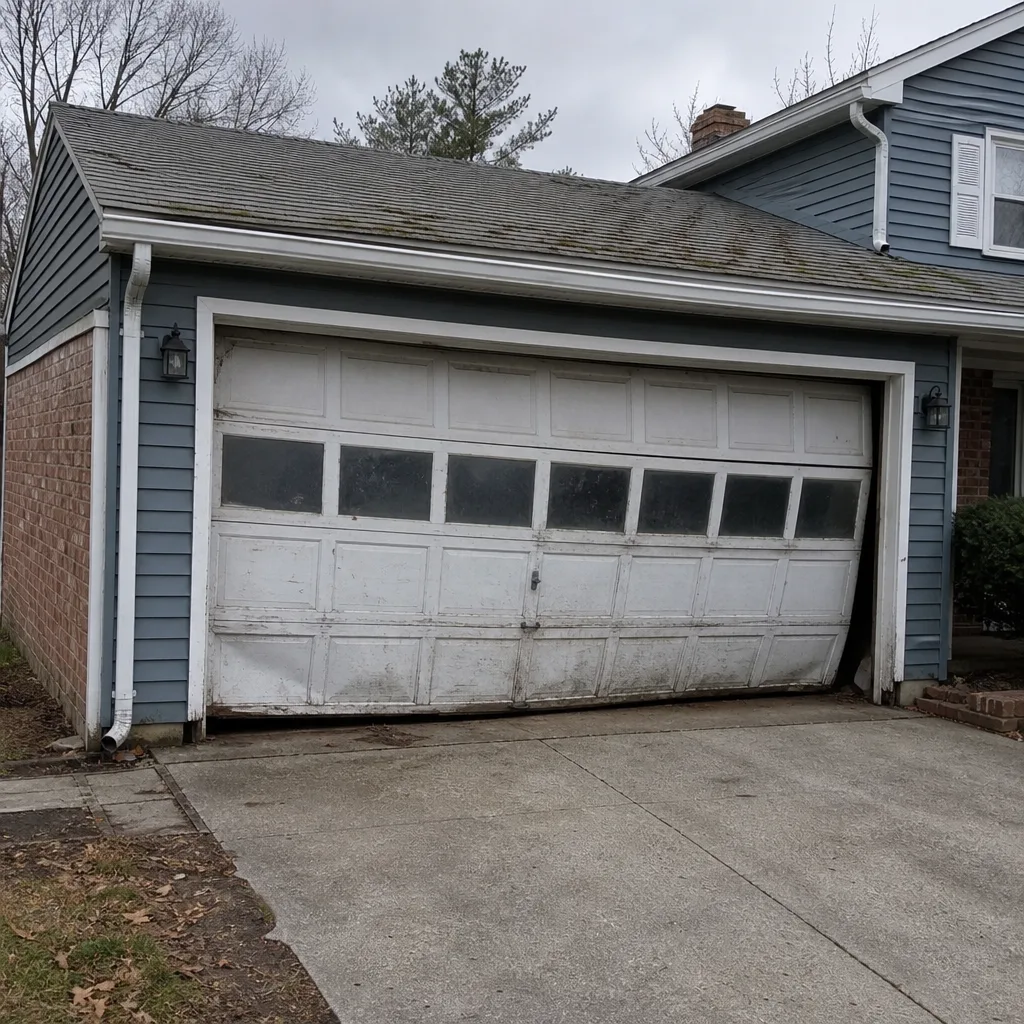
- A door that’s come off its tracks or is hanging at an angle
- A door that won’t close and can’t be secured, especially overnight
- Any situation where a person or pet is trapped under the door
- A door that’s partially collapsed or unsafe to be near
Can wait for a scheduled repair:
- A noisy door that still opens and closes
- A remote or wall button that isn’t responding but the door works manually
- A door that reverses for no obvious reason but still closes with the button held
- A slow opener or a door that hesitates
- A cosmetic issue with panels or weather stripping
If you’re not sure, call anyway. We answer 24/7, and we can help you decide whether it’s safe to wait or whether you need a technician now. If you call outside dispatch hours, we’ll book you into the next opening, Sunday through Friday, 7am to 7pm. When you call, have ready:
- Your address and a callback number
- Your door and opener brands if you know them (Clopay, Amarr, Genie, Chamberlain)
- What the door is doing right now and what you heard or saw when it failed
- Whether a vehicle is trapped or the door is stuck open
- Whether anyone is in danger
Why Manchester Winters Make Garage Door Problems Worse
Manchester’s winters are hard on garage doors. The freeze-thaw cycle that runs from late fall through early spring puts constant stress on springs, cables, and tracks. Water gets into small gaps, freezes, expands, and works hardware loose. Salt and sand tracked in from the road collect on the bottom seal and the tracks, and the cold makes lubricant stiffen so the door labors more. A door that runs smoothly in July can feel sluggish and noisy by January.
The result is a predictable spike in spring failures and off-track doors during the coldest weeks. Springs that are near the end of their life tend to snap in cold weather. Tracks that were slightly out of alignment in autumn can bind up when the temperature drops. Doors that sit outside in the weather all winter also take a beating on their panels and seals.
What you can do:
- Clear snow and ice from the door’s path and the bottom seal after every storm
- Keep the tracks clean and lubricated with a silicone-based spray, not grease
- Watch for a door that opens more slowly in cold weather. It’s a sign the springs or opener are struggling
- Have the door serviced in the fall before the deep cold sets in
If your door has been making noise all winter, don’t wait for it to fail. A scheduled Manchester service visit is far easier than an emergency repair on a freezing morning.
When the Opener Fails: Smart vs. Legacy Systems
An opener that stops working mid-cycle is frustrating, but it’s usually not the emergency a broken spring is. The door itself is fine. The question is whether the opener is repairable or needs replacement, and that depends on the system.
Modern smart-home openers from LiftMaster and Chamberlain have more diagnostics than older units. The wall control or the app often tells you what’s wrong: a sensor obstruction, a battery issue, a Wi-Fi or connection fault. A blinking LED pattern on the motor head is a code you can look up in the manual. These systems also tend to have more replaceable parts, from logic boards to belt assemblies, so repair is often the better option.
Older openers from Genie and Craftsman are simpler and more robust, but parts can be harder to source as models age. When a legacy opener fails, the technician needs to diagnose the actual component: a stripped gear, a failed capacitor, a bad limit switch. Many generalist handyman services skip opener repair entirely or replace the whole unit when a small part would fix it.
In our experience, the right call depends on the age, the brand, and the specific failure. If the opener is a LiftMaster or Chamberlain with smart-home integration, repair is usually worth it. If it’s an older unit with a failed logic board and no replacement parts available, replacement may be the honest answer. We’ll tell you which one makes sense.
Common Mistakes to Avoid
- Pulling the manual release with the door open. This is the most dangerous mistake. A door with a broken spring can crash down when disconnected. Always close the door first.
- Forcing a door with a broken spring. The opener isn’t built to lift a door without spring assistance. Running it will burn out the motor and add to the repair bill.
- Trying to fix a spring or cable yourself. These are the most dangerous parts of the door. Torsion springs store enough energy to cause serious injury. Leave them to a trained technician.
- Ignoring a warning sign. A door that hesitates, grinds, or reverses for no clear reason is telling you something. Fix it before it fails.
- Using a chair or broom to prop up an open door. These fail easily. Use a proper brace and don’t leave it unattended.
- Waiting for a stuck door to fix itself in winter. Cold weather makes problems worse, not better. A door that won’t close on a January morning will still be broken after the next snowstorm.
- Calling a generalist when you need a specialist. Garage door springs, cables, and openers need specific tools, training, and parts. A handyman who “does doors too” often makes the problem worse.
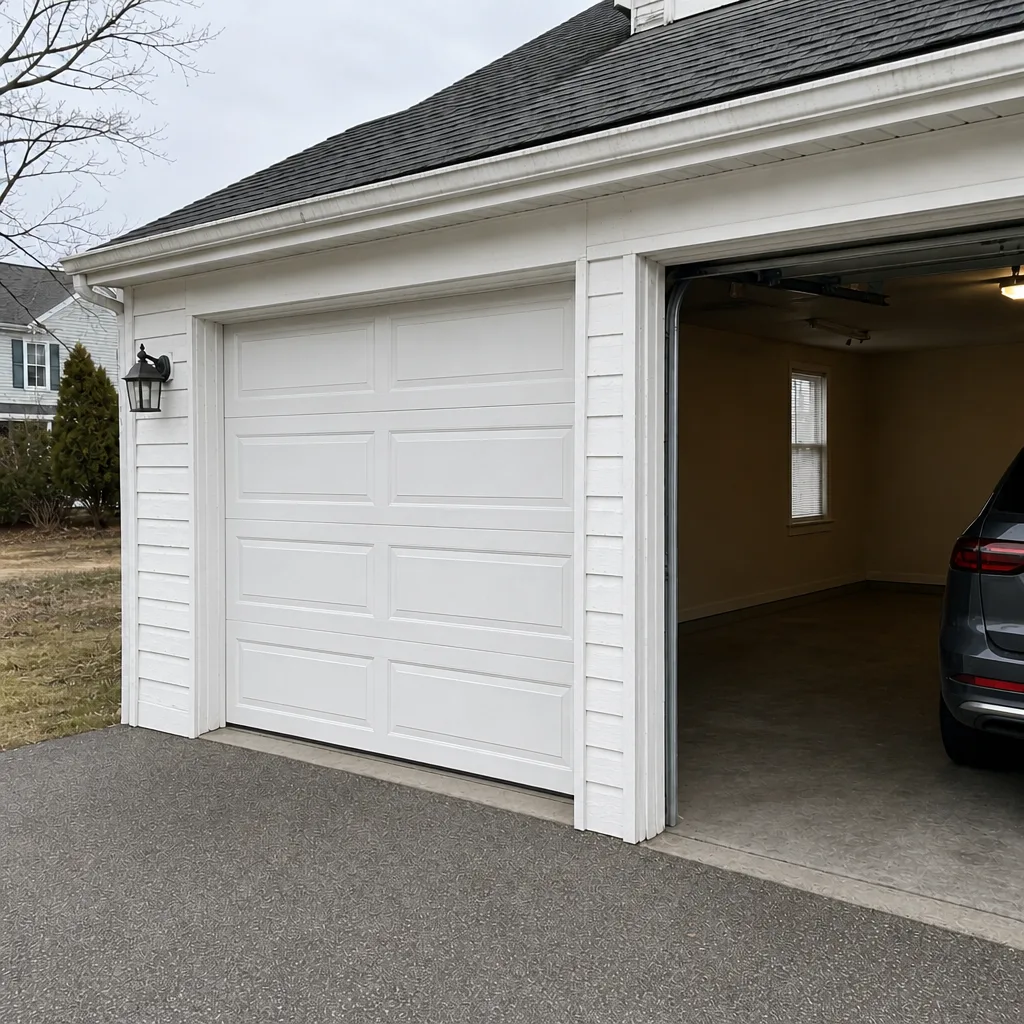
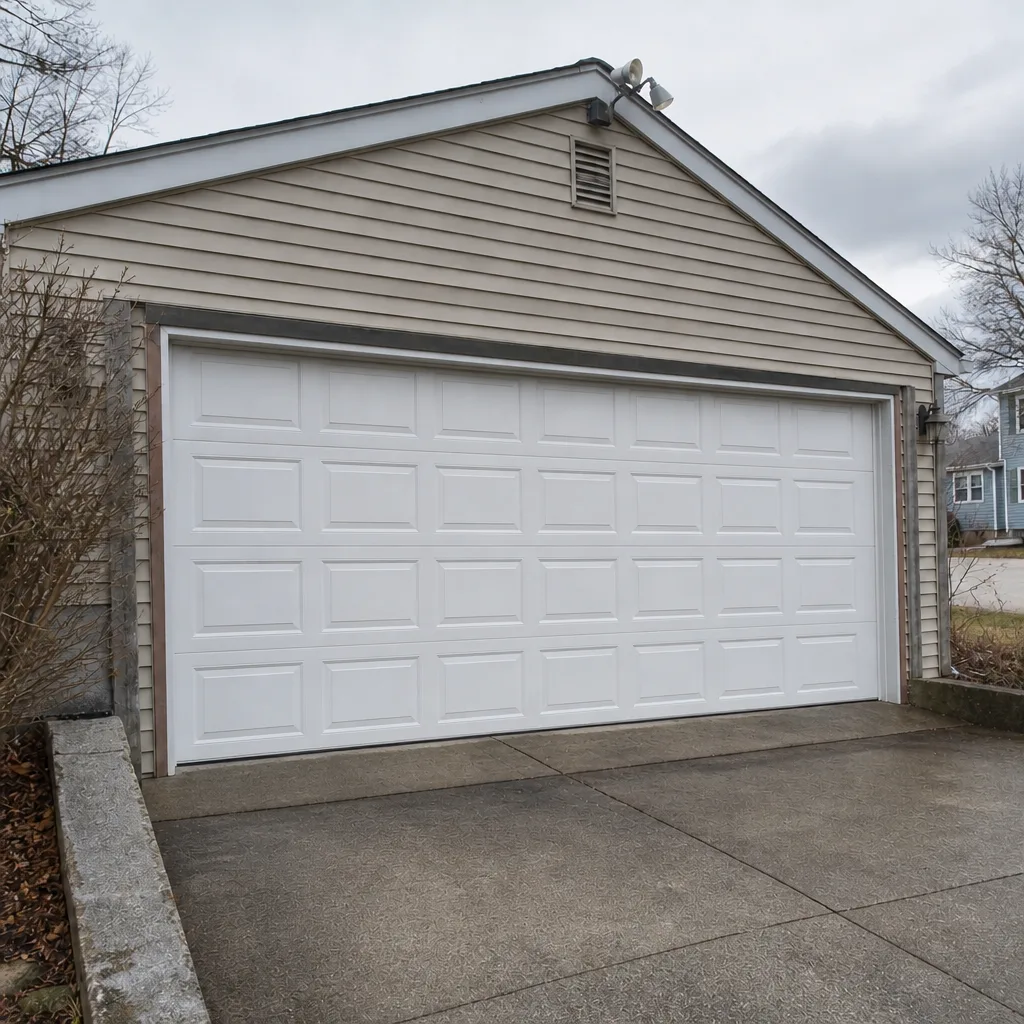
See the difference
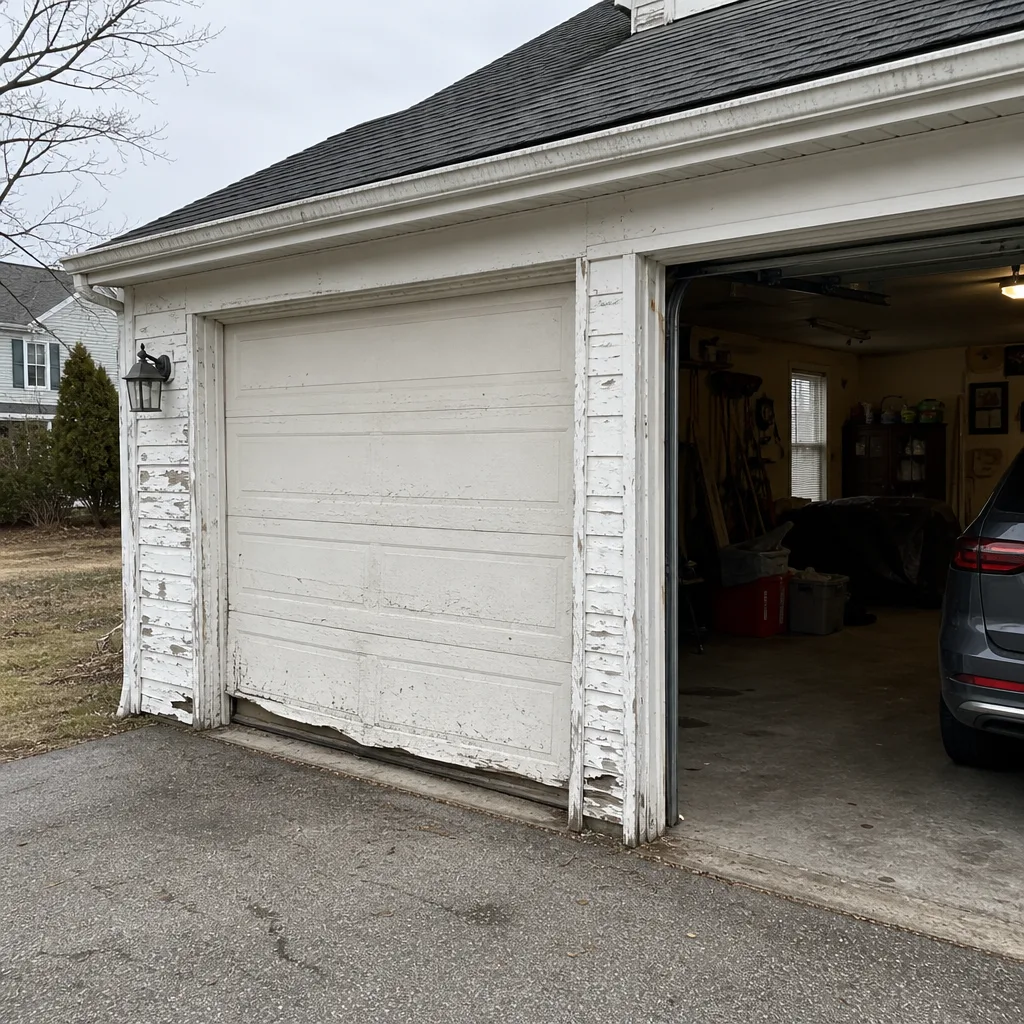 Before
 After
 Before
 After
 Before
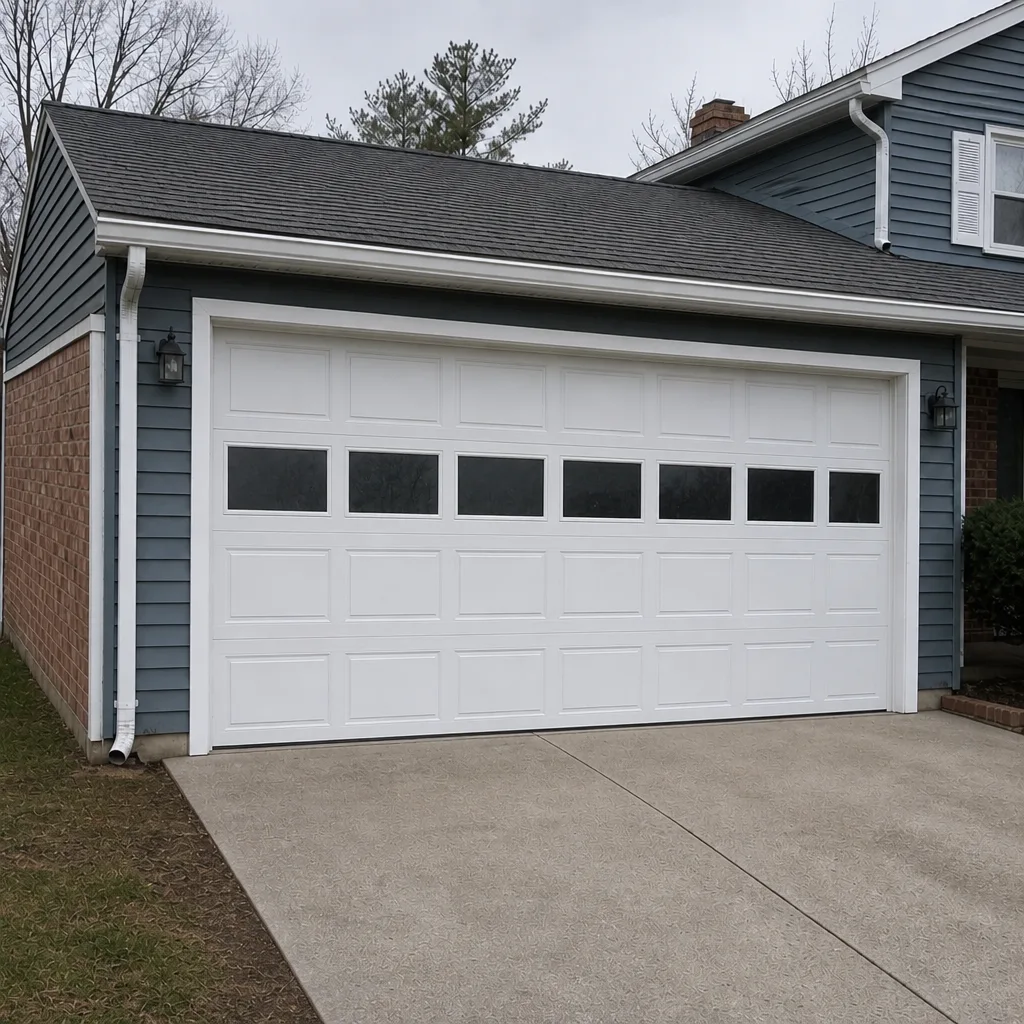 After
When to Call a Professional
Call a professional any time springs, cables, or tracks are involved, any time the door has come off its tracks or is hanging at an angle, and any time a door won’t close and can’t be secured. These are safety issues, not maintenance items. Call us if the door won’t open and doesn’t respond to the remote, wall button, or manual release, or if you hear a bang from the garage followed by a door that won’t lift. If a vehicle is trapped or a person or pet is underneath the door, call immediately. Radiant Garage Door Repair offers free estimates in Manchester. Call (888) 459-1302 to get started.
Frequently Asked Questions
Check that the opener has power and that the safety sensors aren’t blocked, then listen for the opener motor. If you hear the motor running but the door doesn’t move, a spring or cable has likely failed. If there’s no sound at all, the problem is likely electrical or in the opener itself. Don’t force the door. Call us at (888) 459-1302 and describe what’s happening.
Yes, using the emergency release cord, but only with the door fully closed and no one underneath it. Pull the cord straight down to disconnect the opener, then lift the door slowly with both hands. A balanced door should lift easily and stay up when you let go. If it doesn’t, stop and call for repair.
A broken spring usually makes a loud bang and leaves the door stuck. You’ll often see a gap in the coil or a shiny spot where the spring snapped. An opener failure leaves the door intact but unresponsive, and you may hear a humming motor. Tell us what you heard and saw when you call.
Spring repair pricing depends on the type of spring, the door size, and whether it’s a single spring or a matched pair, which is usually replaced together. Call (888) 459-1302 for an exact quote. Estimates are free and the price is set by the written estimate before any work starts.
Yes, same-day service is available for many repair calls. We answer 24/7. If you call outside dispatch hours, we’ll book you into the next opening, Sunday through Friday, 7am to 7pm. Call (888) 459-1302 for an exact quote.
Have your address, callback number, door and opener brands if you know them, and a description of what the door is doing right now. Tell us whether a vehicle is trapped, whether the door is stuck open, and whether anyone is in danger. That information helps us send the right help and get your door working again faster.
The Bottom Line
Garage door emergencies are stressful, but they don’t have to be chaotic. The difference between a twenty-minute inconvenience and a two-hour ordeal is preparation: knowing where your manual release cord is, checking your door’s balance before it fails, and understanding the difference between a true emergency and something that can wait until morning. Trust your springs and cables to a trained technician, secure a door that won’t close so your home stays protected, and call garage door opener repair if the opener is the problem. Call (888) 459-1302. We answer 24/7. Fast dispatch from 7am to 7pm, Sunday through Friday.
Written by the team at Radiant Garage Door Repair.