
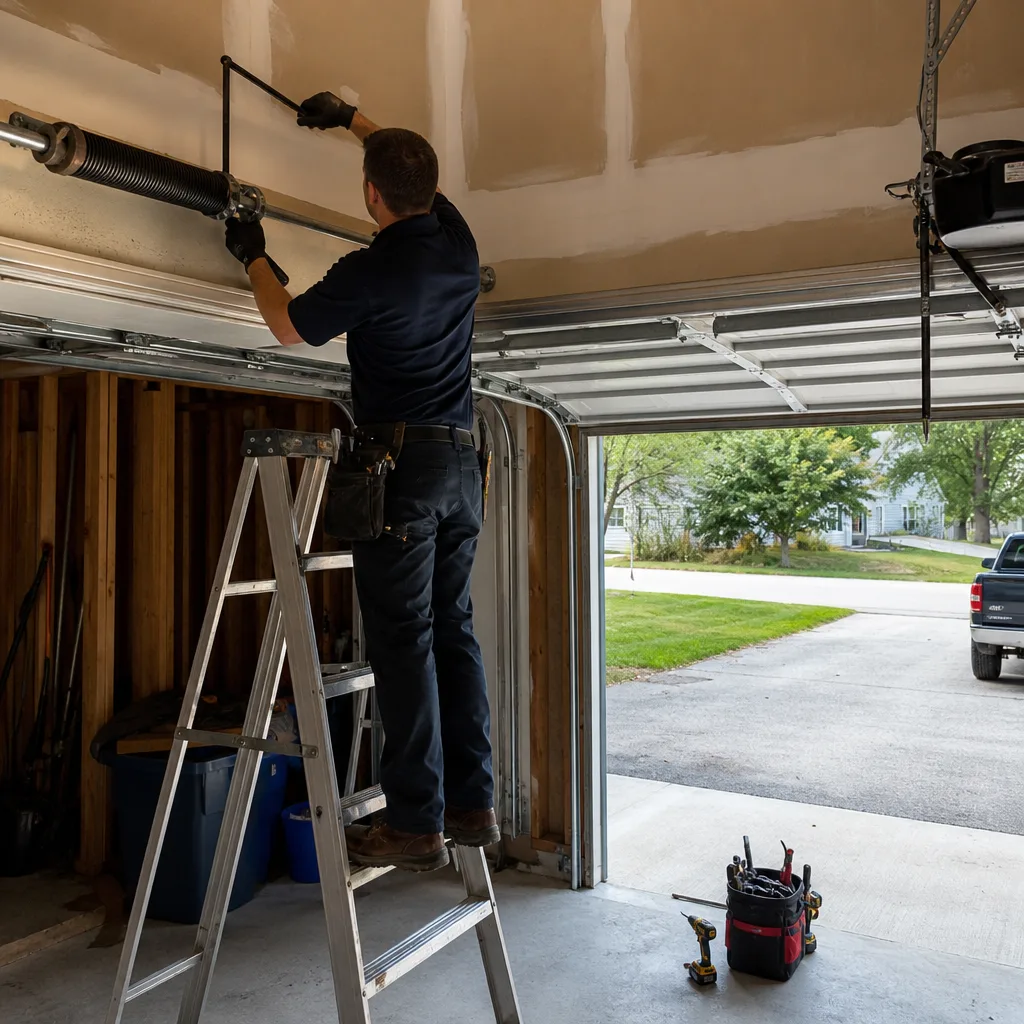
Last updated November 15, 2026
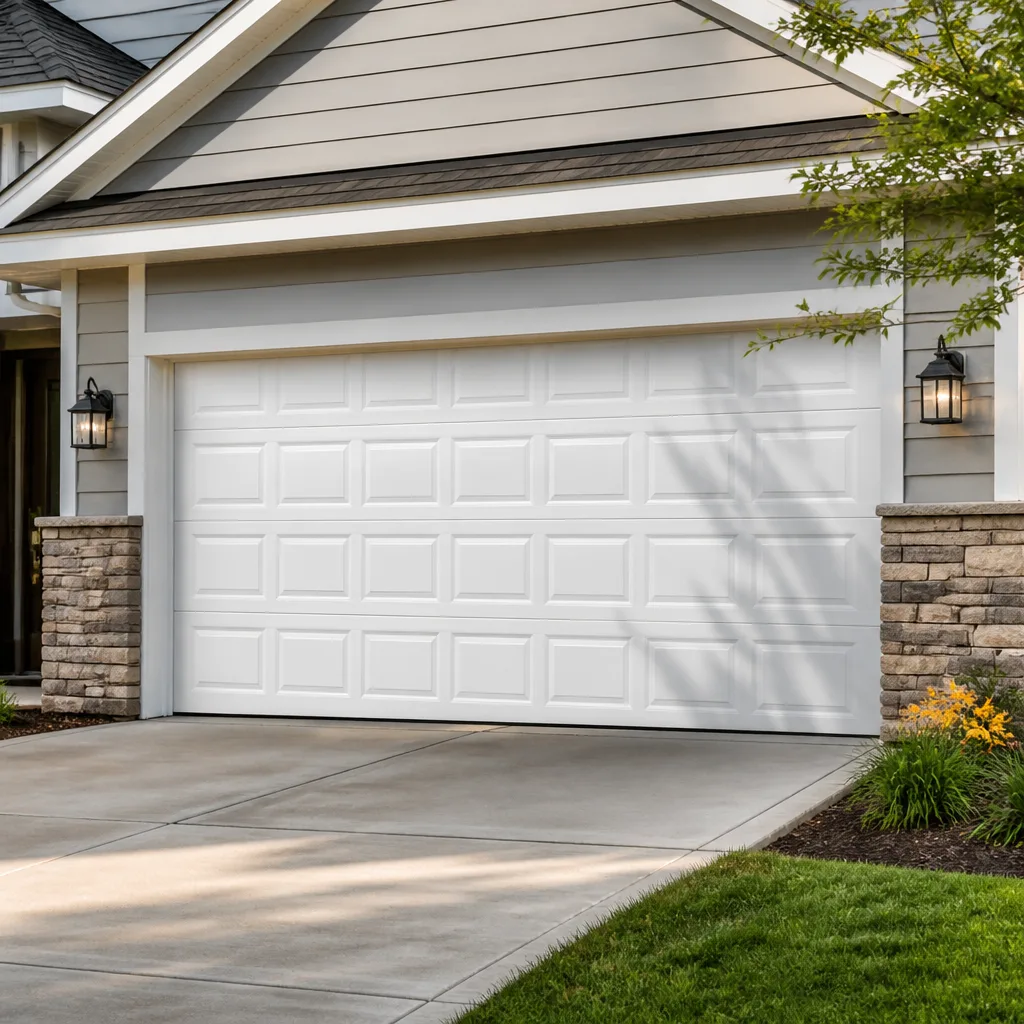 Raised-panel steel
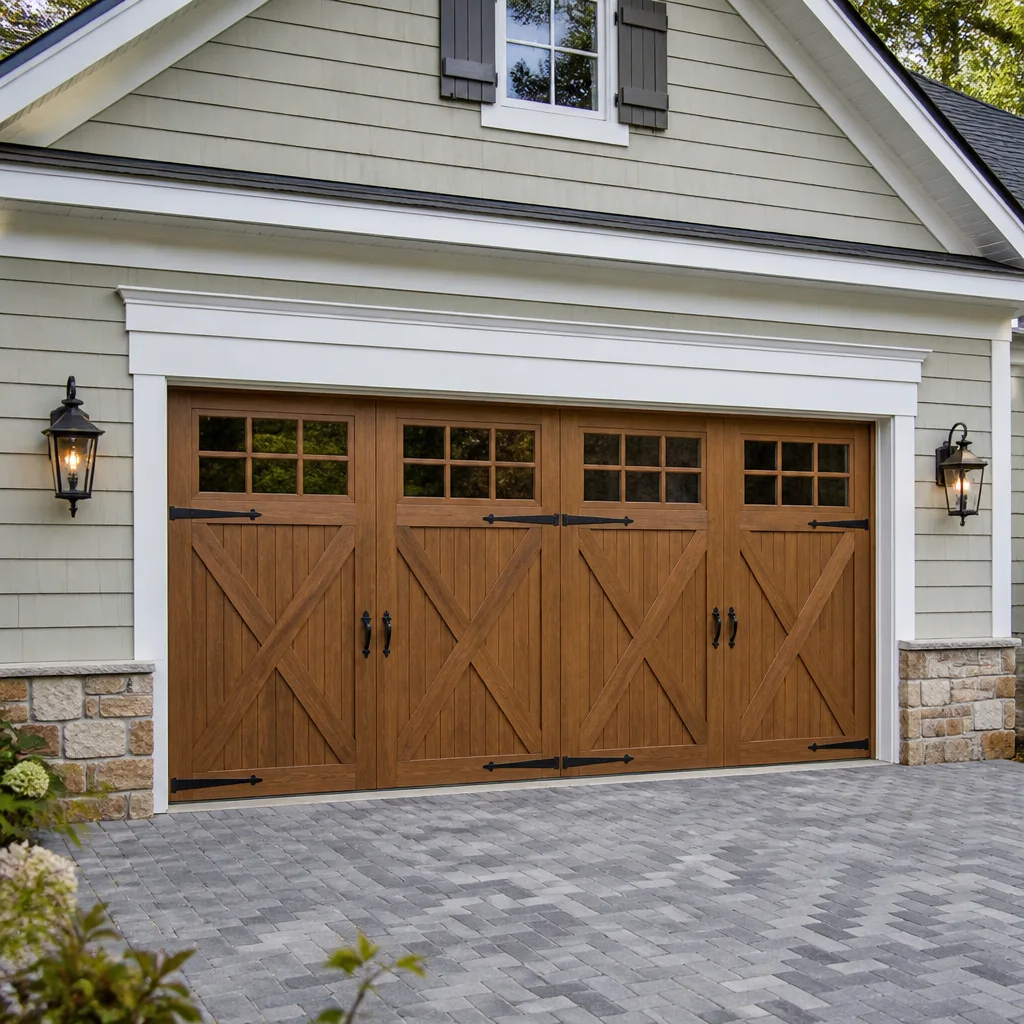 Carriage house
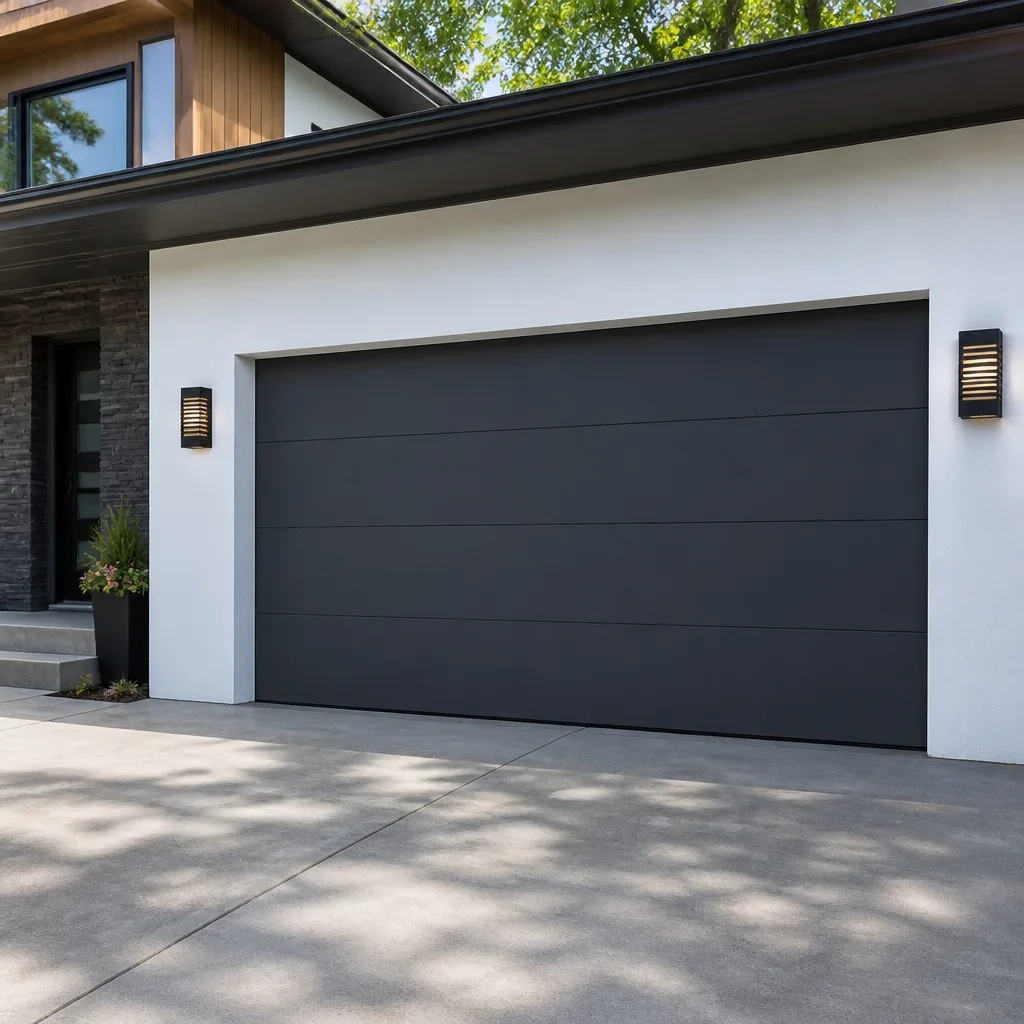 Modern flush
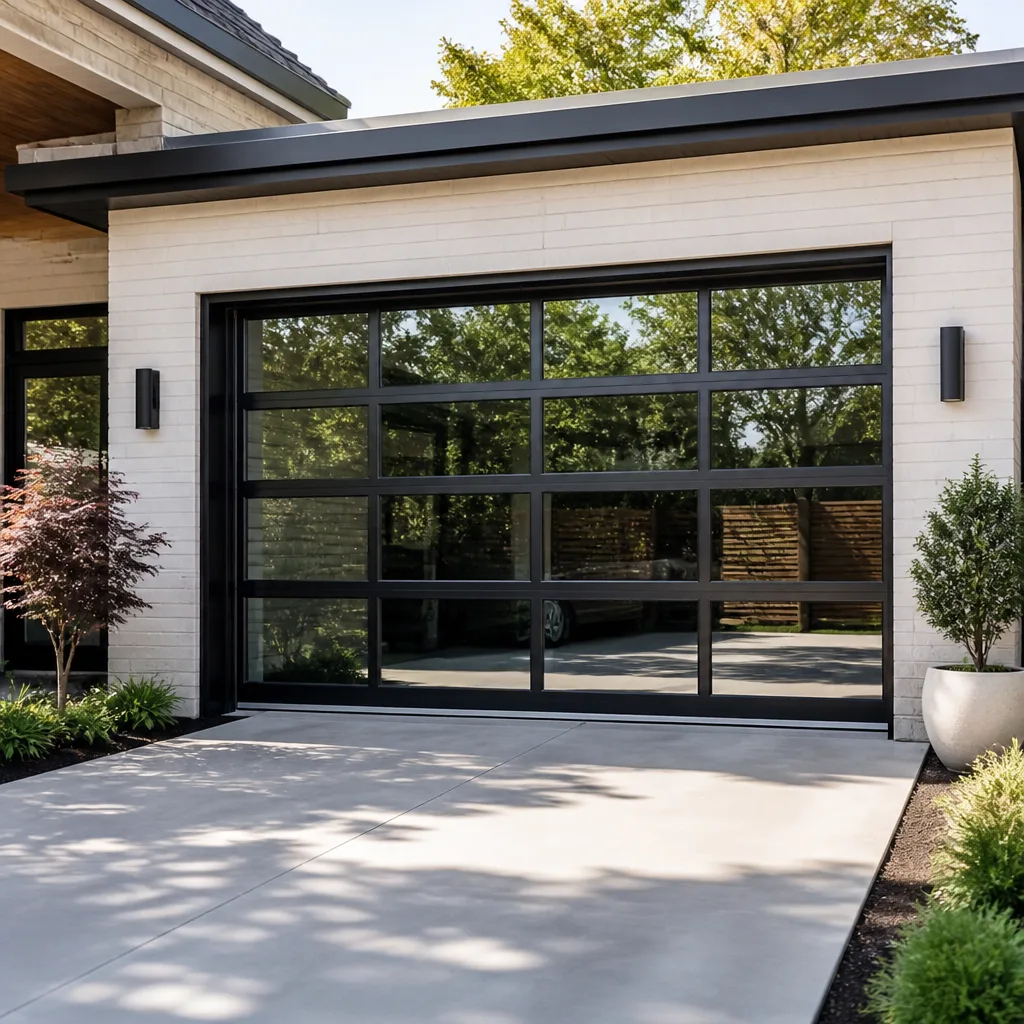 Full-view glass
 LiftMaster openers
 Chamberlain openers
Full 25-point door and opener safety check with every visit - springs, cables, rollers, tracks, and your LiftMaster or Chamberlain opener included
You get a price before we start. It does not change when the pro arrives.
Get your free estimateGarage Door Repair Troubleshooting in Manchester: Common Problems and How to Fix Them
Most homeowners treat every garage door problem as one big mystery, which is why a loose bolt gets the same panic as a snapped torsion spring. Your door isn’t simply broken – it’s communicating. Every symptom, from a shudder on the way up to a door that reverses for no reason, points to one of five root causes, and the difference between a minor adjustment and a job you shouldn’t touch comes down to knowing which one you’re hearing. In this guide we’ll show you how to sort symptoms into those five categories, what Manchester’s freeze-thaw winters and humid summers do to the parts that fail first, and exactly where to stop and call a professional.
Quick Answer
Garage door problems in Manchester usually fall into five root-cause categories: spring tension, track alignment, sensor interference, opener motor failure, and weather seal wear. You can diagnose most of them yourself in a few minutes by watching, listening, and testing the manual release. Any broken spring or cable off its drum is a stop-here situation – those parts are under extreme tension and require a trained technician.
Styles & brands we work with
- Raised-panel steel
- Carriage house
- Modern flush
- Full-view glass
- LiftMaster openers
- Chamberlain openers
Table of Contents
- The Five Root Causes Behind Almost Every Garage Door Problem
- Is It Mechanical or Electrical? The 60-Second Manual Release Test
- Spring Tension and Cables: The Problems You Must Not Touch
- Track Alignment and Manchester’s Freeze-Thaw Cycle
- Sensor Interference and the Safety Reverse Problem
- Opener Motor and Intermittent Failures: The Hardest to Diagnose
- Weather Seals, Road Salt, and Humid Summers
- When to Call a Professional
The Five Root Causes Behind Almost Every Garage Door Problem
Before you touch anything, sort your symptom into one of five buckets. Doing this first saves you from chasing the wrong part – and it tells you right away whether you’re looking at a few-minute adjustment or a job that belongs in the hands of a technician.
The five categories, and the symptoms that point to each:
- Spring tension. The door feels impossibly heavy, won’t stay up when you lift it halfway, or a spring above the door shows a visible gap. This is a stop-here category.
- Track alignment. The door scrapes, binds, or drifts to one side as it travels. Panels may look crooked against the frame.
- Sensor interference. The door starts down, then reverses before it reaches the floor – often with the opener light flashing.
- Opener motor. You hear the motor run but the door doesn’t move, or the carriage moves without the door. Grinding or humming from the ceiling unit points here.
- Weather seal. Daylight shows under the closed door, rainwater gets in, or the rubber at the bottom has hardened and cracked.
Watch the door through two full open and close cycles and listen. A single loud bang followed by a door that won’t lift is spring tension. A rhythmic scrape that repeats in the same spot of travel is track alignment. A door that reverses for no reason is sensors. A motor that runs alone is the opener. Water on the floor is the seal. That quick sort is the whole framework – everything below expands on one category at a time.
Our technicians have up to 10 years of experience, and most of that diagnostic work comes down to these five buckets before a single tool comes out of the case.
Is It Mechanical or Electrical? The 60-Second Manual Release Test
Here’s the fastest way to tell whether you have a mechanical problem with the door or an electrical problem with the opener: pull the manual release cord and try lifting the door by hand. If the door moves smoothly and stays where you put it, the door and springs are fine and the trouble is in the opener. If the door fights you, drops, or won’t stay up, the problem is mechanical, and you should stop and call.
Run it as a numbered check:
- Unplug the opener or switch off its breaker. You want no chance of the motor engaging while your hands are near the door.
- Pull the manual release cord hanging from the opener’s carriage. You’ll hear it click out of the drive chain or belt.
- Lift the door about halfway with one hand at the bottom edge. A balanced door rises with modest effort and stays put when you let go. That’s a healthy mechanical system.
- Lower it gently and note how it feels. A door that drops fast, feels very heavy, or sags on one side has a spring or balance problem.
- Reconnect the carriage by pulling the cord again toward the opener, then restore power. If the door was balanced by hand but the opener still fails to lift it, the fault is electrical.
That last step is the key. A door that lifts easily by hand but stumbles on the motor means the springs are carrying their share and the opener is the weak link. A door that’s hard to lift by hand means the springs have given up and the opener has been dragging a door it was never built to lift alone. That distinction changes the whole repair – and it’s why a diligent garage door repair visit starts with the manual release, not the motor.
If your opener is a LiftMaster or a Chamberlain, note the brand when you call. Those units have their own travel-limit and force-setting quirks that a generalist will miss.
Spring Tension and Cables: The Problems You Must Not Touch
Torsion springs and the cables that run beside them store enough energy to cause serious injury, and this is where we put a hard stop on any do-it-yourself advice. If you see a spring with a visible gap or a door hanging at an angle, call a trained technician. There is no safe homeowner fix for a broken spring or a cable off its drum.
Here’s why. Torsion springs are wound tight to counterbalance a door that may weigh well over a hundred pounds. When one fails, it releases that stored tension instantly. Cables run under the same tension and, if one slips off its drum, can whip with enough force to break bones. The winding bars a technician uses to set tension are specialized tools, and setting them wrong can send a spring flying.
What you can safely do is recognize the signs and back away:
- A loud bang from the garage, followed by a door that won’t lift or feels extremely heavy.
- A visible gap about two to three inches long in the coil of a torsion spring above the door.
- A door that hangs crooked, with one side higher than the other.
- A cable that’s come loose, looks slack, or is wrapped wrong around its drum.
- A door that slams shut instead of lowering under control.
Any one of those is a call, not a project. Our team handles springs and cables as a routine part of what we do, and we’ll tell you honestly whether a repair still makes sense or replacement is the better answer. We work on the equipment you actually own, including doors from Raynor, Clopay, and Amarr. Call (888) 459-1302 and we’ll get you a written price before any work starts.
Track Alignment and Manchester’s Freeze-Thaw Cycle
In Manchester, track alignment problems show up most often at the end of winter and during the first warm weeks of spring. The reason is the freeze-thaw cycle: water gets into the seams and gaps around the garage opening, freezes, expands, and thaws again, over and over. That repeated movement nudges the vertical tracks slightly off plumb, and a track that’s even a fraction out of line will make the door bind on one side as it travels.
The symptoms of a track problem usually follow a pattern:
- A rhythmic scrape or squeal that repeats at the same point in every open or close.
- The door drifting to one side, with uneven gaps along the edges.
- Rubbing marks on one side of the frame where the door has been scraping.
- A door that moves fine partway, then seems to catch or lurch.
Small alignment issues are sometimes a matter of tightening loose track brackets or clearing a bit of debris, but a bend in the track itself usually needs a trained hand to adjust it correctly without forcing the door further out of balance. If your door is scraping, resist the urge to keep running the opener – a binding door puts extra strain on the motor and can wear the rollers unevenly. Better to have the alignment checked once and corrected properly.
If your garage sits on a sloped driveway, which is common on the hillside streets around Manchester, the door can also settle unevenly at the bottom, which stresses the tracks over time. An alignment check catches that early. Fast dispatch from 7am to 7pm – call (888) 459-1302 for a free estimate.
Sensor Interference and the Safety Reverse Problem
A door that starts down and then reverses before it reaches the floor is almost always a sensor problem. The two photo-eye sensors near the bottom of the tracks on either side of the opening talk to the opener, and if their line of sight is broken – or if they’ve lost power or alignment – the opener reads it as an obstruction and reverses to be safe. It’s the most common “broken” door that isn’t actually broken.
Here’s the order we’d check in:
- Look at the sensor indicator lights. Most sensors have a small LED. If it’s off or flickering, the sensor is misaligned, dirty, or unpowered.
- Clear the line of sight. A broom leaning against the wall, a stack of boxes, a leaf, or even spiderwebs between the sensors can break the beam. Move anything in the path.
- Wipe the lenses with a soft cloth. Dust and grime build up quietly, especially in a garage.
- Check alignment. The two sensors should point at each other. A nudge to the bracket – a bump from a bike or a stiff breeze – can knock one off target.
- Look at the wires and the wall. These sensors run on low voltage, and a chewed wire or a loose connection will kill them.
If the lights are solid, the path is clear, and the door still reverses, the fault moves deeper into the opener’s logic board, and that’s a job for someone who knows your specific unit. If your door uses a Genie or Craftsman opener, the sensor wiring and behavior can differ from other brands, so mention the model when you call. If the reverse happens only in humid summer weeks or after rain, damp air and condensation on the lenses can also be the culprit. Call (888) 459-1302 for an exact quote – estimates are free.
Opener Motor and Intermittent Failures: The Hardest to Diagnose
The “it works sometimes” door is the most frustrating and the most misdiagnosed problem in the trade. A door that opens fine one day and refuses the next usually has an intermittent fault, and those hide in a few predictable places: a worn gear inside the opener that catches most of the time but slips under load, a loose wire connection that misses contact when the garage is cold, a force setting that’s too close to the margin for a door that’s heavier than it used to be, or a sensor that works until dust or condensation breaks the beam.
When a door works sometimes, work through this:
- Note when it fails. If it’s most often in cold weather, the opener’s force setting or a stiff door is the likely cause. If it fails at random, suspect a loose connection or a worn gear.
- Listen to the motor. A smooth hum with no movement suggests the carriage has disengaged or the gear is worn. A grinding noise points to gear wear inside the unit.
- Press the wall button and the remote separately. If the wall button works but the remote doesn’t, the problem is in the remote or its battery, not the opener.
- Check the door’s balance again with the manual release. An unbalanced door can overload an otherwise healthy opener and cause intermittent failure.
Intermittent faults are where a specialist matters most. A one-size-fits-all handyman can swap a whole opener and call it fixed, but the real answer might be a gear that costs a fraction of a new unit. We work on legacy openers and modern smart-home units, including LiftMaster and Chamberlain models, and we’ll tell you which fix makes sense. For opener issues specifically, our garage door opener repair team handles both diagnosis and repair. Call (888) 459-1302 for a free estimate.
Weather Seals, Road Salt, and Humid Summers
The bottom weather seal is the hardest-working, least-respected part of a garage door, and in Manchester it takes more punishment than average. Two local factors shorten its life. First, road salt tracked in on the driveway and frozen into the ground gets pushed against the bottom seal every time a car rolls in, and it hardens and cracks the rubber faster than normal wear would. Second, Manchester’s humid summers swell wooden door panels, which can pinch and wear the seal against a tighter gap.
Signs the seal needs attention:
- Daylight visible under the closed door, or a draft when you stand inside.
- Water on the garage floor after rain.
- A hardened, cracked, or brittle rubber strip along the bottom edge.
- Small animals or pests finding their way in.
- Wood door panels that look warped or swollen during humid stretches.
A bottom seal is one of the few garage door parts a homeowner can often replace with basic tools, but if the door itself is out of balance or the tracks are off, the seal won’t stay put and the gap will return. If you have a wood door that swells every summer, the answer may be to check the frame and hinges rather than just swapping the rubber. We’ll tell you honestly which fix makes sense for your door. Call (888) 459-1302 for a free estimate.
See the difference
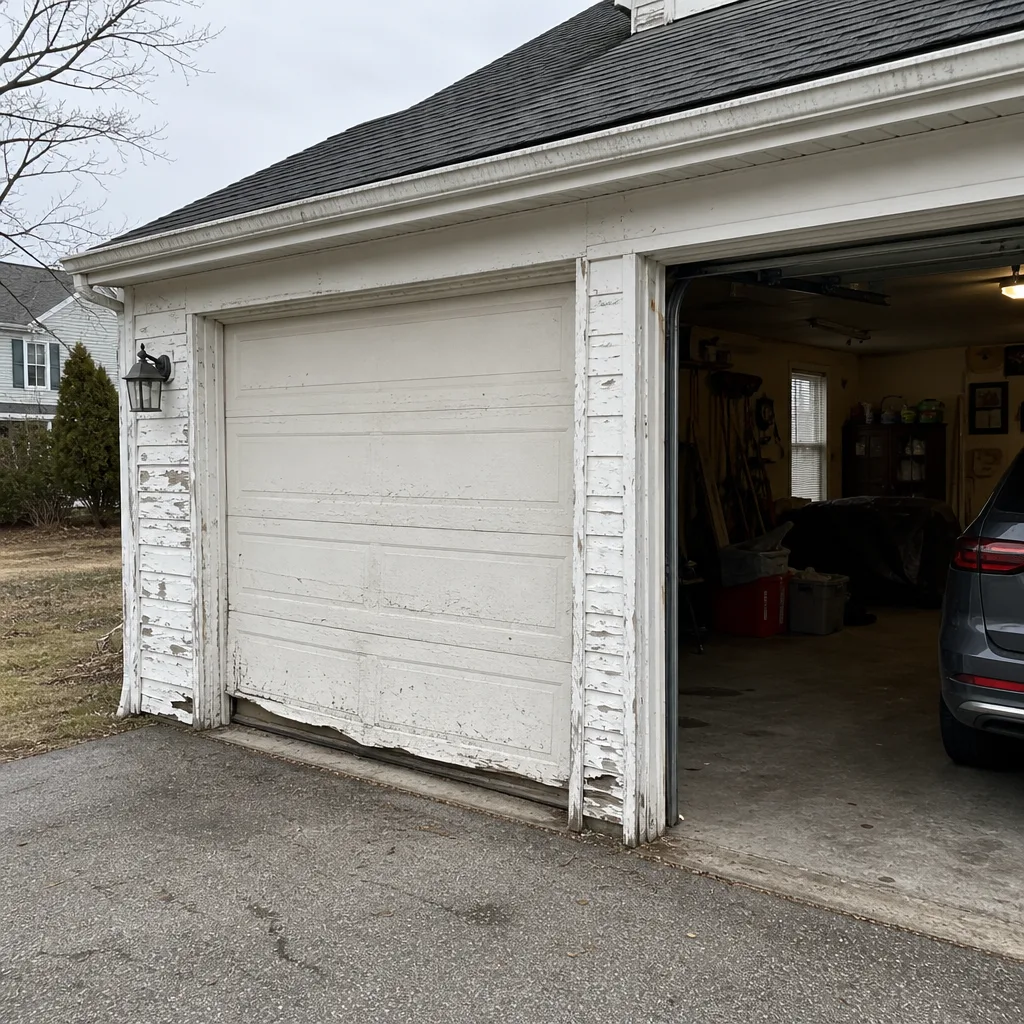 Before
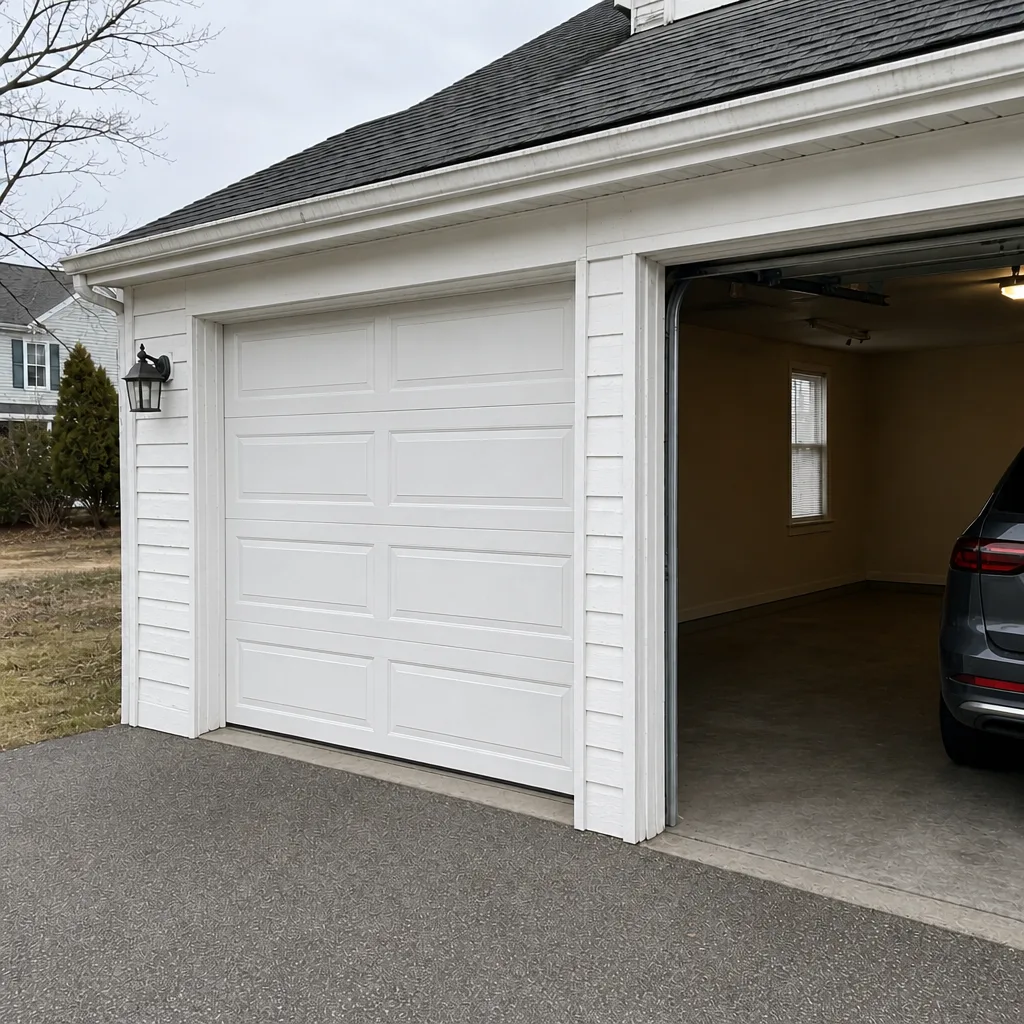 After
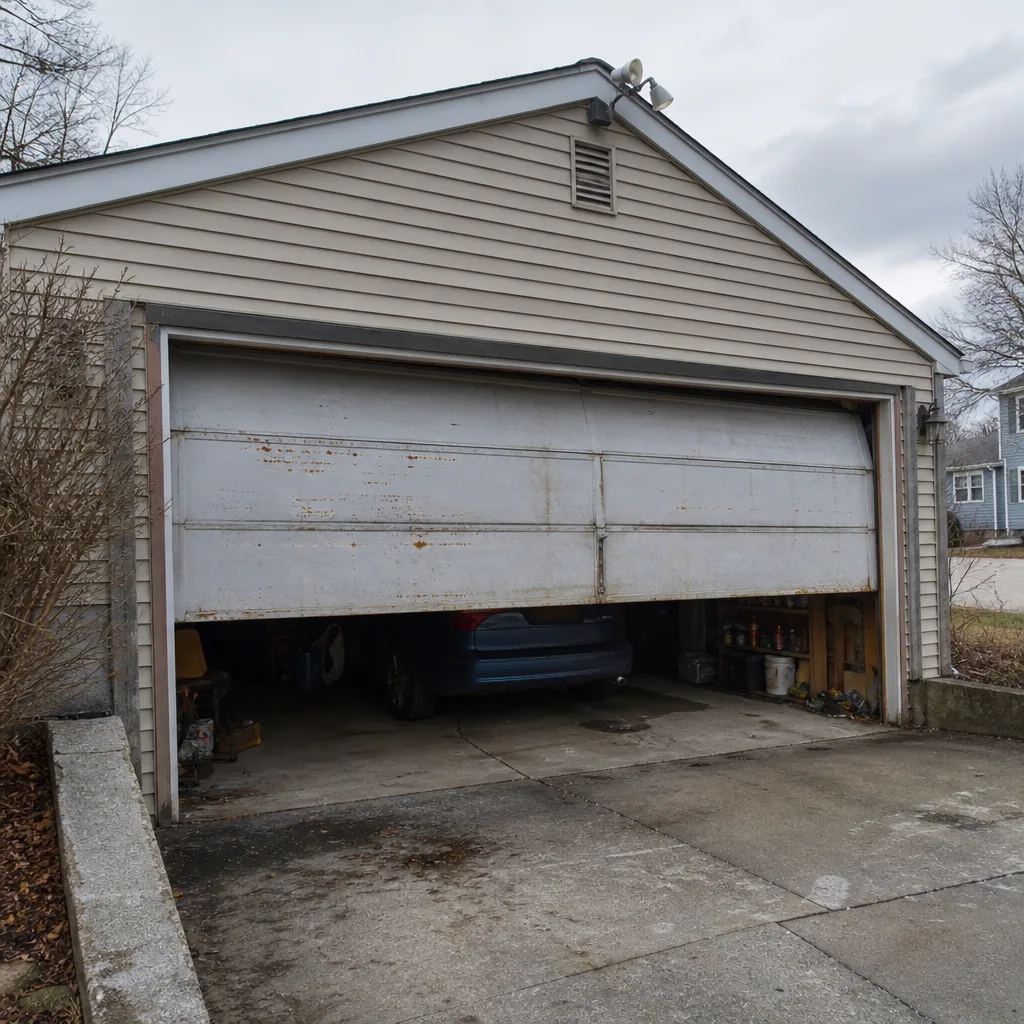 Before
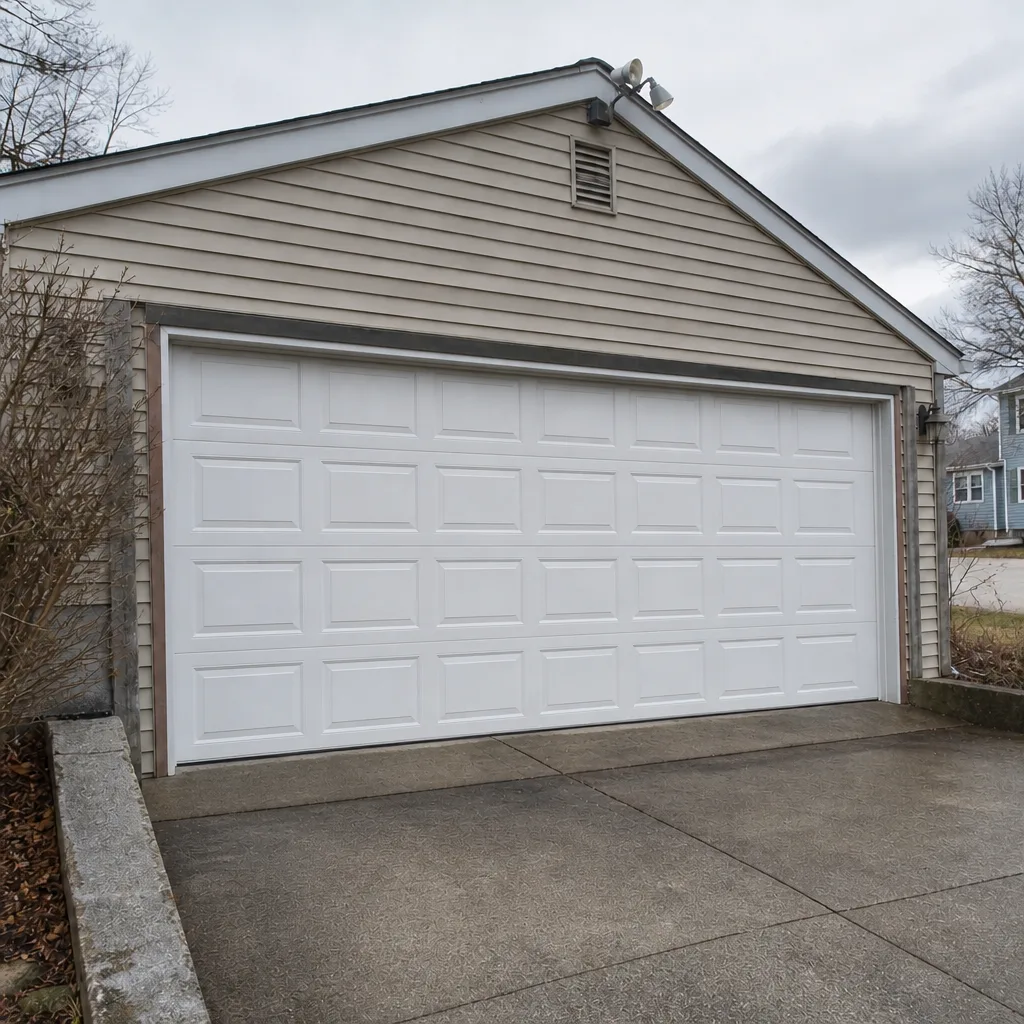 After
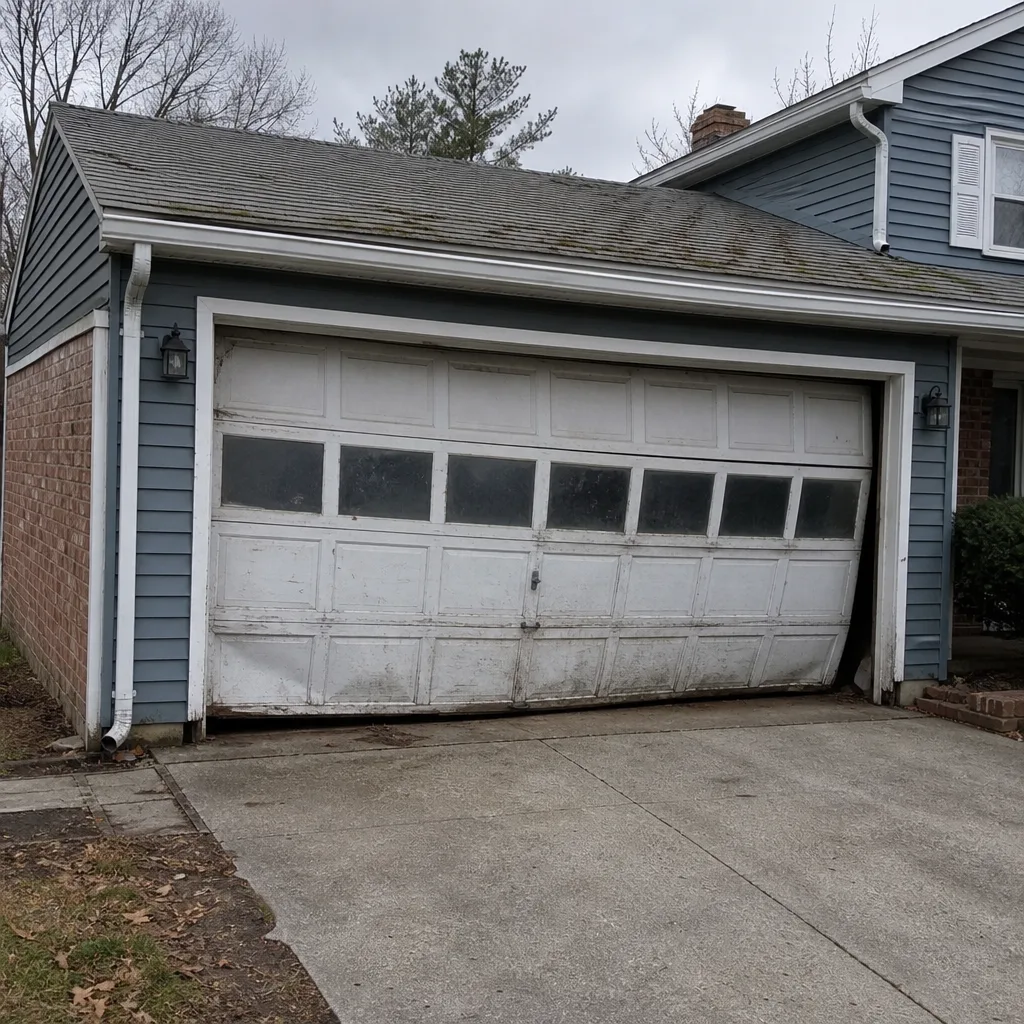 Before
 After
Common Mistakes to Avoid
- Running the opener on a binding door. If the door scrapes or catches, every cycle strains the motor and wears the gears. Stop using it until the alignment is checked.
- Trying to replace or rewind a torsion spring yourself. This is the single most dangerous garage door mistake. The stored energy can cause severe injury. Leave it to a trained technician.
- Ignoring the intermittent failure. A door that works most of the time is telling you something is wearing. Waiting until it fails completely on a cold morning usually means a bigger repair.
- Assuming a reversing door means a new opener. Nine times out of ten a reversing door is a sensor issue – a dirty lens, a misaligned bracket, or an obstruction. Check those first.
- Patching a seal instead of replacing it. In Manchester’s salt and humidity, a patched seal fails again quickly. Replace it and address the door balance that’s wearing it out.
- Hiring a generalist for a brand-specific opener. LiftMaster, Chamberlain, Genie, and Craftsman units each have their own settings and parts. A technician who knows your brand diagnoses the real fault.
- Skipping the manual release test. Before you spend anything, pull the release and lift the door by hand. It takes a minute and tells you which category you’re really dealing with.
When to Call a Professional
Call a professional the moment you see a broken spring, a cable off its drum, a door hanging crooked, or a door that slams shut. Those are the stop-here situations, and there is no safe homeowner fix. Also call when the opener runs but the door doesn’t move, when a door reverses repeatedly after you’ve cleared and cleaned the sensors, or when an intermittent failure has you guessing. And call if the door is more than a decade old and needs a repair that costs close to the price of a new door – we’ll tell you honestly whether repair or replacement is the better answer. Radiant Garage Door Repair offers free estimates in Manchester – call (888) 459-1302. We answer 24/7. Fast dispatch from 7am to 7pm.
Frequently Asked Questions
Garage door repair in Manchester is priced per job by a written estimate, so the exact cost depends on the problem and the parts involved. A sensor adjustment or seal replacement sits at the low end, while a spring or opener replacement sits higher. We quote the price and agree it with you before any work starts, so you never get a surprise invoice. Call (888) 459-1302 for an exact quote – estimates are free.
Yes, for repair and emergency calls we offer same-day service when we can. Call (888) 459-1302. We answer 24/7. Fast dispatch from 7am to 7pm, Sunday through Friday. Installation and new-door work is measured and scheduled rather than same-day.
No, your written quote is the price. We diagnose the actual fault first, then give you a written estimate that sets the final number before any work begins. If we find something different from what you described on the phone, we’ll show you and re-quote before proceeding – you’ll never be billed more than the quote you agreed to.
Yes, the independent local professionals we connect you with are state-licensed and insured and bonded. We work on the equipment you actually own, including doors and openers from LiftMaster, Chamberlain, Genie, Clopay, Amarr, Wayne Dalton, Craftsman, and Raynor. Call (888) 459-1302 for a free estimate.
An intermittent failure usually points to a worn gear inside the opener, a loose wire connection, a force setting that’s too close to the margin, or a sensor affected by dust or condensation. Start with the manual release test to rule out a mechanical problem, then note when it fails. A technician who knows your brand can trace the fault. Call (888) 459-1302 for an exact quote.
No. Torsion springs store extreme energy and a homeowner fix can cause serious injury. If you see a gap in a spring, a door that won’t lift, or a cable off its drum, stop and call a trained technician. This is the one category we’ll never talk you through yourself. Call (888) 459-1302 and we’ll handle it safely.
The Bottom Line
Your garage door tells you which of five root causes is behind almost any problem, and learning to listen is the difference between a quick adjustment and an unnecessary repair bill. Sort the symptom into spring tension, track alignment, sensor interference, opener motor, or weather seal, then run the 60-second manual release test to separate mechanical from electrical. Respect the stop-here situations – broken springs and cables are never a DIY project. Manchester’s freeze-thaw winters, salt, and humid summers wear specific parts faster, so check seals and tracks at the end of each season. When it’s time, Radiant Garage Door Repair is here to get your door back to working the way it should. Call (888) 459-1302 for a free estimate.
If you’re in a neighboring part of the region, our Manchester service area pages cover what we do nearby. We’re also glad to talk through the difference between a simple fix and a full replacement if you’re unsure.
Radiant Garage Door Repair is your dedicated specialist for this trade, ready to diagnose the problem correctly and fix it completely. For the full picture of who we are, see Radiant Garage Door Repair.
Written by the team at Radiant Garage Door Repair.